
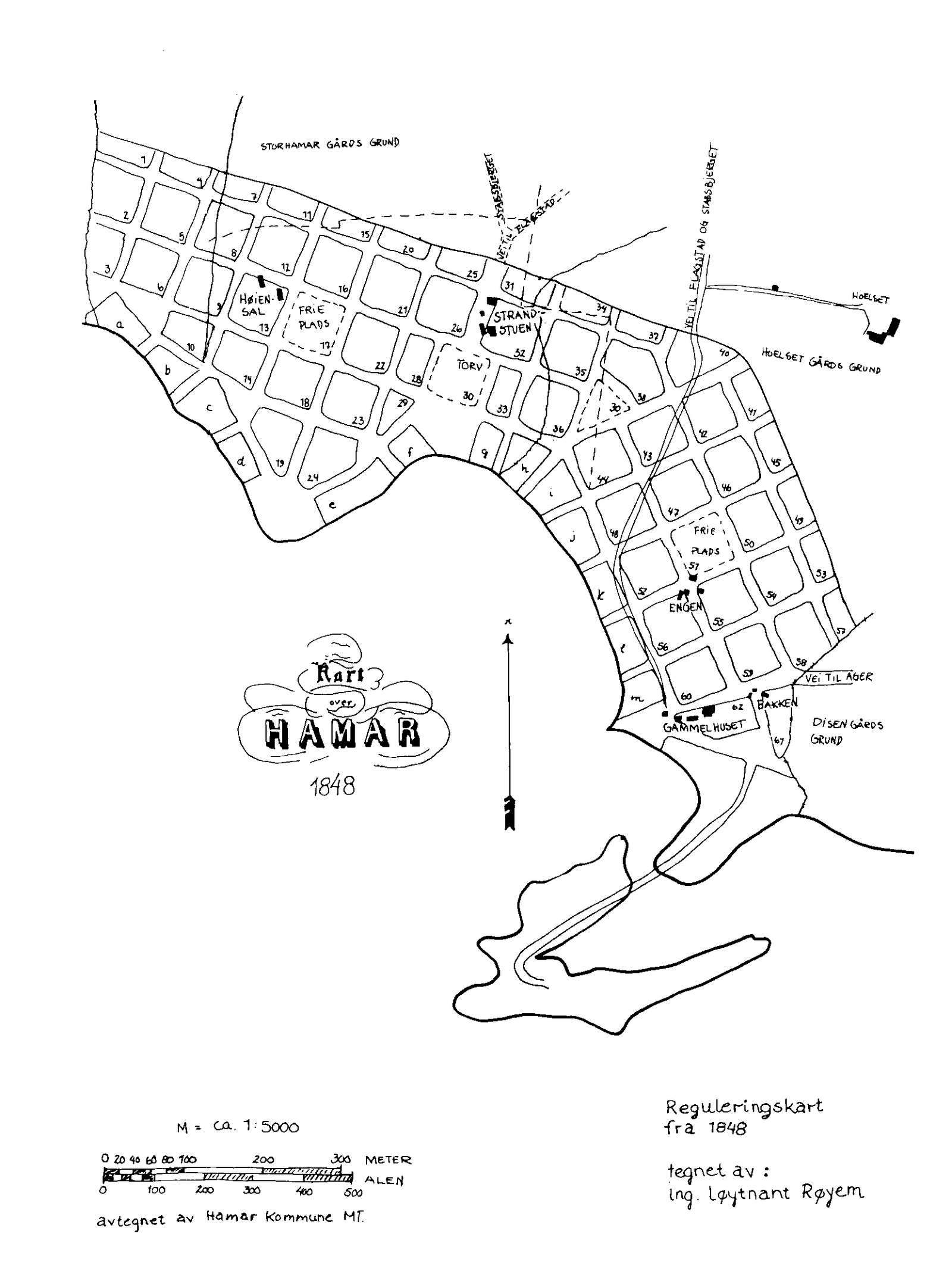
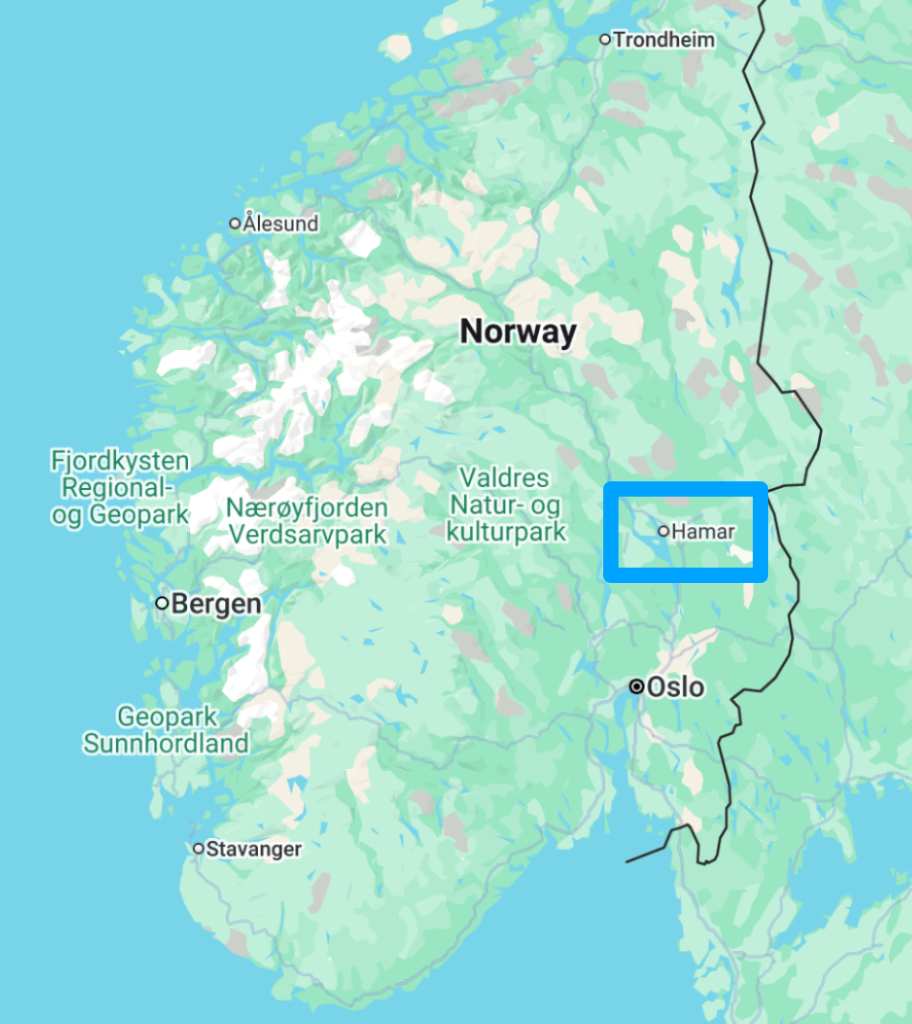
Hamarkaupangen was one of medieval Norway’s most important inland towns, a rare example of urban life far from the coast. It sat on the western shore of Lake Mjøsa, near where the modern town of Hamar stands today. In the Middle Ages, this lake was a vital transport corridor. Goods could move by boat between the fertile inland valleys and the coastal trade networks that connected to England, the Baltic, and continental Europe.
The word “kaupangen” means “market town” or “trading settlement.” Hamarkaupangen emerged around the 11th century, as Norway’s rulers and church leaders were consolidating power. Its position was strategic. From here, the church could control trade routes, collect taxes, and extend religious authority into the interior. The bishops of Hamar became powerful figures, overseeing a diocese that stretched across large parts of eastern Norway.
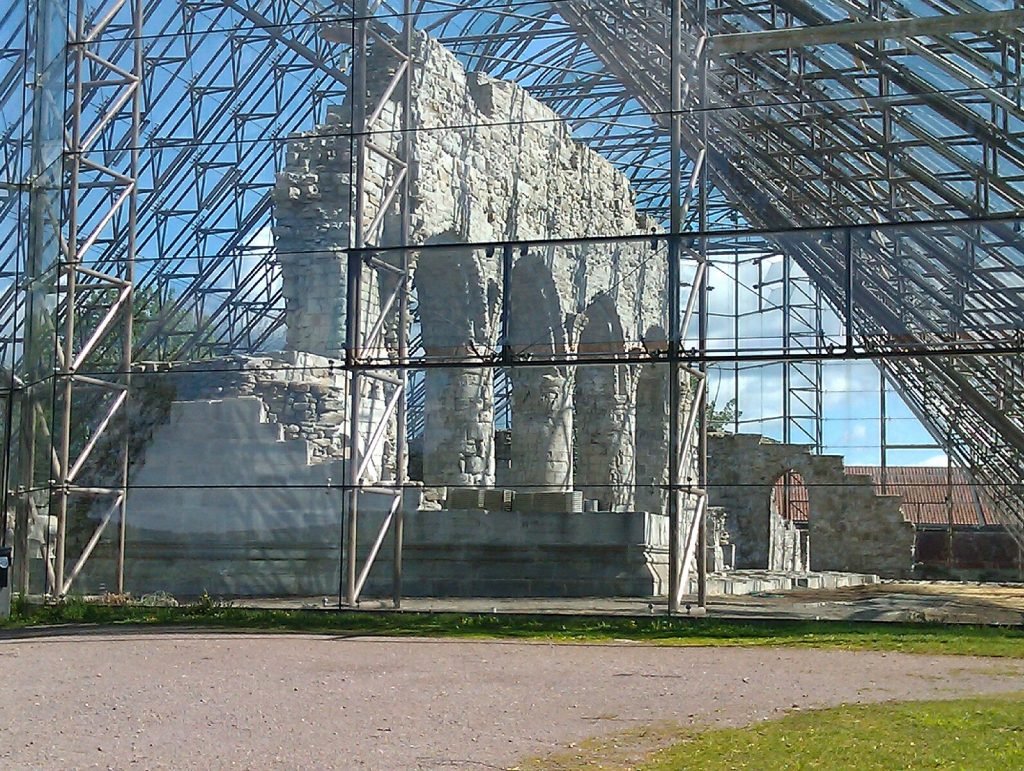
The ruins of Hamar domkirke, built 1152 – 1200 AD
At its height, Hamarkaupangen had a cathedral, a bishop’s palace, several churches, workshops, and a population that may have reached a few thousand—a significant number for medieval Norway. Craftsmen made metalwork and tools, traders sold imported cloth, and farmers brought grain and livestock from surrounding valleys. The cathedral, begun around 1150, was one of the largest stone buildings in the country. Its ruins still dominate the site today, preserved under a striking glass and steel shelter at Domkirkeodden.
Then came the crisis that changed everything: the Black Death. When the bubonic plague reached Norway in 1349, it killed between half and two-thirds of the population. Inland communities were hit especially hard, losing both labor and leadership. Trade faltered, fields went untended, and local economies collapsed. The church, which had relied on tithes and manpower, could no longer maintain its vast network.
Hamarkaupangen never truly recovered. By the late 1300s, the town’s importance had faded. Its population declined, and its role as a trading center weakened as political power shifted toward Oslo and coastal towns. Later, during the Reformation in the 1500s, the final blow came. The last Catholic bishop of Hamar resisted Danish rule and was driven out. The cathedral and bishop’s palace were burned in 1567 by Swedish forces, and the settlement was left in ruins.
For centuries, the area reverted to farmland. Only local memory kept faint stories alive of a “lost town.” Then archaeologists in the 19th and 20th centuries began uncovering its remains, confirming that this quiet stretch of lakeshore had once been a center of medieval power and culture.
Hamarkaupangen’s story matters because it shows how fragile urban life was in medieval Norway. Unlike coastal trading cities such as Bergen or Trondheim, inland towns relied heavily on agriculture and church power. When plague, war, and political change struck, they had no deep commercial base to sustain them.
Today, modern Hamar sits near the same site, a reminder of continuity and reinvention. The Domkirkeodden museum, with its glass-covered cathedral ruins, is one of Norway’s most atmospheric historical sites. Standing there, you can look across Lake Mjøsa and imagine the sound of boats, merchants, and church bells from nearly a thousand years ago—an echo from a vanished inland city that helped shape Norway’s early history.

 English