
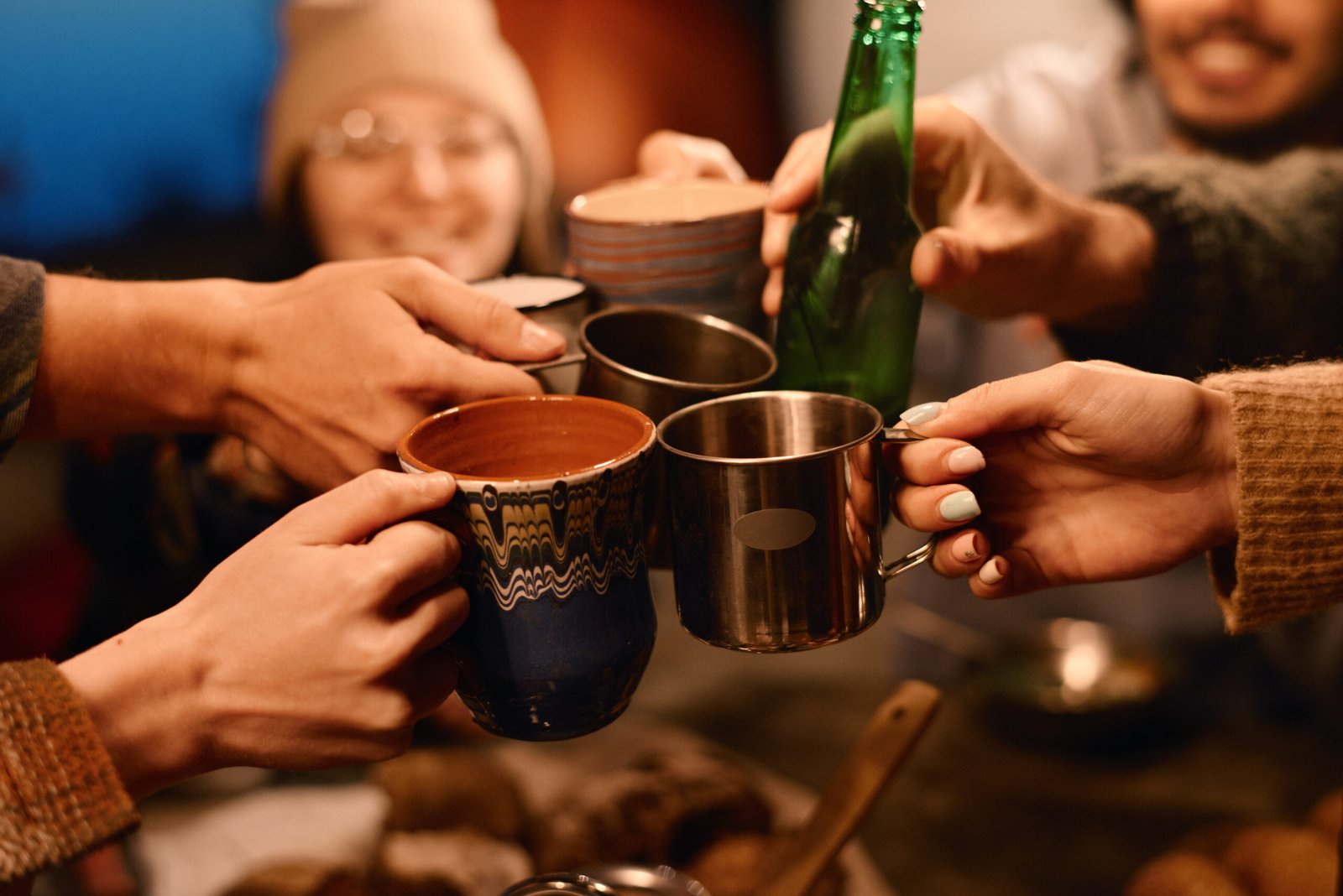
There’s a joke in Norway that goes something like this: beer is so expensive here that the Vikings switched to pillaging just to afford the next round. It’s not far off. A pint at a bar in Oslo will run you around $12-15 USD. And yet beer has been woven into Nordic life for longer than these countries have had names.
What follows is a tour through that history — the ancient stuff brewed with juniper and bread yeast, the industrial consolidation that nearly flattened it, and the craft revolution that didn’t just revive Nordic brewing but arguably helped lead the global craft movement. Plus: what it costs to drink your way through six very different beer cultures, and which beers are actually worth drinking.
Fun fact: Most Nordics say “skål” (pronounced skohl) as a traditional toast meaning “cheers” or “good health” when drinking together. Literal meaning: the word stems from Old Norse skál, meaning “bowl”. It originally referred to a communal wooden bowl or horn that was passed around at feasts.
Before hops: what the Vikings actually drank
The birch bark bucket found at Egtved, Denmark — dating to around 1300 BC — contained a fermented drink made from wheat, cowberries, cranberries, and bog myrtle. It wasn’t exactly beer, and it wasn’t wine. Archaeologists have called these early Nordic concoctions “Nordic grog”: hybrids of beer, mead, and wine, combining grains with berries and honey. Hops don’t enter the picture for centuries.
By the Viking Age proper (roughly 750–1050 AD), the drink had settled into something recognizable as ale. Ale was an everyday beverage, consumed by men, women, and children alike. It was safer than water, provided a significant portion of daily calories, and was generally weak enough to drink throughout the day without much consequence.
Viking ale was typically brewed at home by women, who were responsible for the household’s supply. The primary grain was barley, with oats and rye sometimes added. Without hops, brewers relied on gruit — a mixture of yarrow, bog myrtle, and other local herbs — for preservation and bitterness. Juniper was especially common across Scandinavia.
Fermentation was managed with what we’d now call kveik, a traditional Norwegian farmhouse yeast. Vikings didn’t have cultivated yeast strains. Instead, they relied on wild yeast, or reused brewing tools and sticks that harbored yeast from previous batches — a form of yeast cultivation so effective it’s been passed down in some Norwegian families for centuries.
Beer wasn’t just food. Old Norse laws actually required families to brew ale and hold feasts. Failing to do so could result in legal penalties. Ale was present at weddings, burials, seasonal rituals, and the great feasts where alliances were made and celebrated. The sagas describe these ale-feasts in detail — leaders and chieftains hosting gatherings with abundant food and drink as a form of social glue.
The farmhouse tradition that survived everything
After the Viking Age, Nordic beer culture split in two. Commercial, hopped beer spread from Germany and the Low Countries through the late medieval period, gradually displacing gruit-based ales in cities and trading centers. But in the countryside, something older held on.
Today the survivors of this ancient tradition are: sahti in Finland, koduõlu in Estonia, gotlandsdricke in Sweden, maltøl in Norway, and kaimiškas in Lithuania. These beers didn’t survive because anyone preserved them consciously. They survived because rural communities kept brewing them at home, generation after generation, passing recipes by word of mouth and never writing anything down.
Finnish sahti is the best known of these. The earliest written reference to it dates to 1366, when a large quantity was consumed at the burial of a bishop. The Finnish national epic, the Kalevala, contains 400 stanzas about brewing. Traditional sahti is brewed with malted barley and rye, filtered through a hollowed aspen log lined with juniper boughs, and fermented with bread yeast. The result is hazy, sometimes banana-scented, and can reach 8% ABV. It doesn’t travel well and it doesn’t keep long. The only way to really drink it is to go to central Finland and find someone who makes it.
Norwegian maltøl and kornøl follow similar logic. Kornøl is a raw ale — meaning it isn’t boiled — typically brewed with kveik yeast and juniper, producing a pale, cloudy, fruity beer with a short shelf life. The town of Grodås hosts an annual kornøl festival every October that has become a pilgrimage site for serious farmhouse ale enthusiasts from around the world.
The great consolidation (and what it cost)
The 20th century was not kind to brewing diversity in the Nordic countries. Industrialization concentrated production, temperance movements pushed governments to restrict alcohol sales, and prohibition in various forms swept through Iceland, Norway, and Finland in the early 1900s.
With the exception of Denmark, all five Nordic countries enacted some form of national prohibition around the same time as the United States. Iceland, Norway, and Finland went dry. And when prohibition ended, state monopolies on alcohol sales were established to control consumption — a system that still exists today.
Iceland’s prohibition was the longest and strangest. Beer containing more than 2.25% alcohol was banned until March 1, 1989 — that’s right, 1989. Legislators believed beer, being cheaper and easier to drink in larger amounts, posed a greater risk than wine or spirits, which had been legalized decades earlier. Icelanders of a certain generation remember the day the ban lifted. March 1st is now informally called Beer Day.
In Norway, the beer market collapsed into a duopoly: Carlsberg-Ringnes in Oslo and Hansa Borg Bryggerier in Bergen, together accounting for over 85% of all beer sold. Denmark avoided this fate; Carlsberg had been there since 1847 and internationalized early enough that the domestic market stayed competitive, but it still ended up dominated by two brands: Carlsberg and Tuborg, which Carlsberg acquired in 1970.
The rules around what you can actually buy and where are still arcane by any international standard. In Sweden, beer stronger than 3.5% ABV can only be purchased at Systembolaget, the state-run off-licence chain. In Finland, the limit was raised in June 2024 from 5.5% to 8.0%, finally allowing low-strength wines into regular supermarkets. In Norway, anything above 4.7% is restricted to Vinmonopolet stores or licensed bars. Supermarkets can only sell beer until 8pm on weekdays and 6pm on Saturdays, with no sales on Sundays.
The craft revolution
Nobody really expected Denmark to lead a global craft beer movement. They were a lager country, dominated by one of the biggest breweries on earth.
Mikkeller started not as a brewery but as a homebrewing experiment by Mikkel Borg Bjergsø, then a high school math and physics teacher in Copenhagen. He never built his own production facility. Instead, Mikkeller operates as a “gypsy brewery,” renting tank space at other breweries and shipping recipes around the world — which is exactly how a teacher with a good palate and no investors would do it. What began as a homebrewing experiment grew into an international network of bars and specialty venues.
Bjergsø then inspired two of his former students, who founded To Øl in 2010, which has since opened the restaurant and taproom BRUS in Copenhagen’s Nørrebro neighborhood. His twin brother started Evil Twin Brewing in Brooklyn. The whole thing reads less like a business plan and more like an extended family who really liked beer.
Norway’s equivalent is Nøgne Ø, founded in 2002 in the small southern city of Grimstad. It was among the first Norwegian breweries to introduce imperial stouts, barley wines, and experimental sour ales to the Norwegian market. Their philosophy: beer shouldn’t be adjusted to mass taste. It should express terroir, technique, and the brewer’s character.
Sweden’s Omnipollo is a different animal. Founded by brewer Henok Fentie and artist Karl Grandin, the brewery was designed explicitly to merge bold graphic design with experimental brewing. After years as a gypsy brewery, Omnipollo opened its own facility in 2020 inside a repurposed church in Sundbyberg, Stockholm — with murals and neon installations by Grandin throughout. Their Nebuchadnezzar double IPA (8.5% ABV) put them on the international map.
The movement spread. Norway now has Lervig in Stavanger, HaandBryggeriet outside Oslo, and a growing constellation of smaller operations. Finland has revived commercial interest in sahti alongside a thriving modern craft scene. Iceland, despite having fewer than 400,000 people, has around 25 active breweries.
The national beers: six countries, six stories
Denmark — Carlsberg
There is no separating Denmark from Carlsberg. Founded in 1847 by Jacob Jacobsen and headquartered in Copenhagen, Carlsberg began exporting in 1868 and never stopped growing. The Carlsberg museum in Copenhagen is genuinely worth a visit — not because corporate museums are usually interesting, but because Carlsberg’s labs developed pure yeast culture techniques in the 1880s that changed brewing worldwide. The yeast is still named after the founder’s son: Saccharomyces carlsbergensis.
Today Carlsberg is one of the largest brewing companies on earth, which is both impressive and somewhat beside the point if you want to understand Danish beer culture. The actual action is in Copenhagen’s craft scene: Mikkeller, To Øl, Amager Bryghus, Nørrebro Bryghus, and dozens of others.
Grocery store price: A 0.5L can of Carlsberg or Tuborg in a Danish supermarket runs around 9–15 DKK (roughly €1.20–€2.00). Denmark has no state monopoly, so beer of any strength is available in supermarkets and convenience stores. It’s the most permissive drinking retail environment in the Nordics.
Norway — Ringnes
Ask someone in Oslo what they want and they’ll say Ringnes. Ask someone in Tromsø and they’ll say Mack. Norwegian beer culture has always been regional in this way, with local pilsners tied closely to local identity. Ringnes was founded in 1877 in Oslo’s Grünerløkka district and has been owned by Carlsberg since 2004. Mack, based in Tromsø, describes itself as the world’s northernmost brewery.
Norway is the most expensive country in this list for beer, and it’s not close. Beer between 3.7% and 4.7% ABV is taxed at 23.68 kroner per litre, and anything stronger is subject to 5.29 kroner for every additional percentage point of alcohol per litre. A domestic beer (0.33L bottle) in a Norwegian grocery store costs around 34 NOK (~€3.00). A 0.4L beer at a bar runs 90–130 NOK (~€8–12).
Grocery store price: ~25–34 NOK (€2.20–€3.00) for a 330–500ml domestic lager. Craft beers at Vinmonopolet: 40–80 NOK per bottle.
Sweden — Systembolaget’s own picks
Sweden doesn’t have a single “national beer” the way Denmark has Carlsberg or Finland has Lapin Kulta. Instead, it has a system: Systembolaget, the government-run chain, controls all sales above 3.5% ABV. All products are taxed by alcohol content rather than price, and all carry the same profit margin — which in theory makes it a fairer market for smaller producers.
The most internationally recognized Swedish brewery is Omnipollo, but inside Sweden the everyday pilsner is probably Falcon, Pripps Blå, or one of several regional lagers. The craft culture has exploded in the past decade, with Dugges (Gothenburg) and Nya Carnegie (Stockholm) both earning international recognition.
Grocery store price: Only beers up to 3.5% ABV are available in regular supermarkets, typically 15–25 SEK (€1.30–€2.20) per 500ml. Full-strength beer at Systembolaget runs from about 18–30 SEK (€1.60–€2.70) for domestic lagers, up to 50–100+ SEK for craft.
Finland — Lapin Kulta or Karhu (and sahti)
Finland’s mass-market beer is dominated by Lapin Kulta and Karhu, both owned by Heineken. Neither is embarrassing — Finnish water tends to produce clean, crisp lager — but they’re not why you go to Finland for beer. You go for sahti.
Finland’s beer law divides beer into alcohol content classes, which historically forced breweries to create special formulations specifically to be sold in regular supermarkets. Anything above 4.7% (and since 2024, above 8%) goes to Alko, the state monopoly.
The Finnish craft scene has grown quietly but impressively. Breweries like Pyynikin Craft Brewery in Tampere and Maku Brewing in Helsinki regularly appear in European rankings, and there’s a growing movement to revive commercial sahti production with traditional kveik yeast and juniper filtering.
Grocery store price: Up to 4.7% ABV beers at Finnish supermarkets run roughly €1.50–€2.50 for a 500ml can. Alko prices for stronger craft beers: €2.50–€5.00+ per 330ml.
Iceland — Egils Gull
Iceland’s ban on beer lasted until 1989, which means the country’s entire modern beer culture is only about 35 years old. When the ban lifted, the two established breweries — Víking (now part of Coca-Cola European Partners) and Egill Skallagrímsson (which makes Gull) — dominated for nearly two decades.
Egils Gull is Iceland’s everyday lager — a simple golden beer brewed in the style of a German Helles, made with clean Icelandic glacial water. It won “World’s Best Standard Lager” at the World Beer Awards in 2011, which is about as authoritative as these things get.
The more interesting story is Borg Brugghús, the craft arm launched by Egill in 2010. Their Surtur imperial stout series pushes past 14% ABV and regularly tops Untappd and RateBeer rankings for Icelandic beer. Ölvisholt Brugghús, near Selfoss, converted an old dairy farm into a brewery in 2007; their Lava smoked imperial stout won Best Imperial Smoked Beer at the 2012 U.S. Open Beer Championship.
Alcohol sales in Iceland are only available through state-run Vínbúðin stores (46 across the country) or bars and restaurants. A large beer (0.5L) at a bar costs around 1,750 ISK. In Vínbúðin, the cheapest 0.5L starts at around 199 ISK.
Grocery store price: Beer isn’t sold in regular grocery stores in Iceland. All off-premise sales go through Vínbúðin. Budget roughly 300–600 ISK (€2.00–€4.00) per 500ml can.
Greenland — Godthaab Bryghus and Qajaq
Greenland is the wildcard. Roughly 99% of beer sold in Greenland is Carlsberg or Tuborg, brewed in Denmark and shipped across the North Atlantic. Which is, as one local brewer put it, “insane, considering we’ve got such pure, beautiful water.”
There are currently four active breweries in Greenland. The largest is Godthaab Bryghus, located in Nuuk, which also operates as a brewpub and offers tours. Brewery Immiaq is based in Ilulissat. The most interesting project is Qajaq, a microbrewery in Narsaq in southern Greenland that was revived after its predecessor went bankrupt, and that brews using iceberg water — water that has been frozen for up to 4,000 years before being harvested from drifting glaciers.
If Greenland has a “national beer” right now, it’s whatever Godthaab Bryghus has on tap in Nuuk, plus the industrial imports that still dominate store shelves. That may change. The brewing scene there is young and has a very specific pitch: nobody has better water.
Grocery store price: Pricing data for Greenland is limited; the market is small and isolated. Imported Carlsberg/Tuborg runs broadly in line with Danish retail prices at licensed outlets.
The best beers in the Nordic region: a table
These are beers worth seeking out — not necessarily the bestsellers, but the ones that represent what Nordic brewing is actually capable of (prices 2026).
| Beer | Country | Brewery | Style | ABV | Est. retail price (local) | Notes |
|---|---|---|---|---|---|---|
| Mikkeller Beer Geek Breakfast | Denmark | Mikkeller | Imperial stout w/ coffee | 7.9% | ~70–90 DKK / 330ml | Rich chocolate, coffee, and roasted malt. One of Mikkeller’s most recognized beers internationally. |
| Carlsberg Pilsner | Denmark | Carlsberg | Pale lager | 5.0% | ~9–15 DKK / 500ml | The classic. Clean, affordable, found everywhere. |
| Nøgne Ø Dark Horizon | Norway | Nøgne Ø | Imperial stout | 16% | ~120–180 NOK | Intense dark chocolate, coffee, and dried fruit. One of Europe’s most talked-about strong beers. |
| Ringnes Pilsner | Norway | Ringnes (Carlsberg) | Pilsner | 4.7% | ~25–34 NOK / 330ml | Norway’s most-consumed domestic lager. Reliable. |
| Omnipollo Nebuchadnezzar | Sweden | Omnipollo | Double IPA | 8.5% | ~40–70 SEK / 330ml | Tropical fruit flavors with a solid malt backbone. |
| Lervig Lucky Jack | Norway | Lervig | American pale ale | 4.7% | ~50–75 NOK / 440ml | Gateway craft beer. Balanced, citrusy, widely exported. |
| Egils Gull | Iceland | Ölgerðin | Pale lager | 5.0% | ~300–400 ISK / 500ml | Won World’s Best Standard Lager (2011). Clean and crisp. |
| Einstök White Ale | Iceland | Einstök | Belgian-style witbier | 5.2% | ~400–600 ISK / 330ml | Brewed with orange peel and coriander; pairs well with Icelandic seafood. Iceland’s most exported craft beer. |
| Borg Surtur Nr. 8 | Iceland | Borg Brugghús | Imperial stout | 11.5% | ~800–1200 ISK / 330ml | Top-rated Icelandic beer on both Untappd and RateBeer. |
| Ölvisholt Lava | Iceland | Ölvisholt | Smoked imperial stout | 9.4% | ~700–1000 ISK / 330ml | Won Best Imperial Smoked Beer, 2012 U.S. Open Beer Championship. |
| Lapin Kulta | Finland | Hartwall (Heineken) | Pale lager | 4.5% | ~€1.50–€2.00 / 500ml | Finnish everyday beer; clean water, well-balanced malt. |
| Sahti (traditional) | Finland | Various farmhouse brewers | Farmhouse ale | 6–10% | Rarely sold commercially | Ancient style still brewed in central Finland with juniper and kveik yeast. |
| Godthaab Bryghus (various) | Greenland | Godthaab Bryghus | Various craft | varies | Not widely exported | Nuuk’s brewpub. Rated highest of active Greenlandic breweries. |
| Qajaq IceBerg Ale | Greenland | Qajaq | Pale ale | ~5% | Local only | Brewed with 1,000–4,000 year-old iceberg water in Narsaq. |
The alcohol monopoly map
One thing that distinguishes Nordic beer from anywhere else in the world isn’t the style — it’s the retail structure. The state monopoly system means that how you buy beer is as culturally specific as what you drink.
Here’s a quick summary:
Denmark — No monopoly. Buy any beer, any strength, at any supermarket or corner store. The most open market in the region.
Norway — Beer up to 4.7% in supermarkets (until 8pm weekdays, 6pm Saturdays, never Sundays). Anything stronger: Vinmonopolet only. Highest alcohol taxes in Europe. Norway’s taxes are more than double those in Sweden and five times the rate in Denmark, which is why many Norwegians make border runs to Sweden or stock up at the airport duty-free.
Sweden — Beer up to 3.5% in supermarkets. Systembolaget for anything stronger. Open 10am–7pm on weekdays, shorter hours on Saturdays, closed Sundays.
Finland — Since June 2024, beer up to 8% ABV in supermarkets. Anything stronger at Alko. One of the more recently liberalized markets.
Iceland — All off-premise alcohol sales through 46 Vínbúðin stores. No alcohol in regular grocery stores, period. Bar prices are high even by Nordic standards.
Greenland — Controlled distribution through licensed outlets. Dominated by imported Danish brands; local craft production is limited and growing slowly.
What’s actually happening now
The Nordic craft scene shows no sign of slowing. Breweries like Mikkeller, To Øl, Omnipollo, and Amager Bryghus are regularly cited internationally, and the broader New Nordic Beer movement has done for beer what New Nordic Cuisine did for food.
Kveik yeast deserves a separate mention. This ancient Norwegian farmhouse yeast, which ferments exceptionally fast at high temperatures and produces distinctive fruity esters, has become a global phenomenon. Breweries across the US, UK, and Australia now use kveik strains that were collected from Norwegian farmhouses where the same yeast had been used for generations. It’s one of the more unusual cases of a traditional ingredient becoming trendy worldwide before it ever had much commercial presence in its own country.
Greenland is the story with the most potential and the longest road ahead. Its water — whether glacier melt or actual iceberg blocks harvested by boat — is genuinely extraordinary brewing water: ancient, mineral-clean, and untouched. The local brewing scene is starting to push back against a market where 99% of beer is imported from Denmark. Qajaq’s iceberg ale is a good beer, but more than that it’s a statement: this is Greenland, and this is our water, and we’re going to use it.
That’s ultimately what makes Nordic beer culture worth paying attention to. It’s not just the Viking history or the craft credentials. It’s the fact that a region that spent most of the 20th century under prohibitions and monopolies has managed to produce some of the most creative brewing in the world — while simultaneously preserving farmhouse traditions that predate modern brewing by a thousand years.
Sources and further reading
- Mika Laitinen, Viking Age Brew: The Craft of Brewing Sahti Farmhouse Ale (Chicago Review Press, 2019) — brewingnordic.com
- TasteAtlas: Best beers in Scandinavia
- Guide to Iceland: Top beers in Iceland
- Life in Norway: All about Norwegian beer
- Your Friend in Reykjavik: Best beers in Iceland
- The Beer Thrillers: Greenland’s breweries
- An Adventurous World: Greenland beer and iceberg water
- Nature Travels Blog: Systembolaget explained
- All About Beer: Brewed on the roof of the world (Norway)
- Legends of Beer: Vikings and beer
- Wikipedia: Beer in Norway | Beer in Iceland | Beer in Denmark
- Mikkeller: mikkeller.com
- Einstök: einstokbeer.com
- Omnipollo: omnipollo.com

 English