
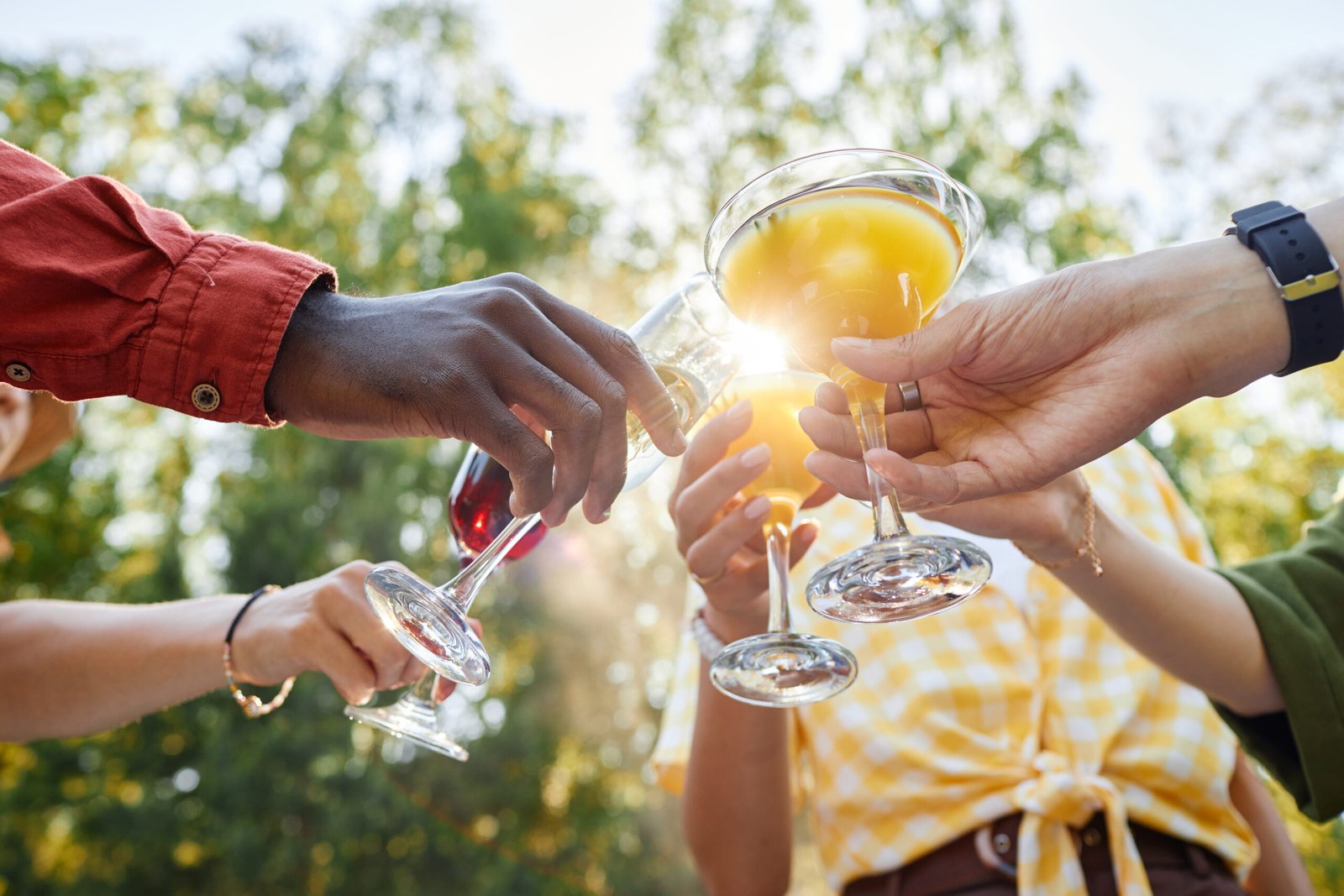
There’s a particular desperation to Nordic spring. After months of darkness, not metaphorical darkness, actual absence-of-light darkness — the sun returns, and people treat it like a long-lost relative. Outdoor tables appear overnight. Jackets come off at 12°C. And drinks that would seem strange anywhere else become the most logical things in the world.
Each Nordic country has its own answer to the question of what you reach for when the weather finally turns. Some answers are ancient. Some were basically invented by the temperance movement. Some come from a tree. Here’s the full picture.
Finland: Sima and the Chaos of Vappu
The Finnish May Day — Vappu, celebrated on May 1st — is one of the more joyful occasions in the Nordic calendar, and sima is its drink. It’s a lightly fermented lemon-and-sugar mead, barely alcoholic (usually under 0.5% ABV), fizzy from a short fermentation, and consumed in enormous quantities by children and adults alike.
Sima is a Finnish fermented low-alcohol drink. It is traditionally a form of mead, though in modern times honey is generally replaced with various sugars, making it a kind of sugar wine. The drink is mainly seasonal and tied to the Finnish Vappu festival, and is usually spiced with both the flesh and rind of a lemon.
The history behind it is more interesting than you’d expect. Mead was originally brought to Finland in the 1500s from Lübeck and Riga, and one of its early champions was King Gustav I of Sweden, who loved the sima he tasted in Turku and essentially created a sima boom. By the early 20th century, the Finnish Temperance Movement — which eventually produced a full alcohol ban between 1919 and 1932 — pushed for a non-alcoholic Vappu drink, and sima, with its negligible alcohol content, filled the gap. Young students still learn to ferment sima in schools; restaurants offer it on Vappu menus alongside herring, potato salad and sweet pastries; and big breweries bottle and sell their own versions. Each spring, shop shelves fill with varieties of sima, and newspapers review the best brands.
What’s also lovely is how the recipe has evolved. Home brewers experiment with new flavours ranging from spruce to cucumber to rhubarb. The classic is still lemon, but rhubarb sima is increasingly popular — a milder, pink-tinted version that goes down well with children who find the lemon version too sour.
Sima is served alongside tippaleipä (funnel cake) and munkki (doughnuts). There’s something right about pairing a fizzy fermented drink with fried dough in the spring sunshine. Don’t overthink it.
Sweden: Snaps, Elderflower, and the Whole Production of Midsommar
Sweden has a midsummer celebration — Midsommar — that functions more as a national religion than a holiday. It falls on the Friday nearest the summer solstice, usually in late June, and the drinking traditions around it are formalized to a degree that’s either charming or alarming depending on your temperament.
No Midsummer meal is complete without schnapps (snaps) — a clear, often herb-flavoured spirit served in small glasses. While dill and caraway make it officially Aquavit (a protected term in Europe), other popular flavours include elderflower, honey and wormwood. Each shot is typically enjoyed after a lively snapsvisa — a traditional drinking song sung with enthusiasm, and often slightly off-key.
The songs are important. Before you can drink your snaps, you have to sing a snaps visa, a snaps song, and the most common one is called Helan går — “all of it goes” — which is the first one you sing before you can have any other snaps. This is not a loosely observed custom. Swedes take the song seriously.
Beyond snaps, elderflower is perhaps the defining flavour of the Swedish summer. Elderflower cordial — fläderblomssaft — is diluted with cold sparkling water and drunk by anyone who isn’t drinking snaps, which at a Midsommar table usually means the children and the people driving home. In Scandinavia, the seasonal blossom is usually made into a refreshing saft — a cordial or syrup that can be added to water or other liquids. It is called fläderblomssaft in Sweden, hylleblomstsaft in Norway, seljankukkamehu in Finland and hyldeblomstsaft in Denmark.
Cold beer also features heavily. The traditional accompaniment to the Midsommar feast is a cold beer and schnapps, preferably spiced. Every time the glasses are refilled, singing breaks out anew.
Denmark: Elderflower Country
Denmark takes elderflower more seriously than anyone. The bushes grow wild across the country — in woods, parks, field edges — and harvesting them in early June is a tradition that predates recorded recipe books.
In Danish mythology, it was believed that the goddess Freja lived by the elderflowers, and that the bushes provided protection from evil. The flowers were also thought to give relief from ailments such as toothaches, fevers, depression and insomnia. That’s a lot of work for a flower. Today the belief has narrowed to: this makes a very good drink.
Hyldeblomstsaft — elderflower cordial — is mixed with cold water or sparkling water and appears on café menus, dinner tables, and at Sankthansaften (the Danish midsummer bonfire night on June 23rd). In June, it’s common to harvest the blossoms and make a syrup, which can be mixed with water or soda for one of the most delicious drinks around. Everyone seems to have their own homemade elderflower cordial recipe.
The Danish approach to summer drinking more broadly follows the same pattern as Swedish: light lager, the odd snaps (spelled snaps in Danish, usually caraway-flavoured), and elderflower for the non-drinkers and children. It’s relaxed, seasonal, and tied to being outdoors.
Norway: Farmhouse Ales, Rhubarb Juice, and Sankthans Bonfires
Norway’s contribution to the regional summer drinking picture is the most divided between ancient and modern. On one hand, there are the farmhouse ales — genuinely ancient, deeply regional, and unlike anything brewed elsewhere. On the other, there’s rabarbrasaft (rhubarb juice), which is drunk out of glasses with ice on warm evenings and is beloved by children.
The farmhouse ales — maltøl — come in a few distinct regional styles. Kornøl is a farmhouse ale mainly associated with Western Norway — the regions of Sunnfjord, Nordfjord and Sunnmøre. It is a raw ale brewed with traditional local yeast (kveik) and juniper. The resulting beer is pale and usually cloudy, fruity and grainy, with a discreet juniper flavour. It isn’t boiled, which gives it a shorter shelf life and a rawer character.
The yeast — kveik — is what makes Norwegian farmhouse brewing genuinely singular. For hundreds of years, the farmers of western Norway brewed beer for themselves, for friends and family, for everyday drinking and especially for special occasions such as weddings and festivals. Kveik is fast-fermenting, tolerant of high temperatures, and has been passed down within farming families for generations. It’s now used by craft brewers around the world, but its roots are Norwegian.
These ales aren’t exclusively summer drinks — they’re brewed for celebrations year-round — but the Sankthans bonfire night (June 23rd, same as Danish midsummer) is a natural occasion for them. On the non-alcoholic side, rhubarb is everywhere in Norway come spring. In childhood gardens across northern Norway, rhubarb defied the climate and thrived. Mothers made rhubarb soup and rhubarb compote from the stalks. Today that tradition shows up in rabarbrasaft — a sweet-tart rhubarb cordial mixed with cold water, pink and refreshing and extremely Norwegian.
Iceland: Birch Sap, Rhubarb, and Very Good Water
Iceland’s spring and summer drinks are defined more by what grows on the island than by cultural tradition — which makes sense, given that Icelanders have been improvising with limited ingredients for over a millennium.
The most distinctive spring drink is Björk, a birch sap liqueur. Björk, the Icelandic word for “birch”, is made from birch tree sap. The sap is harvested during the short spring season, then fermented and distilled into a smooth, slightly sweet liquor. It’s a genuinely unusual spirit — earthy, woody, with a sweetness that fades into something mineral — and it’s tied specifically to the brief window in spring when the sap runs. The two brothers behind Foss Distillery traveled around Iceland sampling native flora until they decided birch was the most delicious, then planted what will eventually become a sustainable birch forest. Since then, they’ve gently borrowed a little sap from the growing trees to make their spirits.
For non-alcoholic summer drinking, Rabarbarasaft — rhubarb syrup mixed with water — is a beloved homemade beverage enjoyed throughout the summer months. Rhubarb is common in Iceland, and the drink is tart and thirst-quenching on warm days.
There’s also skyr drykkur — drinkable skyr, the yogurt-like dairy product that’s been Icelandic since the Viking age. Skyr drykkur is stocked in convenience stores across the country and can be purchased plain or in fruit flavours including blueberry, mango, passionfruit, apple and raspberry. It’s as much a snack as a drink, but on a warm Reykjavík afternoon, cold drinkable skyr is not a bad idea.
The Table
| Name | What Is It | Main Ingredients | Where Made / From | When Drunk |
|---|---|---|---|---|
| Sima | Lightly fermented mead, nearly non-alcoholic | Water, sugar, lemon, yeast, raisins | Finland (nationwide, often homemade) | May Day / Vappu (May 1st), through spring and summer |
| Snaps / Akvavit | Herb-flavoured spirit | Grain or potato base, caraway, dill, or elderflower | Norway, Sweden, Denmark | Midsommar (Sweden), Sankthans (Denmark/Norway), festive meals |
| Fläderblomssaft / Hyldeblomstsaft | Elderflower cordial, diluted with water | Elderflower blossoms, sugar, citric acid, lemon | Sweden, Denmark, Norway (wild-foraged, homemade or commercial) | June, through summer; non-alcoholic Midsommar drink |
| Kornøl | Raw (unboiled) farmhouse ale | Grain, juniper, kveik yeast, hops | Western Norway (Sunnfjord, Nordfjord, Sunnmøre) | Traditional celebrations, summer gatherings |
| Rabarbrasaft | Rhubarb cordial mixed with water | Rhubarb, sugar, water | Norway and Iceland (homemade) | Spring and summer, especially June–August |
| Björk / Birkir | Birch sap liqueur | Birch tree sap (spring-harvested), fermented and distilled | Iceland (Foss Distillery) | Spring and early summer |
| Skyr Drykkur | Drinkable cultured dairy product | Skimmed milk, live cultures | Iceland (Mjólkursamsalan and others) | Year-round, but popular chilled in summer |
| Maltøl / Vossaøl | Traditional Norwegian farmhouse ale | Malted grain, juniper, kveik yeast | Western Norway (Voss area and surroundings) | Weddings, festivals, summer celebrations |
Sources
- Wikipedia: Sima (mead)
- BBC / Mead Lovers: A Finnish drink with a heroic past
- Visit Sweden: Midsummer food and drink
- Sweden.se: Swedish Midsummer
- Scandinavian Standard: All About Elderflower
- My Danish Kitchen: Hyldeblomst Saft
- TasteAtlas: Best Ales in Norway
- Lars Marius Garshol / Larsblog: Norwegian farmhouse ale styles
- Arctic Grub: Aquavit: the water of life
- Guide to Iceland: Icelandic liquor and spirits
- Intrepid Travel: What to drink in Iceland
- Nordic Diner: Rhubarb lemonade
- Craft Beer & Brewing: Kveik: The Ancient and Modern Way to Brew

 English