
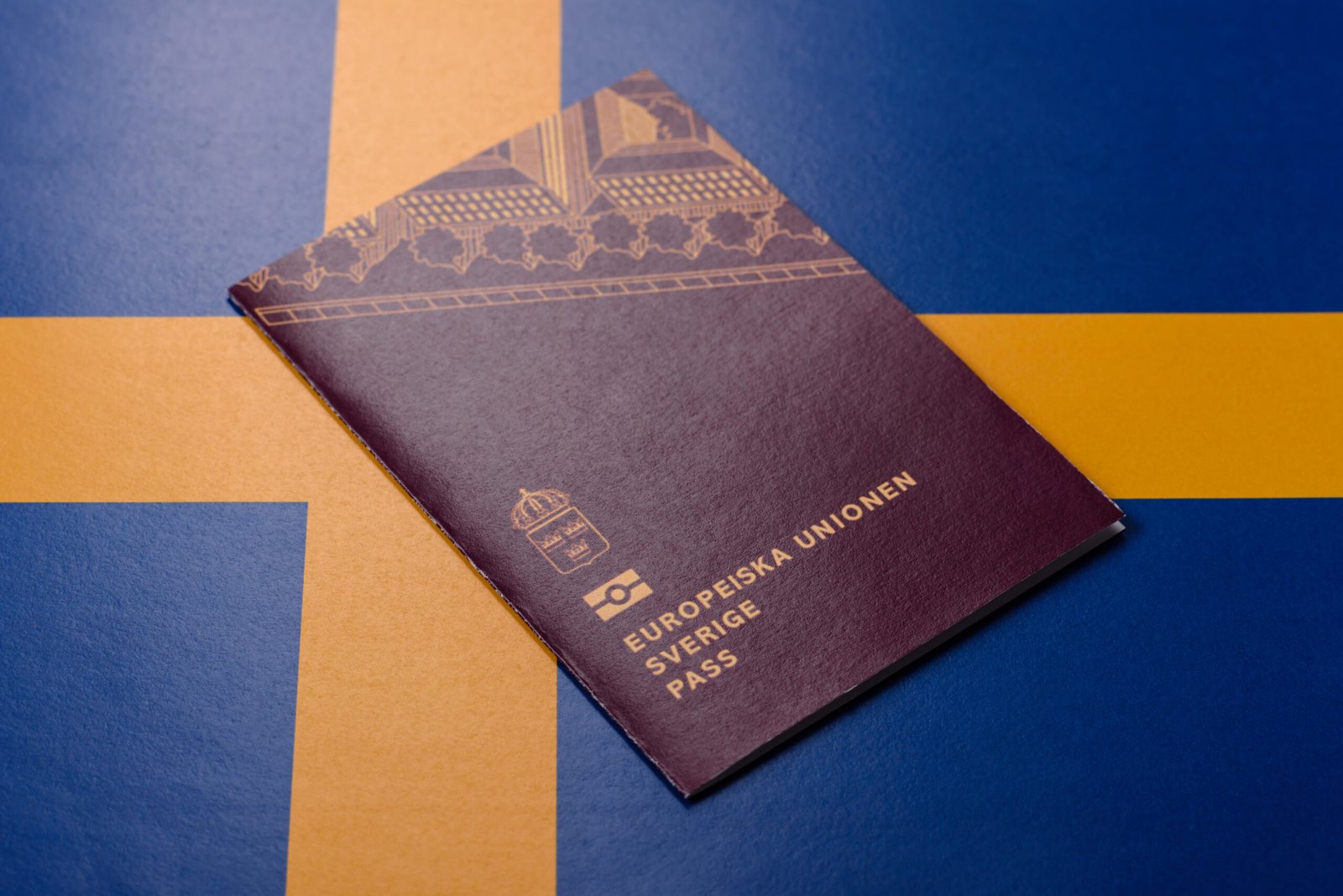
This is not guaranteed advice. Immigration rules in all five countries change frequently — Sweden overhauled its entire citizenship law in 2026 and is now even deporting UK citizens who filed exemptions pre and post Brexit, Finland rewrote its permanent residence system in January 2026, Norway added new language tests in September 2025, and Denmark’s income thresholds reset every January in both left or right governments. Everything below reflects the best publicly available information as of September 2026, gathered from official immigration agencies and specialist legal guides, but only the relevant national immigration agency — Udlændingestyrelsen/SIRI in Denmark, Migrationsverket in Sweden, UDI in Norway, Migri in Finland, or Útlendingastofnun in Iceland — or a qualified immigration lawyer can give advice that applies to a specific case. Treat this as a starting map, not a substitute for checking the source before making any decision.
And do not believe those silly Facebook and TikTok reels that “nearly anyone” can move to Scandinavia or the EU/EEA. Even with determination and a big bank account, it is nearly an impossible task for many and not for the faint of heart.
The shape of it, at a glance
All five countries follow a similar two-step structure: several years of legal residence lead to permanent residency, and permanent residency (plus more years and higher language ability) leads to citizenship. The details of what “several years” means, and what gets tested along the way, differ more than the Nordic countries’ shared reputation for tidy bureaucracy might suggest.
Denmark asks for the most years and the most documentation. Iceland asks for the fewest years but still tests language twice — once for permanent residence, once again at a higher standard for citizenship. Sweden just rewrote its rules from the ground up, nearly doubling its residency requirement overnight. Norway and Finland both added new language tests to their permanent residence stage within the last twelve months. None of these systems are static, which is really the whole point of the disclaimer above.
Years of residence required
The standard-track figures below assume no marriage to a citizen, no refugee status, no Nordic citizenship, and no fast-track exemption — all of which shorten the timeline in every one of these countries and are covered in the country sections further down. However, even with these exemptions, say, through marriage, wait and processing times of one to two decades from start to finish are not unheard of.
Permanent residency, citizenship, language, and money — the comparison table
| Denmark | Sweden | Norway | Finland | Iceland | |
|---|---|---|---|---|---|
| Years to PR (standard) | 8 (4 with extra conditions) | 4 (on a work permit) | 3 (5 for protection-based permits) | 6 (4 on fast tracks) | 4 |
| PR language requirement | Prøve i Dansk 2 (~A2/B1) required for the 8-year route; PD3 (B2) for the 4-year route | None currently required by law | Oral Norskprøven, A2, since Sept 2025 | “Satisfactory” Finnish/Swedish (roughly A2), new from Jan 2026 | 150-hour Icelandic course (85% attendance) or equivalent test |
| PR society/civics test | No separate test at PR stage | No | Samfunnskunnskap (social studies) in a language you understand | No separate civics test | No separate test |
| PR income/self-support | DKK 346,155.57/yr average (2026), one of 4 supplementary conditions | Self-sufficiency required; no fixed published figure for PR itself | NOK 325,400 in the past year (2025 level) | Sufficient means; €40,000/yr income unlocks a 4-year fast track | ISK 259,951/month single, ISK 415,922/month couple (2026) |
| Total years to citizenship (standard) | 9 | 8 (raised from 5, effective 6 June 2026) | 8 (within last 11) | 8 (or 5 with language proficiency) | 7 |
| Citizenship language requirement | Prøve i Dansk 3, B2 | None yet; B1 test planned from Oct 2027 | Oral Norskprøven, B1 | YKI level 3 (~B1.2), Finnish or Swedish | Icelandic test, ~A1–A2 |
| Citizenship civics/society test | Indfødsretsprøven, 45 questions, need 36 correct | Planned, not yet designed | Statsborgerprøven, in Norwegian only | New knowledge test announced for autumn 2026, details pending | No separate written civics test currently |
| Dual citizenship allowed? | Yes, since 2015 | Yes, since 2001 | Yes, since 2020 | Yes | Yes, since 2003 |
A caveat worth repeating: several of these rows are mid-change right now. Sweden’s language and civics tests for citizenship are legislated but not yet built. Finland’s citizenship knowledge test is announced but has no published syllabus. Treat any figure here as “current direction of travel,” not a fixed target.
Denmark
Denmark runs the most document-heavy system of the five, and it’s the only one where permanent residency is graded on a points-like system of supplementary conditions rather than a single bar to clear.
Getting to permanent residence. The baseline route requires eight years of legal residence, no serious criminal convictions, no overdue public debt, employment, and a signed declaration of self-support — plus at least two of four supplementary conditions: passing Prøve i Dansk 2 (roughly A2–B1), an average annual taxable income of at least DKK 346,155.57 over the two years before a decision (the 2026 level; this resets every January), at least three years and six months of full-time employment within the last four years, or passing the active citizen exam. Meet all four supplementary conditions, plus a higher language test (Prøve i Dansk 3, B2) and four years of full-time employment, and the residency requirement drops to just four years — a genuinely fast track, but one that demands more on every other axis to earn it. The application fee is roughly DKK 10,330 at 2026 levels, and processing commonly takes six months to a year.
Getting to citizenship. Danish citizenship (indfødsret) requires nine years of continuous legal residence for most applicants, less for Nordic citizens, refugees, or spouses of Danish citizens under specific rules. Applicants need Prøve i Dansk 3 (B2) — a full level above the minimum needed for permanent residence — and a pass on the Indfødsretsprøven, a 45-question multiple-choice test on Danish democracy, culture, and history where 36 correct answers are required to pass. Approval isn’t purely administrative: successful applicants are named in a naturalization bill that Parliament (Folketinget) votes on twice a year, and attending an in-person ceremony — with a mandatory handshake — is a hard requirement with no exceptions. The application fee is around DKK 4,000, and the whole process, residency plus review, tends to run 10–11 years door to door.
Dual citizenship. Allowed since 1 September 2015. Before that date, naturalizing as Danish meant giving up any prior nationality, and Danes who took another nationality lost their Danish one automatically. People who lost Danish citizenship that way have had a window — running through 30 June 2026 — to reclaim it by simple declaration.
Sweden
Sweden is the country to watch here, because the rules that applied for the last two decades changed mid-2026, and changed for people already in the queue.
Getting to permanent residence. The standard route for work-permit holders is four years of continuous legal residence, self-sufficiency without state benefits, and stable employment (permanent, or a fixed-term contract of at least 18 months remaining at the time of decision). Sweden’s EU Blue Card route can shorten this to about 33 months. Notably, Sweden currently has no formal language test requirement at the permanent residence stage — proficiency is encouraged but not legally required, which sets it apart from every other country on this list.
Getting to citizenship — the part that just changed. Until 5 June 2026, Swedish citizenship required just five years of habitual residence and no language or civics test at all — the lightest-touch system in the Nordics. On 29 April 2026, Sweden’s Parliament approved a substantial rewrite, which took effect 6 June 2026: the residency requirement rose to eight years, a new self-sufficiency requirement was added (recent reliance on state benefits can count against an application), and mandatory language and civics testing was introduced for the first time in Sweden’s history, for applicants aged 18–67. The catch that’s caused the most anxiety: the new rules apply based on when a decision is made, not when the application was filed, so people who applied under the old five-year rule but hadn’t yet received a decision by 6 June 2026 found themselves suddenly needing eight years instead. The language test (basic reading and listening in Swedish) is scheduled to become mandatory from 1 October 2027, or earlier if the government moves faster; the civics test has no live date yet, with a pilot study due by the end of September 2026. Reduced timelines remain for Nordic citizens (four years) and people married to a Swedish citizen for at least two years (three years).
Dual citizenship. Allowed since 1 July 2001, and unaffected by the 2026 reform. Sweden does not require giving up a prior nationality, though the origin country’s own rules may still apply.
Norway
Norway tightened its language requirements at both stages within roughly the last year, and now tests language twice, at two different levels, in two different formats. Wait times are excruciating: up to two years or longer for a decision on part of the process to move you to the next step.
Getting to permanent residence. Most applicants need three continuous years of legal residence (five years for permits based on asylum/protection, or family reunification linked to that group), an own income of at least NOK 325,400 in the past year, and — new since 1 September 2025 — a passed oral Norwegian test at A2 level (Norskprøven) plus a social studies test (Samfunnskunnskap) that can be taken in a language the applicant understands. This replaced an older system that only required attending language and social studies courses (50 hours, then raised to 75) rather than passing tests on the content. The coursework is still available but only to help you pass the test. Exemptions exist for documented health conditions and a few other specific situations, listed on UDI’s website.
Getting to citizenship. The standard path requires eight years of residence within the last eleven, plus holding a permanent residence permit in most cases. The bar rises meaningfully from the PR stage: applicants need B1-level oral Norwegian — a full step up from the A2 required for permanent residence — and must pass the Statsborgerprøven (the citizenship civics test), which unlike the PR-stage social studies test is administered in Norwegian only. Reduced residency periods apply for people with sufficient income over six of the last ten years, asylum-based permits (seven years), stateless applicants (three years, as of a 2025 policy change, without needing permanent residence first), and spouses of Norwegian citizens. Test fees run roughly NOK 900–1,200.
Dual citizenship. Allowed since 2020 — a relatively recent shift, and one that removed the requirement to formally renounce a prior nationality to become Norwegian.
Finland
Finland just replaced its entire permanent residence framework, effective 8 January 2026, adding language and work-history requirements that simply didn’t exist before.
Getting to permanent residence. Under the new system, the standard path requires six years on a continuous residence permit, at least two years of work history in Finland, and satisfactory Finnish or Swedish language skills (roughly A2, waived for applicants 65 or older) — none of which were required under the old four-year rule that applied to anyone who applied before 8 January 2026. Three faster alternatives exist, all needing only four years of residence: an annual income over €40,000 (no language or work-history test at all), a recognized master’s, licentiate, or doctoral degree plus two years of work history, or high language proficiency plus three years of work experience. Children can qualify for a related P-EU permit after five years if there are sufficient financial resources, without a language test.
Getting to citizenship. The general residency requirement is eight years (extended from five in an October 2024 reform), dropping to five years for anyone who already meets the language requirement, and to two years for Nordic citizens or the spouses of Finnish diplomats. The language bar is the YKI test (National Certificate of Language Proficiency) at intermediate level (grade 3), roughly equivalent to B1.2, in Finnish or Swedish, requiring at least grade 3 in one oral and one written subtest. Applicants must also show they haven’t relied on unemployment benefit or social assistance for more than three months total across the prior two years, a rule tightened again for applications filed on or after 17 December 2025. A new citizenship knowledge test is legally planned but not yet operational — Migri says preparation materials and registration details are still being finalized, with more information expected in autumn 2026. Up to 365 days spent abroad during the qualifying period are tolerated, with no more than 90 of those days in the year immediately before the decision.
Dual citizenship. Finland does not require giving up an existing nationality to naturalize. Whether the reverse is true — whether the country of origin lets someone keep that nationality after taking Finnish citizenship — depends entirely on that country’s own law, not Finland’s.
Iceland
Iceland has the shortest total timeline to citizenship on this list, but it’s also the only country here that tests language ability twice at two different institutions — once through a language-school course for permanent residence, again through a separate government-administered exam for citizenship.
Getting to permanent residence. Most applicants need four continuous years of residence (three for the spouse of an Icelandic citizen; automatic for Nordic citizens), financial self-sufficiency at a minimum of ISK 259,951/month for a single applicant or ISK 415,922/month for a married couple (2026 levels), and either completion of a 150-lesson Icelandic-for-foreigners course with at least 85% attendance, or a pass on a separate Icelandic-language assessment test. Exemptions apply for applicants over 65 with at least seven years of residence, documented medical reasons, or prior education completed in Icelandic.
Getting to citizenship. Naturalization requires seven years of continuous legal residence (four years for Nordic citizens, three years for the spouse of an Icelandic citizen who has themselves held citizenship for at least five years, or four years of cohabitation, one year for former Icelandic citizens, five years for stateless persons or recognized refugees), holding a permanent residence permit, and passing a separate Icelandic language test — pitched at roughly A1–A2 and covering speaking, listening, reading, and writing — distinct from the course-based proof accepted at the PR stage. Applicants also can’t have spent more than 90 days outside Iceland in any 12-month period during the qualifying years. Unusually among these five countries, Icelandic naturalization is formally an act of the Althingi (Parliament) rather than a purely administrative decision, though in practice routine applications are processed in a standardized way. As of January 2026, the application fee is 60,000 ISK, with the language test itself costing an additional 40,000 ISK.
Dual citizenship. Allowed since 2003. No renunciation of a prior nationality is required.
Patterns worth noticing across all five
The language bar consistently climbs between permanent residence and citizenship, never the reverse — Denmark goes from PD2 to PD3, Norway from A2 to B1, Iceland tests twice at two different bodies. Nobody offers a shortcut around it: even Sweden, the last holdout with no citizenship language test at all, has one legislated and scheduled.
The last twelve months have been unusually active for reform across the board — Norway’s language rules for permanent residence (September 2025), Finland’s entire permanent residence overhaul (January 2026), and Sweden’s citizenship rewrite (June 2026) all landed within roughly a year of each other, and all three made the path longer or harder rather than shorter. None of that is a signal these systems have settled; if anything it’s the opposite. Anyone planning a multi-year timeline around a specific rule set should check that rule’s status every year, not just at the start of the process, because Sweden’s mid-application rule change shows that the goalposts can move while an application is already sitting in the queue.
Every country here allows dual citizenship, but every one of them also mentions the same caveat: the destination country dropping its own restriction doesn’t override whatever the country of origin’s law says. That check runs in both directions and belongs on the to-do list before, not after, applying.
Sources
- Apply for a permanent residence permit — New i Denmark (SIRI)
- Permanent Residency in Denmark — exploringdenmark.com
- Danish Citizenship — Naturalisation Requirements & Process 2026 — exploringdenmark.com
- Denmark — Citizenship — Expat Focus
- Conditions for foreign citizens’ acquisition of Danish citizenship — Life in Denmark
- Indfødsretsprøven — Danish Language Test for Citizenship — UC Plus
- Sweden: Parliament Approves New Citizenship Law Requiring Language and Knowledge Tests — Library of Congress
- Sweden Citizenship Requirements 2026: New 8-Year Rule Guide — VisaVerge
- Sweden — Citizenship — Expat Focus
- Sweden Permanent Residence Permit: Requirements, Timeline & the PR Process — Smartly.se
- Permanent residence permit — UDI
- The residence period for permanent residence permits — UDI
- Want to apply: Apply for a permanent residence permit — UDI
- Norwegian Citizenship Requirements 2026: Do You Qualify? — Kvest
- Norwegian Language Requirements 2026 — Kvest
- Amendments to Aliens Act regarding permanent residence permits 2026 — Migri
- Permanent residence permit — Migri
- Finland: Permanent Residence Eligibility Restrictions Forthcoming — Fragomen
- Period of residence — Migri
- Finnish citizenship FAQ — Migri
- Language skills — Migri
- Finnish Citizenship 2026: Complete Guide to 8/5 Years, Language — ENB
- Permanent residence permit — Ísland.is
- Iceland Residence Permit 2026: Types, Requirements & Costs — Consiliojus
- Icelandic Citizenship 2026 | Requirements & 7-Year Timeline — movingtoiceland.com
- How to Become an Icelandic Citizen: Requirements & Pathways — LegalClarity
Where to check for yourself
- Denmark: nyidanmark.dk
- Sweden: migrationsverket.se
- Norway: udi.no
- Finland: migri.fi
- Iceland: island.is and utl.is







 English