
The Nordic region is one of the few places left where a traveler can plan an entire trip around animals rather than cities: puffins by the hundred thousand, orcas hunting in fjords, wild reindeer that have never been domesticated, and musk oxen that look like they wandered out of the last Ice Age — because, in a sense, they did. Timing matters more here than almost anywhere else in Europe. Miss the window by a few weeks and the puffins are gone, the whales have followed the herring elsewhere, or the fox has swapped its photogenic white coat for a duller summer brown.
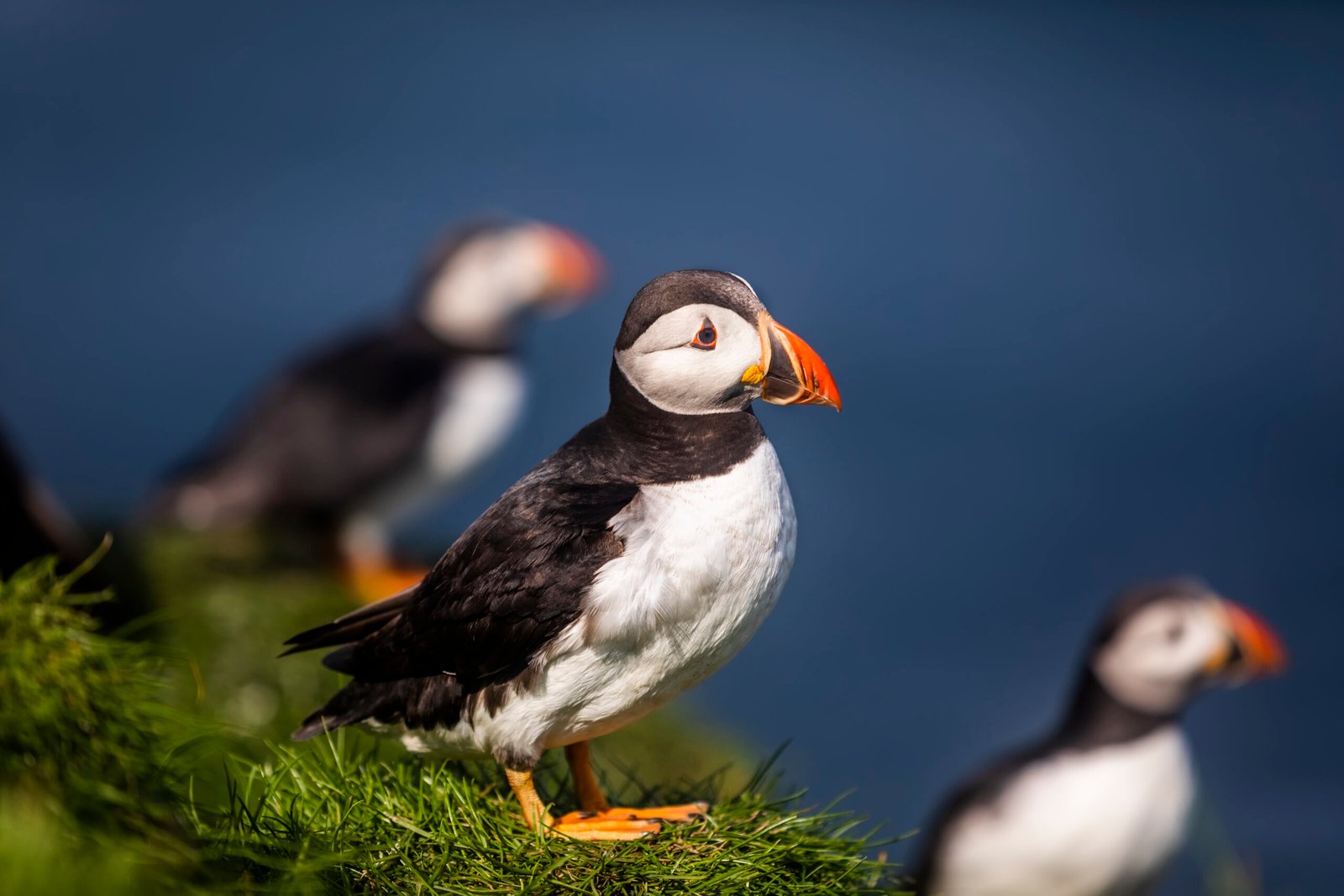
Puffins: Iceland holds most of them, but they’re not exclusive
Iceland hosts roughly 60 percent of the world’s Atlantic puffins — something like two million breeding pairs — but the same species nests across the North Atlantic, from the Faroes to Norway to Greenland’s coasts. Puffins spend most of the year at sea and only come ashore to breed, which is why the viewing window is so tight everywhere: they arrive in spring, raise a single chick in a burrow, and are back on the open ocean by late summer.
| Country | Best locations | Best time |
|---|---|---|
| Iceland | Látrabjarg cliffs (Westfjords, Europe’s largest bird cliff), Vestmannaeyjar/Heimaey (largest single colony, ~1.2 million pairs), Borgarfjörður eystri (best close-up viewing platform), Dyrhólaey and the South Coast | May to mid-August; peak activity June–early August |
| Norway | Røst in the Lofoten archipelago (Norway’s largest colony, up to 300,000 pairs), Runde Island near Ålesund (most accessible), Bleiksøya in Vesterålen | Mid-April to early August; some islands mark 14 April as the traditional arrival date |
| Faroe Islands | Mykines, the westernmost and most famous puffin island, reachable by boat or helicopter from Vágar | Early May to end of August; the birds leave in early September |
| Greenland | Scattered coastal colonies, notably around Disko Bay and the southwest coast, though in far smaller numbers than Iceland, Norway or the Faroes | June to August |
A practical note that applies everywhere on this list: puffins are protected, and the ethical version of “getting close” is a boat tour or a marked viewing platform, not scrambling off-trail toward a burrow. Several colonies, including Bleiksøya in Norway, prohibit landing on the island entirely.
Whales: different countries, different species, wildly different seasons
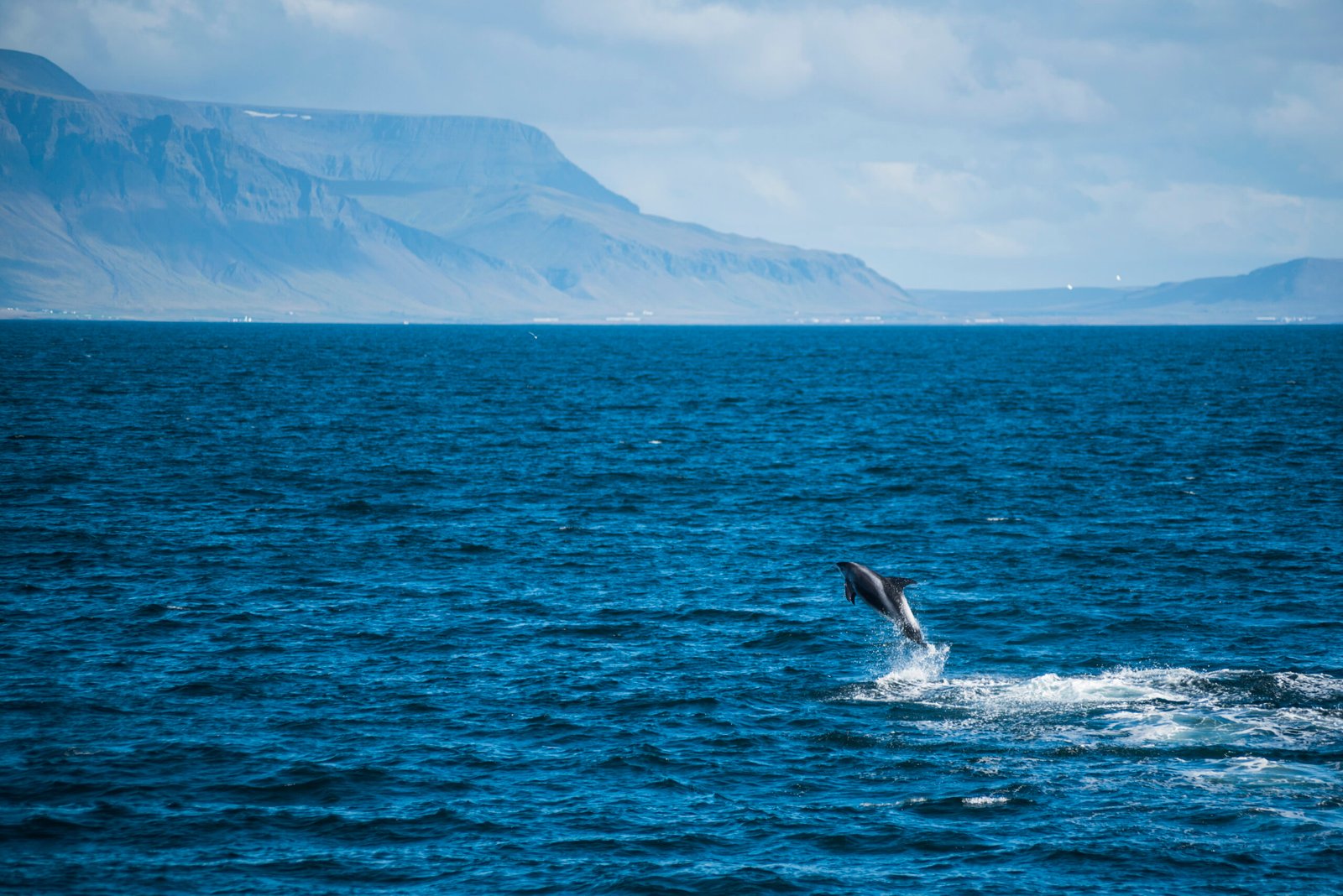
This is the category where season matters most, because “whale watching in the Nordics” actually describes several unrelated phenomena happening at different times of year in different places.
Let’s be honest, though. Whale hunting is still a thing for the Nordics: Norway: Hunts minke whales in the North Atlantic under a formal objection to the International Whaling Commission (IWC) moratorium. Iceland: Hunts fin and minke whales under a reservation, though the government is considering a permanent ban. Denmark / Greenland: Local Inuit communities hunt whales for traditional use.
Iceland — Húsavík and Skjálfandi Bay. Iceland’s northern whale-watching capital sees 12 species over the course of a year, with minke whales the most reliable sighting and humpbacks, white-beaked dolphins, and the occasional blue whale rounding things out. Sightings run essentially year-round from Húsavík, with summer (June–August) offering the calmest seas and longest days.
Norway — Tromsø in winter, Andenes in summer. Norway splits cleanly into two separate trips. From late October to the end of January, enormous herring shoals overwinter in the fjords around Skjervøy and Kvænangen near Tromsø, and hundreds of orcas and humpback whales follow them in — a spectacle made stranger by the polar night, when the sun doesn’t rise at all for several weeks. Separately, from May to mid-September, sperm whales gather year-round off Andenes and Stø in Vesterålen, drawn by a deep submarine canyon that supports the squid they hunt. These are genuinely different trips with different animals; the Lofoten Islands, despite the scenery, are not actually a strong whale-watching base.
Faroe Islands. Less commercially developed for whale tourism than Iceland or Norway, though fin whales and the occasional northern bottlenose whale turn up on crossings between Iceland and the Faroes. It’s worth knowing, and worth stating plainly, that the Faroe Islands are also where the controversial pilot whale drive hunt (grindadráp) still takes place — a traditional, government-regulated harvest that draws regular international criticism from marine conservation groups. Visitors interested in whale-watching tourism and visitors aware of the hunting practice are often, awkwardly, looking at the same animals.
Greenland — Disko Bay. Humpback, minke, fin and (more rarely) bowhead whales gather in Disko Bay and around Ilulissat and Qeqertarsuaq in summer, often surfacing among floating icebergs — a backdrop no other whale-watching destination in this list can match. In spring, with considerably more luck, narwhals, belugas and bowheads can be spotted near the ice edge further north, with Qaanaaq offering the best odds for narwhal specifically. Because most of Greenland sits above the Arctic Circle, summer whale tours often run under the midnight sun.
Reindeer: wild versus herded, and why that distinction matters
“See a reindeer in Lapland” and “see a wild reindeer in Norway” are two different experiences, and conflating them is a common tourist mistake.
Semi-domesticated, herded reindeer are the ones most visitors actually encounter — grazing beside highways, pulling sleighs at farms near Luosto and Saariselkä in Finnish Lapland, or gathered for the herders’ winter round-ups. These animals belong to Sámi herding families (in Finland, herding is open to any resident, Sámi or not; in Norway and Sweden it remains a protected Sámi right), and they’re genuinely part of a living economy, not a photo prop, even where tourism has grown up around them.
Wild reindeer are a different animal entirely, in the practical sense. Dovrefjell-Sunndalsfjella National Park in central Norway protects mainland Europe’s last genetically pure wild mountain reindeer population — animals never crossbred with domesticated stock — and they are shy, keep their distance from the marked trails, and require patience rather than a farm visit.
| Type | Where | Best time |
|---|---|---|
| Herded/semi-domesticated | Finnish, Swedish and Norwegian Lapland (farms and safaris near Rovaniemi, Luosto, Kiruna, Kautokeino) | Winter (Dec–Mar) for sleigh rides and round-ups; spring for calving (visits often restricted); summer for free-roaming encounters |
| Wild, unherded | Dovrefjell-Sunndalsfjella National Park, Norway | Spring and autumn migrations are most reliable; requires hiking and binoculars, and a 200-meter distance is enforced |
| Wild, Arctic | Svalbard (a distinct, smaller subspecies) | June–August, alongside other Svalbard wildlife |
Musk ox: Greenland’s native, Norway’s reintroduced population
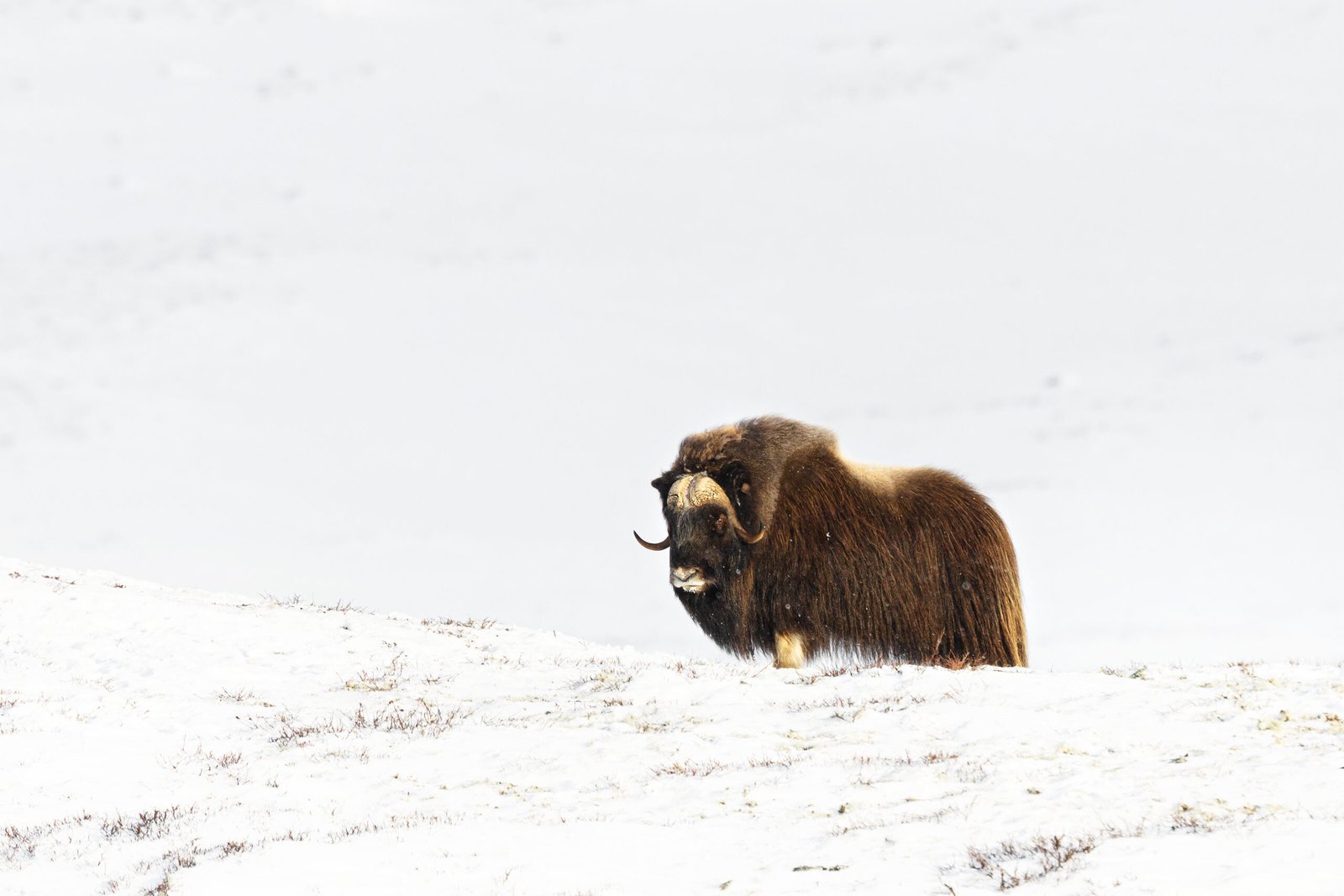
Musk oxen are native to Greenland and were wiped out of mainland Europe during the last Ice Age. Norway’s population exists only because animals were brought over from Greenland’s Kangerlussuaq region and released into Dovrefjell in stages between 1932 and 1953 — an earlier reintroduction attempt near Ålesund in the 1920s having failed, and a separate attempt to establish them on Svalbard also failing.
- Norway (Dovrefjell): roughly 200–300 animals, walkable from Kongsvoll or Oppdal via the marked Musk Ox Trail. Summer (June–September) offers daily guided safaris; winter visits require skis or snowshoes as the herd moves deeper into the plateau, and late September’s rutting season brings dramatic male-on-male confrontations for photographers willing to hike.
- Greenland (Kangerlussuaq and the interior): the native source population, seen on overland safaris and some Disko Bay cruise itineraries, alongside Arctic hares, foxes, and reindeer. Summer is the practical season for access.
A 200-meter distance is standard advice in both countries — musk oxen look placid but will charge if they feel cornered.
Other animals worth building a trip around
Arctic fox — Hornstrandir, Iceland. The Westfjords’ Hornstrandir Nature Reserve has been uninhabited by humans since the 1950s and is the only place in Iceland where Arctic foxes are fully protected from hunting, which is why they’ve grown unusually tame. Two distinct trips exist here: late June and July for cubs and brown summer coats, or February and March for the classic white winter coat (only about a third of Iceland’s foxes actually turn white). Access is by boat from Ísafjörður only — no roads reach the reserve.
Polar bears — Svalbard. Technically visible year-round, but May through September is the realistic window, once the sea ice around the archipelago breaks up enough for expedition ships to reach the areas bears actually frequent — mainly the pack ice north of Spitsbergen. Svalbard also hosts its own distinct, smaller subspecies of reindeer, walrus, and seals in the same June–August window, making it the single best stop on this list for volume of species in one trip.
Orcas outside the winter herring season. Worth flagging separately from the Norway whale entry above: orcas are one of the few animals on this list with two genuinely different behavioral contexts — the winter herring-hunting spectacle near Tromsø, and much rarer, more opportunistic sightings elsewhere in Icelandic and Norwegian waters year-round.
A rough season-by-season cheat sheet
| Season | What’s active |
|---|---|
| Late winter (Feb–Mar) | Arctic fox in white coat (Iceland); reindeer sleigh season and herding round-ups (Lapland); polar bear season not yet open (Svalbard) |
| Spring (Apr–May) | Puffins arriving (Norway, Iceland); reindeer calving (Lapland — access often limited); narwhal/beluga/bowhead season begins (northern Greenland) |
| Early summer (Jun) | Puffin season in full swing everywhere; musk ox safaris open (Norway, Greenland); polar bear and Svalbard reindeer season opens; Arctic fox cubs (Iceland) |
| High summer (Jul–Aug) | Peak puffin viewing across all four countries; Disko Bay whales (Greenland); sperm whales off Andenes (Norway); wild reindeer more visible on migration (Norway) |
| Autumn (Sep–Oct) | Musk ox rutting season (Norway); puffins departed; whale season shifting north toward Tromsø’s winter phase |
| Winter (Nov–Jan) | Orca and humpback herring spectacle (Tromsø, Norway); reindeer herding and sleigh season (Lapland); polar night limits most other viewing |
Sources
- Iceland Tours — Best Places to See Puffins in Iceland
- Guide to Iceland — The Best Places to Spot Puffins
- Life in Norway — Where to See Puffins in Norway
- Novo Monde — See the Puffins on Runde Island
- Guide to Faroe Islands — Mykines
- Húsavík Whale Watching Tour — Adventures.com
- Rødne — Why Do Whales Come to Tromsø in Winter?
- Arctic Whale Tours — Whale Watching in Norway: Summer vs. Winter Locations
- Greenland Travel — Top 10 Western Greenland Attractions: Whale Watching
- Whaletrips — Whales in Greenland
- Fjord Norway — Dovrefjell-Sunndalsfjella National Park
- Life in Norway — Musk Oxen of Dovrefjell
- Photo Tours Norway — Musk-Ox Rutting Season
- National Parks Finland — Finnish Lapland
- The Hidden North — How to See Reindeer in Finland
- jvn.photo — Photographing Arctic Foxes in Iceland
- Poseidon Expeditions — The Best Time to Visit Svalbard
- Steppes Travel — Best Time to Visit the Arctic






 English