
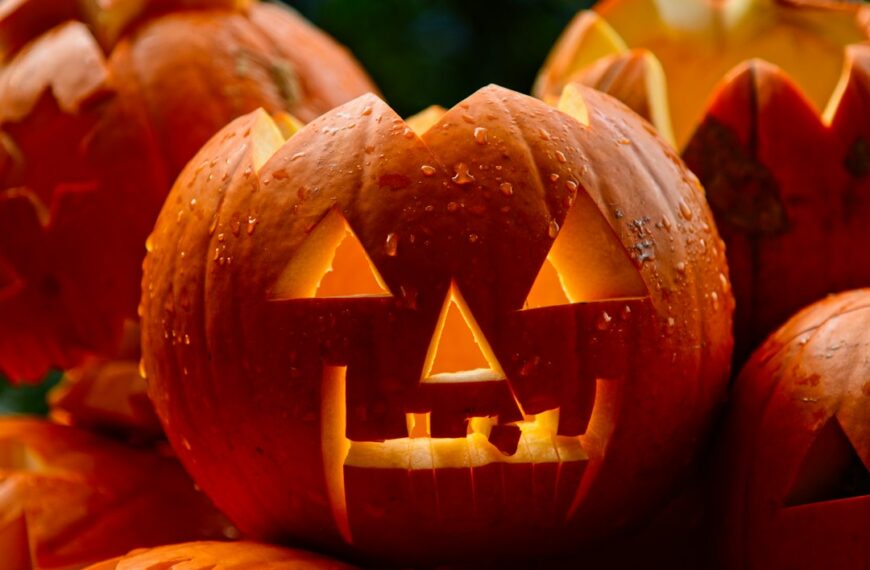
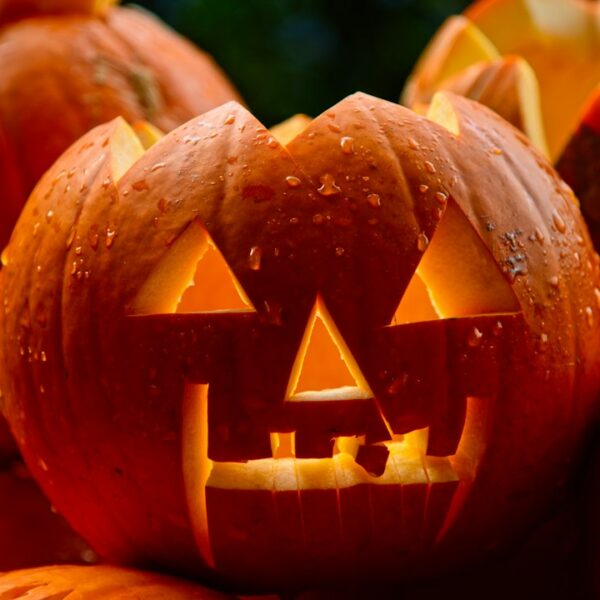
On Saturday, 31 October 2026, Halloween and All Saints’ Day land on the same date in Finland and Sweden. In Helsinki, the city’s cemeteries run a candle event from 16:00 to 19:00, with children invited to bring flashlights. In Espoo, thousands of candles are planned for the churchyards. Elsewhere in both countries, costumed teenagers will be heading to parties.
The coincidence shows the basic situation in the region. Halloween proper is a recent import. The things it does, which are honoring the dead, wearing masks and extracting sweets at the door, were already in the Nordic calendar, just on other dates.
A very young import
Sweden’s church describes Halloween there as growing up in the 1990s. The Norwegian magazine Klikk dates its full arrival to Sweden in 1995 and Norway in 2000. The Norwegian encyclopedia Store norske leksikon agrees that a breakthrough came around the turn of the millennium. Yle says Finland has embraced it increasingly over recent decades.
Norway’s trick-or-treat phrase has a traceable origin. “Knask eller knep” first appeared in the 1993 Donald Duck book Eventyrlig snadder, translated by the brothers Henning and Espen Hagerup. Norwegian children met Halloween in a comic book before they met it on their doorsteps.
The popular claim that Nordic Halloween descends from the Celtic Samhain is weak. Norway’s consumer research institute Sifo, as summarized in Dagbladet, concluded that no direct line runs from Samhain to the Norwegian version, which comes from the American festival of the 1800s. The Nordic region does not need a Celtic ancestor. It has its own.
The Saturday that took over
Finland and Sweden both keep All Saints’ Day on the Saturday falling between 31 October and 6 November. Finland’s Lutheran church has used the nearest Saturday since the mid-1950s. In Sweden the day is strongly tied to candles on graves.
The Nordic Museum in Stockholm makes the point that this scene is newer than it looks. Grave candles were once lit mainly at Christmas, and the custom of lighting them on All Saints’ spread widely only after the Second World War. The candlelit cemetery that Swedes and Finns treat as ancient is largely a postwar habit. It still does Halloween’s old job: the dead are close, and the living go out in the dark to meet them.
Kekri, the Finnish autumn of the dead
Finland’s real counterpart is Kekri, which had no fixed date. Each farm held it when the harvest and the autumn slaughter were finished. Pirjo Vuorinen of the Jyväskylä University Museum told Yle that Kekri was the last chance to eat fresh food before spring, and that it combined what Finns now associate with Christmas and New Year.
The spirit side is where it overlaps with Halloween. According to Finland Naturally, households left a table of food and drink for the dead and went to the sauna themselves, leaving the house to the visitors. Young people dressed as the horned kekripukki, the Kekri goat, with a fur coat worn inside out, and went from house to house asking for food or beer. History Extra adds that a household head might pour a line of ale from the road to the door to invite ancestors in.
Kekri declined with industrialization in the early 1900s but lasted longest in eastern Finland. Much of it was absorbed into All Saints’ Day in the 1800s and into the Christmas table, where the porridge once set out for the spirits survives.
An elf sacrifice and a locked door
The oldest documented autumn rite in the region is Norse. Winter Nights (vetrnætr) marked the start of winter, and Icelandic sagas tie it to a sacrifice to Freyr. Two sacrifices belonged to the season: the public dísablót, and the álfablót, held privately at each homestead for the local spirits, with strangers excluded.
The best surviving account is a complaint. Around 1019 the Icelandic skald Sigvatr Þórðarson crossed into Sweden on a diplomatic errand for King Olaf of Norway and found the doors shut. At one farm, a woman drove him off like a wolf, saying the household was holding a sacrifice to the elves. By one scholarly reading, he was turned away from four farms. The first, probably Stora Hov in Västergötland, was where Sigvatr, a Christian, told the occupants the trolls could have them.
A skald getting locked out of a family ritual at the beginning of winter is as close to a Viking-age Halloween as the sources get. It is a closed-door night about ancestors and spirits, with an outsider on the step.
In Iceland, the Grapevine reports, Winter Nights was once a popular time to marry, and Ásatrú followers still observe it. The belief that elves and the dead wander about moved to the night of 6 January.
Where the costumes went
Norway and Denmark kept costumes and door-to-door begging but parked them in other seasons.
In Norway, julebukk (Christmas goat) visits have a long history in forms with horned masks at midwinter. The modern version, children singing for sweets, dates only from the 1960s. Some Norwegians still prefer it to Halloween.
In Denmark the stand-in is fastelavn, held before Lent. Children dress up, and the central game is hitting the cat out of the barrel. Historically a live cat was in the barrel, as a way to drive evil off, and the last known case was in the 1880s. A black cat is now painted on the barrel, and the one who breaks the last board is crowned kattekonge, cat king. Danish parents say Halloween costumes rank higher because Halloween gets the bigger budget.
Iceland’s singing for sweets
Iceland’s costume day is Öskudagur, Ash Wednesday. Costumed children go from shop to shop singing for candy. They go to businesses, not private homes, and they have to perform, which makes Icelandic trick-or-treating something closer to busking.
The older custom was pranks. Icelandic author Alda Sigmundsdóttir recalls children pinning small ash-filled pouches on adults, and the north’s Akureyri tradition of beating a barrel that supposedly held a dead cat. The Grapevine says the pouch custom goes back to the 1700s and had a gendered rule: women hung ash on men, and men hung stones on women. The costumes themselves moved to Öskudagur in 1917.
Halloween (hrekkjavaka) is a recent addition, and adults now hold hallóvín parties.
The Faroe Islands: lost at sea, and trolls on Twelfth Night
The Faroes are the region’s most reluctant Halloween adopters. The blog All Things Nordic reports that 1 November, Alla halganna dagur, is still kept to remember Faroese lives lost at sea in a century of small-boat fishing. Costume parties and trick-or-treating exist in Tórshavn, mostly among children and teenagers. A modern local ritual is driving to the tunnels near Klaksvík, where a 2010 recording is said to have captured screams.
The Faroese version of a night of the roaming supernatural comes in January. Trøllanes (“troll peninsula”) on Kalsoy gets its name from a legend. Every Twelfth Night, trolls came down from the mountains and the villagers fled to Mikladalur. One year an old woman too frail to travel hid under the table. When the trolls began to dance, she cried out the name of Christ and they left for good. It is a survival story in which the ghost-night is an annual flight.
Fastelavn also exists on the islands. A 2010 panorama from Sumba shows the cat-barrel game.
Greenland: Mitaartut
Greenland has the most vivid analogue, and it falls in the first week of January. The masked visitors are called mitaartut, and the custom, mitaarneq, means “cutting faces”: soot-smeared and string-distorted faces, or masks. The visitors knock, enter, stay silent, and try to remain unrecognized while the hosts guess. Atlas Obscura’s 2023 account shows regional variation. In Nuuk it is wholesome, with dancing and treats. In Ilulissat, Arnánguak Skifte Lynge says “it’s about being scary, really scary”, with older mitaartut carrying harpoons, whips or chains and chasing people through the dark.
The origin is contested. Randi Sørensen Johansen of the Greenland National Museum links it to an old Inuit fertility ritual and the Sea Woman myth. Ethnologist Birgitte Sonne of the University of Copenhagen finds the oldest source on masked Christmas visitors in the 1820s, and says the demand for silence and anonymity likely came from Danish Epiphany customs. The result is a blend of Inuit and Danish elements. Inge Kleivan’s study Mitârtut links it to Sea Woman ritual in West Greenland.
Greenlandic mask traditions run deeper than this. Visit Greenland dates mask dancing to about 4,000 years ago, notes that missionaries forbade it, and says it was kept up in secret in the north and east. Today’s door-to-door “trick or treat” on 31 October is a separate, imported habit.
The calendar at a glance
| Place | Imported Halloween | Older counterpart | When |
|---|---|---|---|
| Finland | Parties, mostly among youth | Kekri; All Saints’ candles | Autumn; Saturday, 31 Oct to 6 Nov |
| Sweden | Since the 1990s | All Saints’ weekend, grave candles | Saturday, 31 Oct to 6 Nov |
| Norway | Around 2000 | Julebukk; All Saints’ Day | Midwinter; first Sunday of November |
| Denmark | Growing | Fastelavn, cat-barrel | Before Lent |
| Iceland | Hrekkjavaka, recent | Öskudagur; Winter Nights | Ash Wednesday; start of winter |
| Faroe Islands | Tórshavn, tunnels near Klaksvík | Lost-at-sea remembrance; Twelfth Night trolls | 1 Nov; 6 Jan |
| Greenland | Door-to-door, recent | Mitaartut; mask dancing | Around 6 January |
What the pattern shows
Halloween did not need to be invented in the North, because its components were already there. The Reformation stripped All Saints’ Day of most of its content, and the dead, masks and begging reappeared under Shrovetide, Christmas and Epiphany. Finland and Sweden keep a clean version in cemetery candles, and Greenland keeps the most unsettling one in its January masks.
Anyone in the region this week has options. On Saturday evening, Helsinki’s cemeteries are open late. On 1 November, Danes and Norwegians mark All Saints’ Day. For the full effect, Ilulissat on 5 and 6 January is the place to be, ideally without a harpoon-carrying stranger around the corner.
Sources
- Atlas Obscura, Greenland’s mitaartut tradition
- Visit Greenland, Mitaartut and mask dance
- All Things Nordic, Halloween and the Nordic countries and Faroe Islands entry
- Wikipedia, Trøllanes
- 360cities, Halloween in Sumba
- Yle, Kekri and Christmas foods
- Finland Naturally, Kekri
- History Extra, Kekri
- Wikipedia, Kekri
- Yle, All Saints’ Day and Halloween in Finland
- MyHelsinki, Muistojen puutarhat
- Espoon seurakuntayhtymä press release
- Nordiska museet, All Saints’ Day
- Svenska kyrkan, Allhelgona
- Store norske leksikon, Halloween
- Klikk, 20 facts about Halloween and Hvorfor feirer vi Halloween?
- Dagbladet, Sifo on Norwegian Halloween
- Wikipedia, Fastelavn and The Local Denmark, fastelavn
- Guide to Iceland, Alda Sigmundsdóttir on Öskudagur and Grapevine on Öskudagur
- Grapevine, Veturnætur
- Wikipedia, Winter Nights and Vetrnætr
- Wikipedia, Austrfararvísur
- Handwiki, Álfablót
- Wellendorf, Austrfararvísur and interreligious contacts

 English