
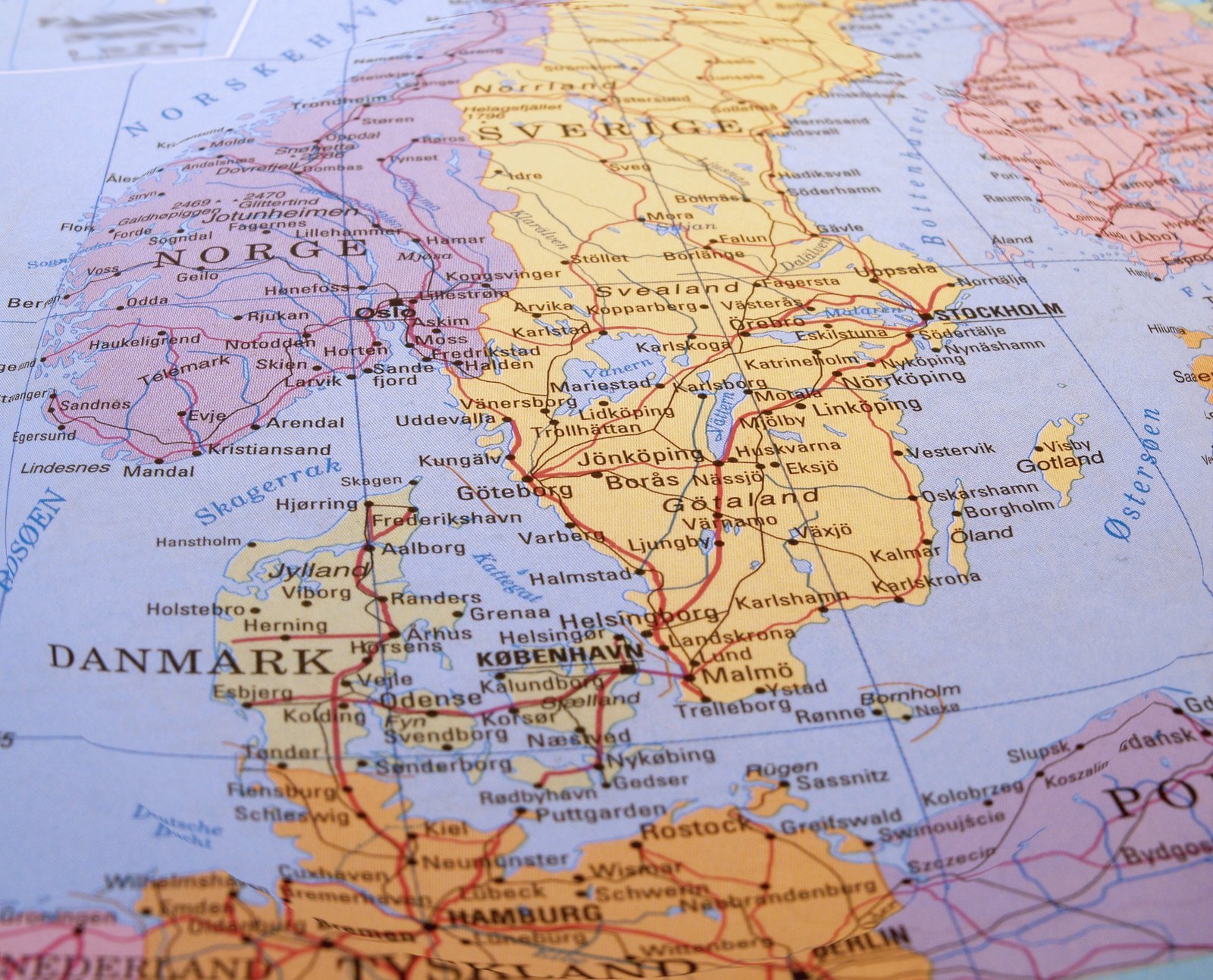
Nordic Languages Connection
Exploring the linguistic relationships between Denmark, Norway, Sweden, Greenland, and Iceland
North Germanic Language Family Tree
Proto-Norse
200-800 AD
Old Norse
800-1300 AD
West Norse
Developed into:
Old Norwegian
→ Modern Norwegian
Old Icelandic
→ Modern Icelandic
East Norse
Developed into:
Old Danish
→ Modern Danish
Old Swedish
→ Modern Swedish

Denmark
Official language: Danish
Danish has heavily influenced Norwegian (Bokmål) and was the official language of Norway until 1814. It also influenced Icelandic vocabulary during Danish rule.

Norway
Official languages: Norwegian (Bokmål & Nynorsk)
Bokmål is heavily influenced by Danish, while Nynorsk is based on Norwegian dialects. Norwegian is mutually intelligible with Swedish and Danish.

Sweden
Official language: Swedish
Swedish is the most widely spoken North Germanic language. It’s mutually intelligible with Danish and Norwegian, with closer intelligibility to Norwegian.

Iceland
Official language: Icelandic
Icelandic has changed very little since the Viking Age. Modern Icelanders can still read Old Norse sagas. The language is conservative in grammar and vocabulary.

Greenland
Official languages: Greenlandic (Kalaallisut), Danish
While Danish is spoken due to colonial history, Greenlandic is unrelated to Nordic languages. It’s part of the Inuit language family, showing the cultural diversity of the region.
Mutual Intelligibility
Danish & Norwegian
89% lexical similarity
Norwegian & Swedish
93% lexical similarity
Danish & Swedish
85% lexical similarity
Icelandic & Norwegian
55% lexical similarity
Historical Linguistic Timeline
200-800 AD: Proto-Norse
The common ancestor of all North Germanic languages, spoken in Scandinavia during the Migration Period.
800-1300 AD: Old Norse
The language of the Vikings, spreading to Iceland, Greenland, and other North Atlantic islands through Norse expansion.
1300-1500: Language Divergence
Old Norse splits into West Norse (Norway, Iceland) and East Norse (Denmark, Sweden). Greenlandic Inuit language begins to dominate in Greenland.
1500-1800: Reformation & Standardization
Bible translations help standardize Danish, Swedish, and Norwegian (Dano-Norwegian). Icelandic remains conservative. Danish becomes official in Norway and Iceland.
1800-Present: National Languages
Norwegian develops Nynorsk as a alternative to Dano-Norwegian. Icelandic language purification movement. Greenlandic gains official status alongside Danish.
Did You Know?
Icelandic Sagas
Modern Icelanders can read 13th-century sagas in their original language, a unique feature among Germanic languages.
Norwegian Variants
Norway has two official written forms of Norwegian: Bokmål (book language) and Nynorsk (new Norwegian).
Greenlandic Complexity
Greenlandic is a polysynthetic language where single words can express what would be a whole sentence in English.





 English