
From criminalization and invisibility to equal rights and political mainstreaming
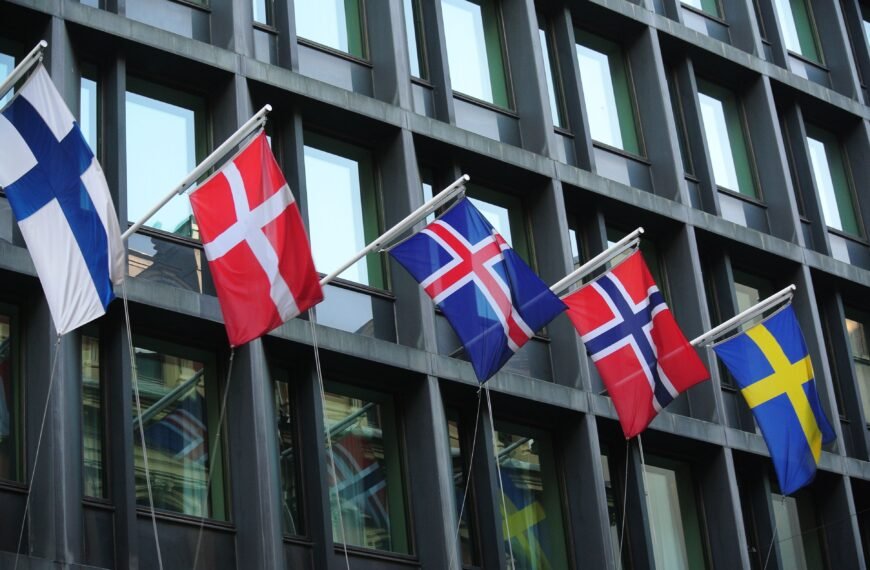
The Nordic countries — Denmark, Sweden, Norway, Finland, and Iceland — are often ranked among the most LGBTQ+ friendly in the world. That reputation rests on a long arc of legal reform, organized activism, cultural change, and political commitment. This history shows how resistance evolved into rights, and how LGBTQ+ politics became a standard part of public life in the region.
Early Legal Context: Criminalization to Decriminalization
Across the Nordic region, historical legal codes reflected religious and moral norms. Homosexual acts between men were criminalized in several territories, often under general “indecency” or sodomy provisions, while lesbianism was less visible or not explicitly criminalized. Evidence from scholarly summaries notes that penalties ranged from fines to harsher sanctions, rooted in earlier moral frameworks.
- Denmark became a pioneer in reform, decriminalizing male homosexual acts in 1933 under its Civil Penalties Act.
- Sweden’s criminal code still included prohibitions until mid-20th century but removed them well before the 1970s.
- Finland and Norway decriminalized homosexual activity in 1971 and 1972, respectively, completing formal repeal of criminal penalties in each country.
- Iceland, under Danish law earlier, also ended criminalization mid-20th century as legal codes evolved.
LGBTQ+ Rights Development: From Partnerships to Marriage
After decriminalization, Nordic LGBTQ+ movement energy turned to legal recognition of relationships, anti-discrimination protections, and broader civil rights.
The Nordic timeline below illustrates key legal milestones:
| Country | Criminalization Ends | First Legal Recognition of LGBTQ Relationships | Marriage Equality | Adoption Rights / Family |
|---|---|---|---|---|
| Denmark | 1933 | Registered partnerships (1989) | Equal marriage (2012) | IVF/trans rights advances in 2014-17 (legal gender change) |
| Sweden | Before 1944 | Registered partnerships (1995) | Marriage equality (2009) | Full adoption equal to opposite-sex couples |
| Norway | 1972 | Registered partnerships (1993) | Marriage equality (2009) | Full adoption rights with marriage |
| Finland | 1971 | Registered partnerships replaced by marriage (2017) | Marriage equality (2017) | Joint adoption rights (2017) |
| Iceland | Mid 20th c. | Registered partnerships (1996) | Marriage equality (2010) | Adoption rights since mid-2000s |
These reforms reflect both legal change and shifting societal values about gender and sexual diversity across the Nordic region.
LGBTQ+ Activism and Organizations
LGBTQ+ activism took shape through grassroots groups and national organisations that built community, campaigned for law reform, and fostered public understanding.
In Denmark, the association Forbundet af 1948 (later LGBT+ Danmark) helped coordinate early activism and lay the groundwork for registered partnerships.
In Norway, the Norwegian Organisation for Sexual and Gender Diversity (FRI) began as a branch of the Danish group in 1949 and became an independent force campaigning for decriminalization and civil rights.
Iceland’s Samtökin ’78 was founded in 1978 in Reykjavík and became the national queer organization advocating visibility, legal reform, and education, including during the HIV/AIDS era and beyond.
Across the region, student organisations and networks like the Association of Nordic and Pol-Balt LGBTQ Student Organizations formed in 2004 to connect youth movements.
Key Figures and Cultural Influencers
Beyond legal reform, notable Nordic LGBTQ+ individuals helped shape cultural acceptance and public recognition:
• Axel Axgil and Eigil Axgil — Danish gay activists and first couple to enter a registered partnership after Denmark’s 1989 reform.
• Jóhanna Sigurðardóttir — Prime Minister of Iceland (2009–2013) and the first openly LGBTQ+ head of government in the world; her administration passed same-sex marriage legislation.
• Tove Jansson — Finnish-Swedish author and artist whose life with partner Tuulikki Pietilä became an emblem of queer relationships in Nordic culture, influencing public awareness.
• Tuure Boelius — a younger Finnish LGBTQ+ advocate, known for using cultural platforms to engage discussions about prejudice and representation.
Icelandic activists and leaders like Guðrún Ögmundsdóttir also played crucial roles in public leadership for equality and human rights.
Pride and Cultural Normalization
Pride festivals became major cultural and political events. Copenhagen hosted its first Copenhagen Pride in 1996, building on broader equality movements.
In Reykjavík, Pride celebrations began in 1999, reflecting growing community strength and visibility after generations of activism.
Festivals like West Pride in Gothenburg draw large numbers annually and include educational programs in schools and workplaces.
Pride events now function not only as celebrations but as public forums for ongoing policy advocacy and cultural dialogue.
LGBTQ+ Politics as Mainstream Public Life
LGBTQ+ equality is part of political discourse and public policy across the Nordic region. Governments and the Nordic Council of Ministers have reaffirmed commitments to full enjoyment of LGBTQ+ rights, including anti-discrimination measures and inclusive healthcare and education policies.
Public opinion in many Nordic countries shows strong support for same-sex marriage and LGBTQ+ equality, often well above European averages.
Even long-established institutions like the Church of Norway have issued public apologies for past discrimination, acknowledging historical harms and recognizing LGBTQ+ couples in religious rites.
Timeline: Nordic LGBTQ+ History
| Year | Milestone |
|---|---|
| 1933 | Denmark decriminalizes male same-sex acts. |
| 1949 | Norwegian Organisation for Sexual and Gender Diversity origins. |
| 1971 | Finland decriminalizes homosexuality. |
| 1972 | Norway repeals sex crime law; male homosexual acts become legal. |
| 1978 | Samtökin ’78 founded in Iceland. |
| 1989 | Denmark legalizes registered partnerships. |
| 1992 | Sweden declassifies homosexuality as illness; activism grows. |
| 1993 | Norway legalizes registered partnerships. |
| 1996 | Iceland legalizes civil unions. |
| 1999 | Reykjavík Pride starts. |
| 2009 | Sweden & Norway legalize same-sex marriage. |
| 2010 | Iceland legalizes same-sex marriage. |
| 2012 | Denmark legalizes marriage equality. |
| 2017 | Finland legalizes marriage & adoption equality. |
| 2021 | Nordic Council LGBTI declaration renews rights commitments. |
| 2025 | Church of Norway apologizes for past discrimination. |
Why the Nordic Model Matters
The Nordic region shows how LGBTQ+ history is intertwined with broader civic and political life. Legal protections, cultural visibility, public funding for community organisations, and engagement in international rights work all reflect an inclusive societal model. LGBTQ+ leadership, visible activists, and supportive policies help embed sexual orientation and gender identity issues in everyday politics, from healthcare to education to foreign policy.
While progress is uneven and debates continue, particularly around transgender rights, LGBTQ+ issues have moved from margins to mainstream political discourse, not as isolated concerns but as part of integrated equality agendas across the region.



 English