
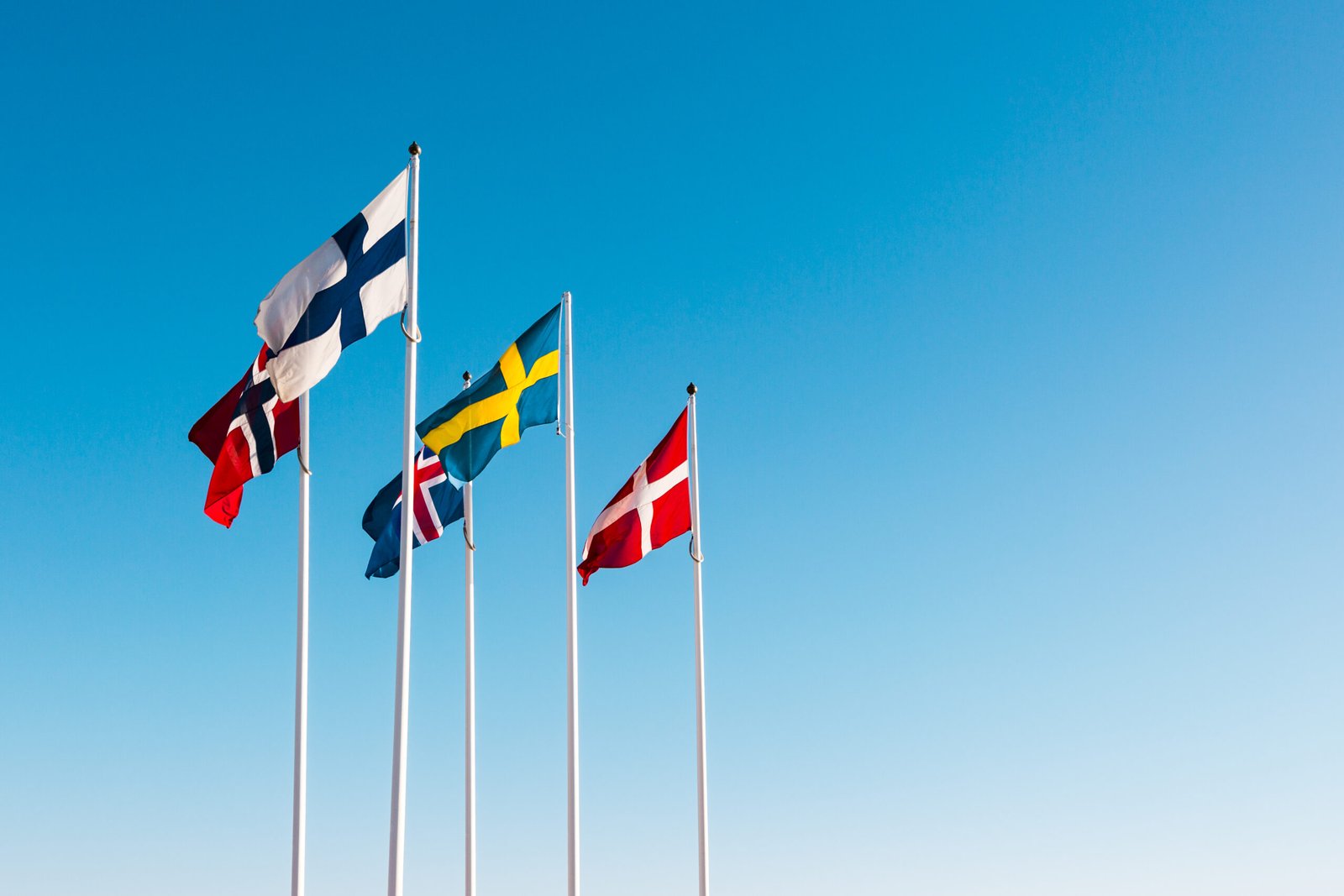
They’re neighbors, they share centuries of entangled history, some of tortuous and violent, some of it upholding the highest values of humanity, and they all belong to the same corner of the world. But spend any of these six holidays in their respective countries and you’d barely guess they came from the same cultural region. A Norwegian May 17th and a Finnish December 6th are practically opposite experiences — one is a children’s street carnival in the summer sun, the other a candlelit winter evening of quiet remembrance. And then there’s Denmark, which technically hasn’t even settled on having a national day at all. Here’s the story behind each.
| Country | Date | Type of day | What happens | Learn more |
|---|---|---|---|---|
| 🇳🇴Norway | 17 May | Constitution Day | Children’s parades dominate — Oslo’s draws ~60,000 kids. Bunads (traditional costumes) everywhere. Ice cream, hot dogs, champagne breakfasts. Royal family waves from the palace balcony on Karl Johans Gate. | visitnorway.com |
| 🇩🇰Denmark | 5 June | Constitution Day | Grundlovsdag — not an official public holiday. Shops close by noon. Political speeches (grundlovstaler) in parks and squares, group singing (fællessang), Dannebrog raised everywhere. Hot dogs and beer. Also Father’s Day. | Wikipedia |
| 🇸🇪Sweden | 6 June | National Day | Subdued by Nordic standards. Ceremony at Skansen open-air museum with the royal family. Children in folk costume present flowers. New citizens receive their certificates. Flag-raising, folk dancing, marching bands. | sweden.se |
| 🇮🇸Iceland | 17 June | Independence Day | Parades with brass bands, Icelandic horses, and scouts in every town. A woman (Fjallkona, “Mountain Woman”) recites a poem in traditional Skautbúningur dress. Face-painting, helium balloons, street concerts, midnight sun. | Wikipedia |
| 🇫🇮Finland | 6 December | Independence Day | Two blue-and-white candles in every window. Military parade in Helsinki. Students’ torchlight procession. The Presidential Reception (“Linnanjuhlat”) broadcast nationally. Many watch the 1955 film The Unknown Soldier. | finland.fi |
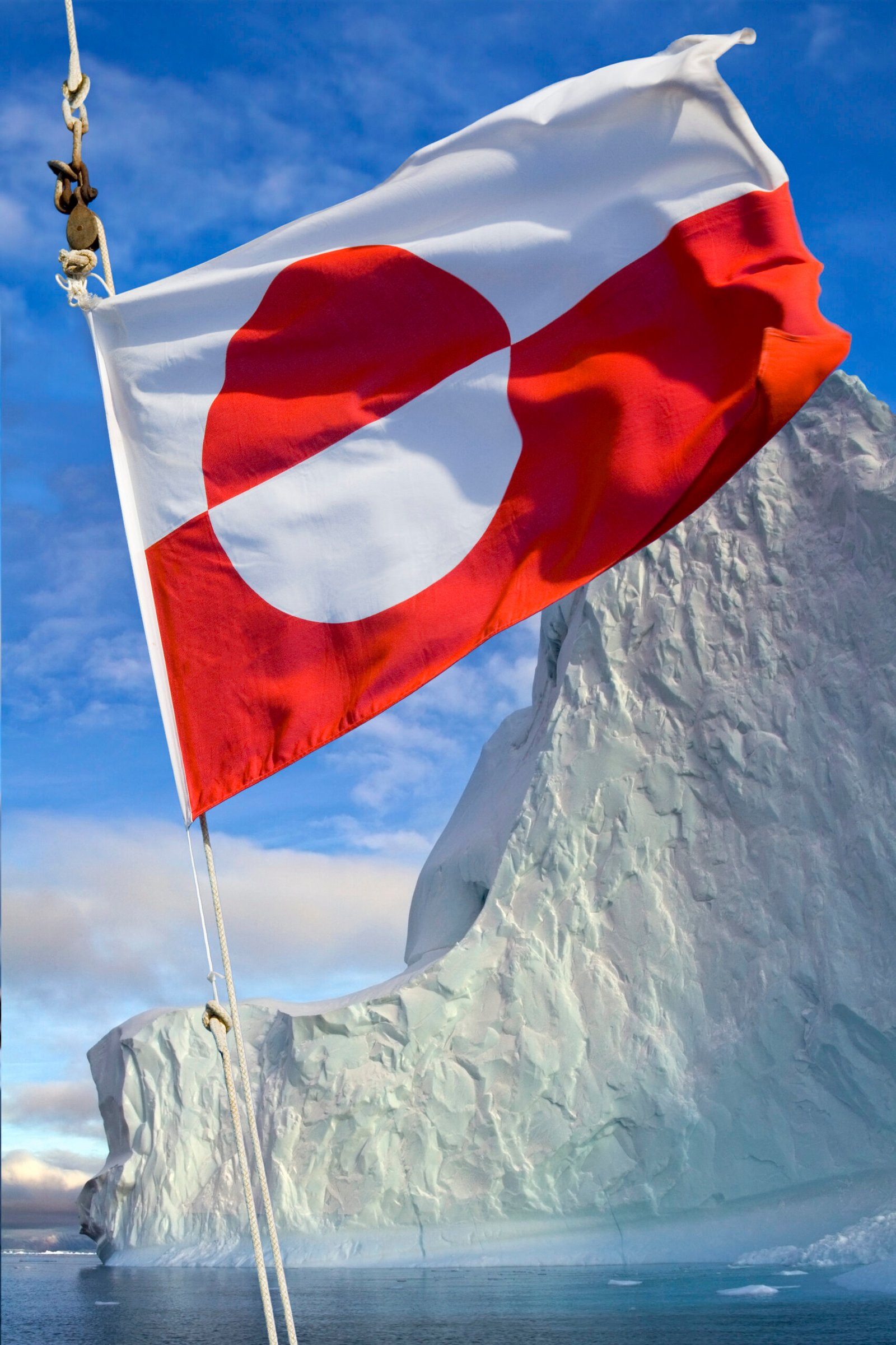
| 🇬🇱Greenland | 21 June | National Day | The longest day of the year (Ullortuneq). Flag-raising, drum dancing, folk performances, kaffemik (coffee & cake gatherings), seal-hunting competitions. Celebrated in every settlement across the island. | Wikipedia |
Norway — 17 May (Syttende Mai)
The Constitution of Norway was signed at Eidsvoll on 17 May 1814 — the third oldest written constitution still in use. Norway was trying to avoid being handed to Sweden as a spoil of the Napoleonic Wars, and the Eidsvoll assembly moved fast. The document was signed; the union with Sweden happened anyway. But the date stuck.
The first public speech marking the day was delivered in 1833 by the poet Henrik Wergeland. Swedish king Karl Johan had actually banned the celebrations from 1820–1829, viewing them as anti-Swedish provocation — and he wasn’t entirely wrong. In 1829, syttende mai fell on a Sunday, and large crowds celebrating the day triggered the so-called Battle of the Square. The following year, many people were arrested during the celebration.
The holiday transformed when Norway finally shed the Swedish union in 1905. During World War II, Nazi occupiers banned all May 17 celebrations. When the children’s parades returned after liberation in 1945, they carried extra significance. That history shows. Norway’s Constitution Day is unusually child-centred for a national holiday — no military parade, just kids.
All over Norway, children’s parades are a key part of the celebrations, with marching bands and an abundance of flags. The longest parade is in Oslo, where about 100,000 people pack the city centre, passing the Royal Palace where the royal family waves to the crowds from the balcony. The food is surprisingly humble: hot dogs, waffles, and ice cream, plus the traditional champagne-and-smoked-salmon breakfast if you’re lucky enough to have an invitation.
One thing to know: May also coincides with russefeiring, the graduation celebration for final-year high school students stretching throughout the month. If you see groups of teenagers in red or blue overalls celebrating somewhat wildly, they’re russ — graduating students marking the end of 13 years of school.
Denmark — 5 June (Grundlovsdag)
Denmark has a distinction that surprises most outsiders: it is one of only a handful of countries in the world not to have an official national day. Grundlovsdag is the closest thing Danes have — but it has never been a proper public holiday, and even its status as a day off is negotiated through collective labour agreements rather than law.
The day commemorates two moments that happened to share a date. The first constitution, which established Denmark as a constitutional monarchy, was signed by King Frederick VII on 5 June 1849. The constitution was completely rewritten in 1915 (when women’s suffrage was introduced) and most recently in 1953, the latter rewriting also on 5 June.
Why no official national day? A Danish historian gave a pretty frank answer: “I think that it’s never become an official national day because it’s still political. From the very beginning, Grundlovsdag became a day for political statements, which means it’s been politicised and not a natural time for a national day of celebration.” There’s also the historical reality that Denmark was never colonised or occupied for long enough to give the day the weight of a liberation. No drama, no clear enemy, no clean founding moment.
The original Danish Constitution drew inspiration largely from the Constitution of Norway and, in terms of human rights, from the Bill of Rights of the US Constitution. The irony of borrowing Norway’s constitutional framework and then watching Norway’s national day become one of the most celebrated in the world while Denmark’s remains semi-official has not been lost on Danes.
What actually happens on the day is more civic than festive. The day is widely celebrated throughout Denmark with church congregations, associations and political organisations meeting for what are essentially “secular services” — the raising of the Dannebrog, a speech by a local politician or celebrity, and collective singing (fællessang). Many people celebrate by attending open-air gatherings at public parks (udendørsarrangementer), with hot dogs and beer, group singing, and sometimes a bonfire at night. Political parties use the occasion for what often amounts to early campaigning. The day also doubles as Father’s Day — a peculiarity that came about because Constitution Day was already a half-day off work, so Father’s Day was moved to share it.
Sweden — 6 June (Sveriges Nationaldag)
Sweden’s National Day has a slightly awkward history: it was officially named such in 1983, and only became a public holiday in 2005. Before that it was Swedish Flag Day, and before that it wasn’t even official. Skansen’s founder Artur Hazelius established it in 1893, inspired by the national days of neighbouring Norway and Denmark, choosing 6 June because Gustav Vasa had been proclaimed king on that date in 1523.
The election of King Gustav is considered to mark the foundation of modern Sweden — signifying the end of the Danish-ruled Kalmar Union. June 6th also marks the adoption of the Instrument of Government on 6 June 1809, one of the fundamental laws that made up Sweden’s constitution until 1974. Two significant dates on the same calendar square is either a remarkable coincidence or a very convenient one.
The celebrations throughout Sweden are subdued. An annual event takes place at Skansen, the open-air museum in Stockholm, where children present the Swedish King and Queen with flowers, then the flag is raised. Activities include traditional folk dancing, flag-making, history lectures, and performances.
The other tradition worth noting: another important part of these celebrations is the welcoming of new Swedish citizens all around the country. On this day new Swedes receive their citizenship certificates, in some years directly from the monarch. For a country that only reluctantly turned its flag day into a proper holiday, it has found a quietly meaningful use for it.
Iceland — 17 June (Þjóðhátíðardagur)
Iceland became fully independent from Denmark on June 17th, 1944, with celebrations at the historic Þingvellir, where Iceland’s parliament Althing was originally formed in the year 930. The timing was not coincidental: Denmark was occupied by Germany, and the union treaty with Denmark had technically expired in 1943. Iceland moved.
The date itself was chosen to honour Jón Sigurðsson, the 19th-century independence campaigner born on June 17th, 1811. The first records of a major celebration on June 17 were from 1907, when Jón’s birthday was commemorated with a trumpet blast and speeches at Austurvellir in Reykjavík, with a gathering of 4–6 thousand people — about half of all townspeople. He was dead by then, having never seen independence himself. He appears on the 500 króna bill.
The celebration traditionally takes the form of parades through each city, town, and village, usually with a brass band leading the way. Riders on Icelandic horses often precede the brass band. After the parade, speeches are held out in the open, including one from Fjallkonan (the woman of the mountain), clad in Skautbúningur, who recites a poem.
This figure — the Fjallkona — is one of the more distinctive features of Icelandic National Day. She represents the spirit of the nation and of Icelandic nature, an idea that comes straight out of 19th-century Romanticism, the same era that birthed the independence movement itself. Unfortunately, the skies seem to have decided it is a tradition to rain on June 17th, even if the days before have been lovely — so dress appropriately.
Finland — 6 December (Itsenäisyyspäivä)
Finland’s path to independence is a story of waiting for the right moment. Finland had been an autonomous Grand Duchy of the Russian Empire since 1809. Prior to Russian rule, Finland was part of Sweden for nearly 700 years. The moment came in late 1917, when revolution in Russia created a window. The Finnish Parliament formally proclaimed Finland a sovereign state amid the chaos of the Russian Revolution and the First World War.
It was not a triumphant birth. A civil war followed almost immediately, and during the first years of independence, 6 December in some parts of Finland was only a minor holiday compared to 16 May, the day celebrating the White victory in the Civil War. It took time for the date to become truly unifying.
Today the mood is more solemn than celebratory — and that’s by design. Celebrated in the depths of winter on December 6th, it contrasts with the generally brighter, more festive national days of its Nordic neighbours. The winter setting lends a unique, introspective quality to the day.
The most universal tradition: families light two blue-and-white candles in their windows — a tradition believed to have originated as a silent protest against Russian rule. Outside, official Independence Day festivities commence with the raising of the Finnish flag on Tähtitorninmäki (Observatory Hill) in Helsinki, followed by a religious service at Helsinki Cathedral and official visits to World War II memorials.
The evening centrepiece is the Presidential Reception — “Linnanjuhlat,” or Castle Ball — a televised gala at the Presidential Palace. Millions of Finns watch it at home. YLE, Finland’s national public service broadcaster, also broadcasts the 1955 film adaptation of The Unknown Soldier, based on Väinö Linna’s iconic novel. Watching it has become almost as traditional as the candles themselves.
Greenland — 21 June (Ullortuneq)
Greenland is in the unusual position of celebrating a national day that isn’t actually independence day — not yet, anyway. Introduced in 1983 by the Home Rule government as a marker of self-determination following the 1979 Home Rule Act, the day was deliberately set for June 21, aligning with the summer solstice to resonate with longstanding Inuit cultural traditions of marking the longest day of the year.
The original idea had been to celebrate on May 1st. But that coincided with International Workers’ Day, which was a bit awkward, and moreover it is also reasonably cold to celebrate outdoors in Greenland in early May. The solstice made more sense — culturally and climatically.
The day picked up a second layer of meaning in 2009: it was on this date that Greenland gained self-government, when the Act on Greenland Self-Government came into effect. From 2016, it also became an official flag day in Denmark, where state authorities fly the Greenlandic flag.
National Day is celebrated in all Greenlandic settlements. Favourite activities include morning singing, coffee making, flag raising, and speeches, as well as cultural performances with folk dance, music, and kayaking. In many towns, seal hunting competitions are held in which hunters set off in their boats with the aim of being the first to return with a seal. The kaffemik tradition — where people open their homes to serve coffee and cake — runs through the day in every settlement.
The political undertow is unmistakable. Greenlandic premiers have used speeches at these events to advocate for greater self-determination, highlighting frictions with Denmark’s NATO-aligned commitments. For now, Greenland celebrates the longest day with one eye on a longer future.
Why these days matter
These aren’t just days off work. Each one marks a moment when a small country — or a people seeking to become one — insisted on its own existence. Norway’s children waving flags on a May morning are doing something their great-grandparents risked arrest for. Finnish families lighting candles in December windows are continuing a silent protest that started under tsarist rule. Greenlandic kayakers setting out at midsummer are practising traditions that date back 4,500 years while also pushing forward a political claim that isn’t resolved yet.
Denmark’s version is different in a way that’s almost philosophical: it’s a country that has had the same state for so long, and changed so peacefully, that it never needed a sharp founding moment. You can’t celebrate independence if you were never colonised. You can only celebrate the day you wrote down the rules — and then argue about politics over hot dogs in the park.
The celebrations look different because the histories are different. But the impulse behind each of them is more or less the same.



 English