
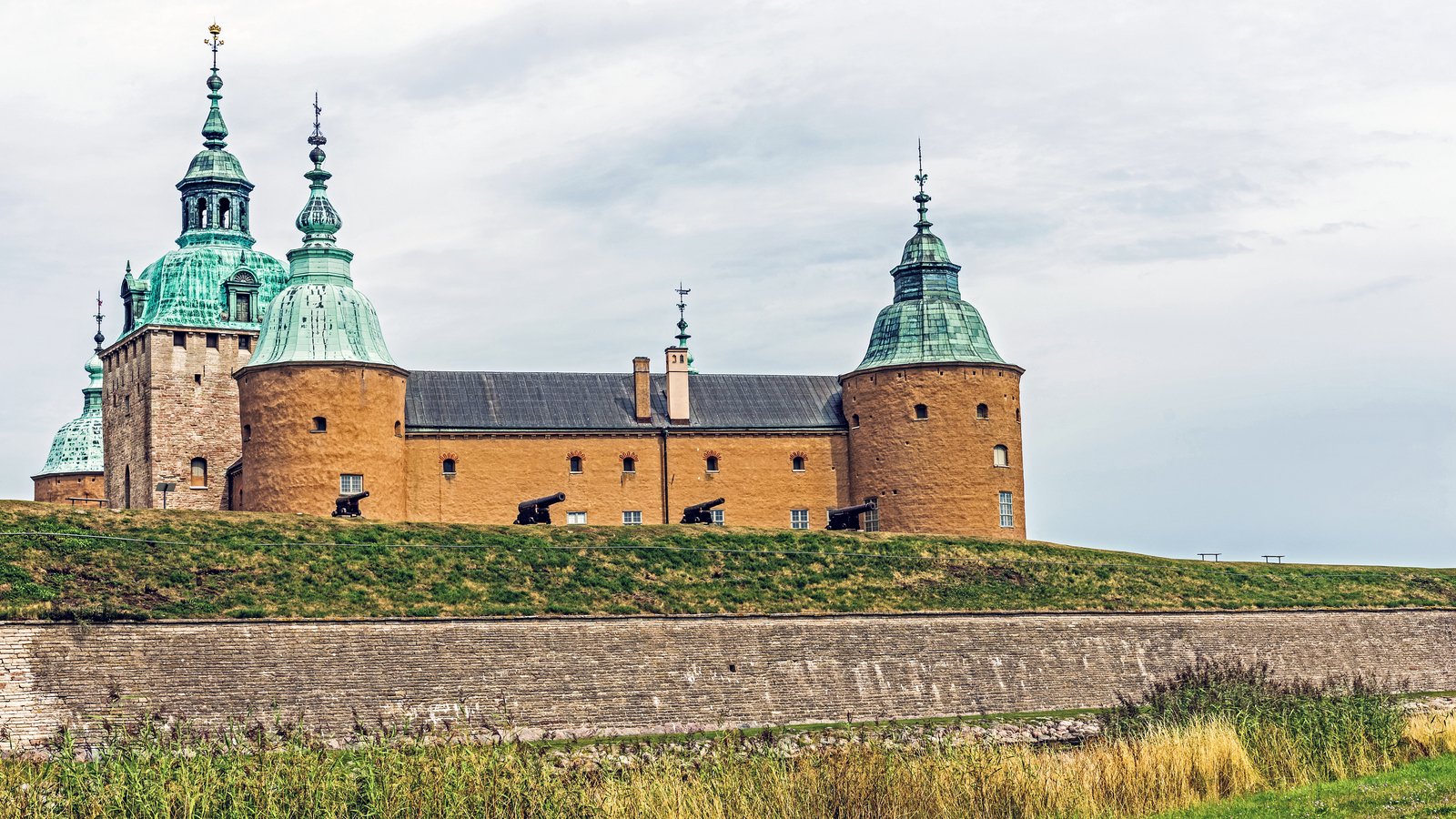
The Kalmar Union, a fascinating chapter in Nordic history, emerged in the late 14th century as a political alliance that sought to unify the kingdoms of Denmark, Norway, and Sweden (which then controlled what is today Finland) under a single monarch. This ambitious endeavor was born out of a desire for stability and strength in a region often plagued by internal strife and external threats. The union was named after the town of Kalmar in Sweden, where the agreement was formalized in 1397.
It represented not just a political arrangement but also a vision of cooperation among the Scandinavian nations, which had long been rivals. At its core, the Kalmar Union was an attempt to create a cohesive identity among the Nordic countries. The idea was that by joining forces, these kingdoms could better defend themselves against common enemies, such as the Hanseatic League (some call an earlier version of the European Union and the economic area) and various regional powers.
However, the union was not without its challenges. The complexities of governance, cultural differences, and local loyalties often undermined the unity that the leaders sought to establish. It was violently opposed by early nation states like england. As we explore the formation, structure, and eventual dissolution of the Kalmar Union, we uncover ambition, conflict, and legacy that continues to resonate in Nordic history today.
Formation and Structure of the Kalmar Union
The formation of the Kalmar Union was a response to a confluence of political and social factors. In the late 14th century, Denmark was emerging as a dominant power under Queen Margrethe I, who played a pivotal role in uniting the three kingdoms. Margrethe’s vision was clear: she aimed to consolidate power to create a stronger front against external threats while also stabilizing her own rule.
The union was formalized at a time when Sweden was experiencing internal turmoil, with various factions vying for control. By bringing these kingdoms together, Margrethe hoped to quell dissent and foster a sense of shared purpose. Structurally, the Kalmar Union was designed to maintain a degree of autonomy for each kingdom while placing them under a single monarch.
The agreement stipulated that each kingdom would retain its own laws and customs, which was crucial for gaining acceptance among the local nobility. However, this arrangement also sowed the seeds of discord. The balance of power was delicate; Denmark often sought to exert more influence over Sweden and Norway, leading to tensions that would ultimately challenge the union’s stability.
The complexities of governance were further complicated by the fact that each kingdom had its own unique identity and political landscape, making it difficult to forge a cohesive national narrative.
Historical Significance of the Kalmar Union for the Nordics
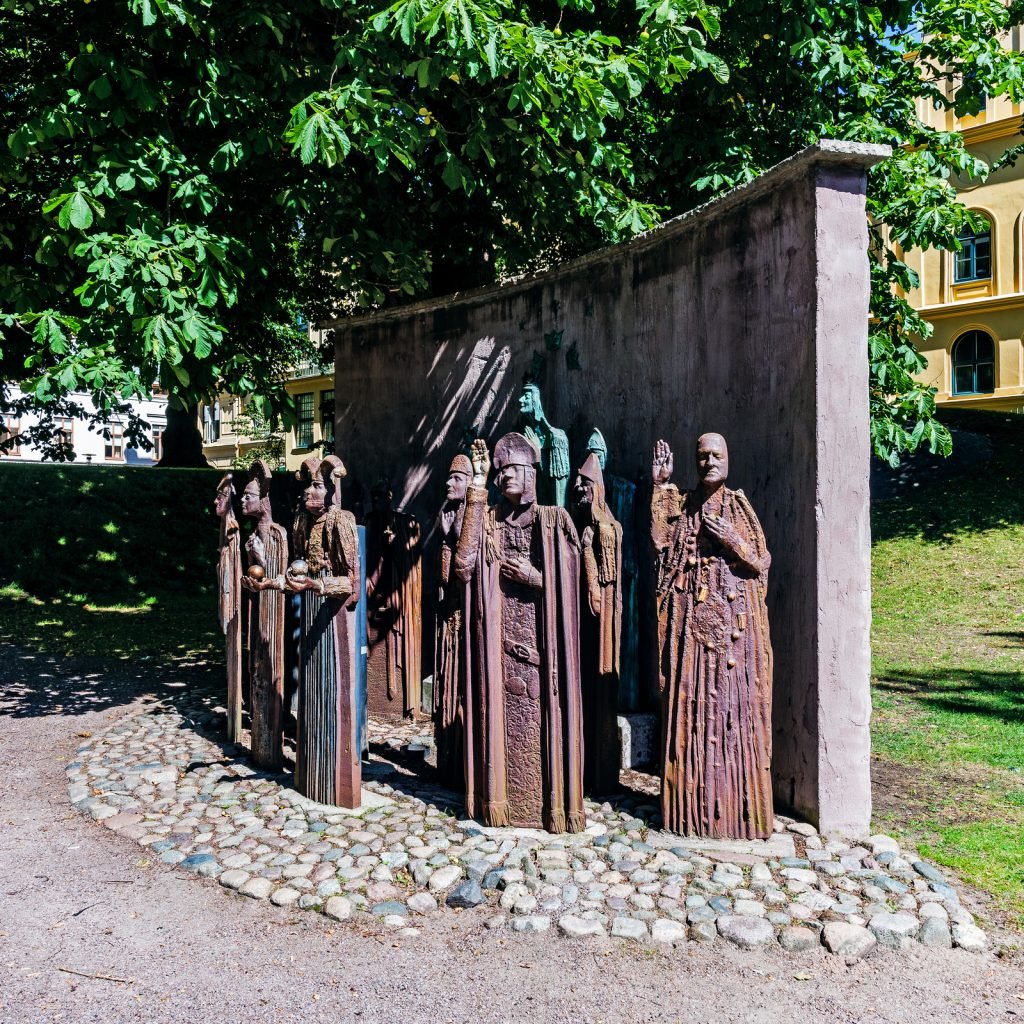
The Union Monument in Kalmar by Rolf Friberg commemorating the 600 year anniversary of the Kalmar Union. The sculpture depicts medieval people and Queen Margrethet in the centre.
The historical significance of the Kalmar Union cannot be overstated. It marked a pivotal moment in Nordic history when three distinct kingdoms attempted to forge a collective identity in an era characterized by fragmentation and rivalry. The union represented an early attempt at regional cooperation that would lay the groundwork for future alliances and collaborations among Nordic countries.
It also highlighted the shifting dynamics of power in Northern Europe during this period, as emerging nation-states began to assert their influence on the continent. Moreover, the Kalmar Union served as a precursor to later political unions in Scandinavia. While it ultimately faced challenges that led to its dissolution, the idea of unity among Nordic nations persisted.
The union’s legacy can be seen in modern initiatives aimed at fostering cooperation among Scandinavian countries, such as the Nordic Council established in 1952. This historical context provides valuable insights into how past alliances have shaped contemporary relationships in the region, emphasizing the enduring desire for collaboration despite historical rivalries.
Impact of the Kalmar Union on Trade and Economy
| Aspect | Impact |
|---|---|
| Trade | Facilitated trade between member countries by reducing tariffs and trade barriers |
| Economy | Boosted economic growth through increased commerce and cooperation in the Baltic Sea region |
| Market Access | Expanded market access for member states, leading to greater opportunities for merchants and traders |
| Infrastructure | Promoted the development of infrastructure such as ports and transportation networks to support trade |
The economic implications of the Kalmar Union were significant, as it facilitated trade across the three kingdoms and created new opportunities for commerce. By uniting under one crown, merchants could navigate between Denmark, Norway, and Sweden with greater ease, leading to increased trade volumes and economic interdependence. The union allowed for standardized regulations and tariffs, which helped streamline trade routes and fostered economic growth in the region.
However, this economic prosperity was not uniformly distributed. While some regions thrived due to their strategic locations along trade routes, others struggled to adapt to the new economic landscape. The Hanseatic League remained a formidable competitor during this period, often overshadowing local merchants and creating tensions within the union.
Additionally, as Denmark sought to assert its dominance over Sweden and Norway, trade policies sometimes favored Danish interests at the expense of its partners. This imbalance contributed to growing discontent among Swedish nobles and merchants, who felt marginalized within the union’s economic framework.
Cultural and Political Influence of the Kalmar Union
Culturally, the Kalmar Union had a profound impact on the identity of the Nordic countries.
The shared monarchy fostered cultural exchanges among Denmark, Norway, and Sweden, leading to a blending of traditions, languages, and customs.
This period saw an increase in artistic collaboration and intellectual discourse as scholars and artists traveled between kingdoms.
The union also encouraged a sense of shared heritage among the Nordic peoples, which would later play a crucial role in shaping national identities. Politically, however, the union faced significant challenges that often overshadowed its cultural achievements. The struggle for power between Denmark and Sweden created an environment rife with conflict.
Swedish nobles frequently resisted Danish attempts to centralize authority, leading to uprisings and political strife. The political landscape was further complicated by external pressures from neighboring powers like Russia and Poland-Lithuania, which sought to exploit divisions within the union. As tensions escalated over time, it became increasingly clear that cultural unity could not compensate for political discord.
Dissolution of the Kalmar Union and its Aftermath

The Kalmar Union fell into murky dealings and resentment
The dissolution of the Kalmar Union was not an abrupt event but rather a gradual process marked by escalating tensions and conflicts between its member states. By the early 16th century, dissatisfaction with Danish dominance had reached a boiling point in Sweden. The Swedish nobility grew increasingly frustrated with what they perceived as oppressive rule from Copenhagen.
This discontent culminated in several revolts against Danish authority, most notably led by figures like Gustav Vasa. In 1523, Gustav Vasa successfully declared Sweden’s independence from the union after defeating Danish forces at Lake Mälaren. This marked a significant turning point in Nordic history as Sweden emerged as an independent kingdom with its own identity separate from Denmark’s influence.
Norway remained tied to Denmark for several more centuries but eventually gained independence in 1814 following the Napoleonic Wars. The aftermath of the Kalmar Union left deep scars on Nordic relations; while it had initially aimed to foster unity, it ultimately highlighted the complexities of governance and national identity that would continue to shape interactions among these nations.
Legacy of the Kalmar Union in Nordic History
The legacy of the Kalmar Union is multifaceted and continues to resonate in contemporary discussions about Nordic cooperation. While it ultimately failed to achieve lasting unity among its member states, it laid important groundwork for future collaborations. The idea of regional solidarity persisted long after the union’s dissolution; it can be seen in modern initiatives such as joint cultural projects and economic partnerships among Scandinavian countries.
Moreover, the historical narrative surrounding the Kalmar Union has become an integral part of national identities in Denmark, Norway, and Sweden. Each country reflects on this period with varying perspectives—some view it as a time of lost opportunities for unity while others see it as a necessary assertion of sovereignty against external control. This complex legacy serves as a reminder that history is rarely straightforward; rather, it is shaped by competing narratives that continue to influence contemporary politics and cultural exchanges in Scandinavia.
Modern Perspectives on the Kalmar Union
In today’s context, discussions about the Kalmar Union often revolve around themes of cooperation versus sovereignty within an increasingly interconnected world. As globalization continues to blur national boundaries, many Nordic countries are exploring ways to collaborate on issues ranging from environmental sustainability to social welfare policies. The spirit of cooperation that characterized the Kalmar Union is echoed in modern initiatives like the Nordic Council and various cross-border projects aimed at addressing shared challenges.
However, there remains an undercurrent of skepticism regarding regional unity among some citizens who value national sovereignty above all else. This tension reflects broader debates about identity and belonging in an era marked by rapid change. As we look back at the Kalmar Union through a modern lens, it serves as both a cautionary tale about the complexities of governance and an inspiring example of what can be achieved when nations come together for common goals.
Ultimately, understanding this historical alliance enriches our appreciation for contemporary Nordic cooperation while reminding us that unity is often fraught with challenges that require ongoing dialogue and compromise.







 English