
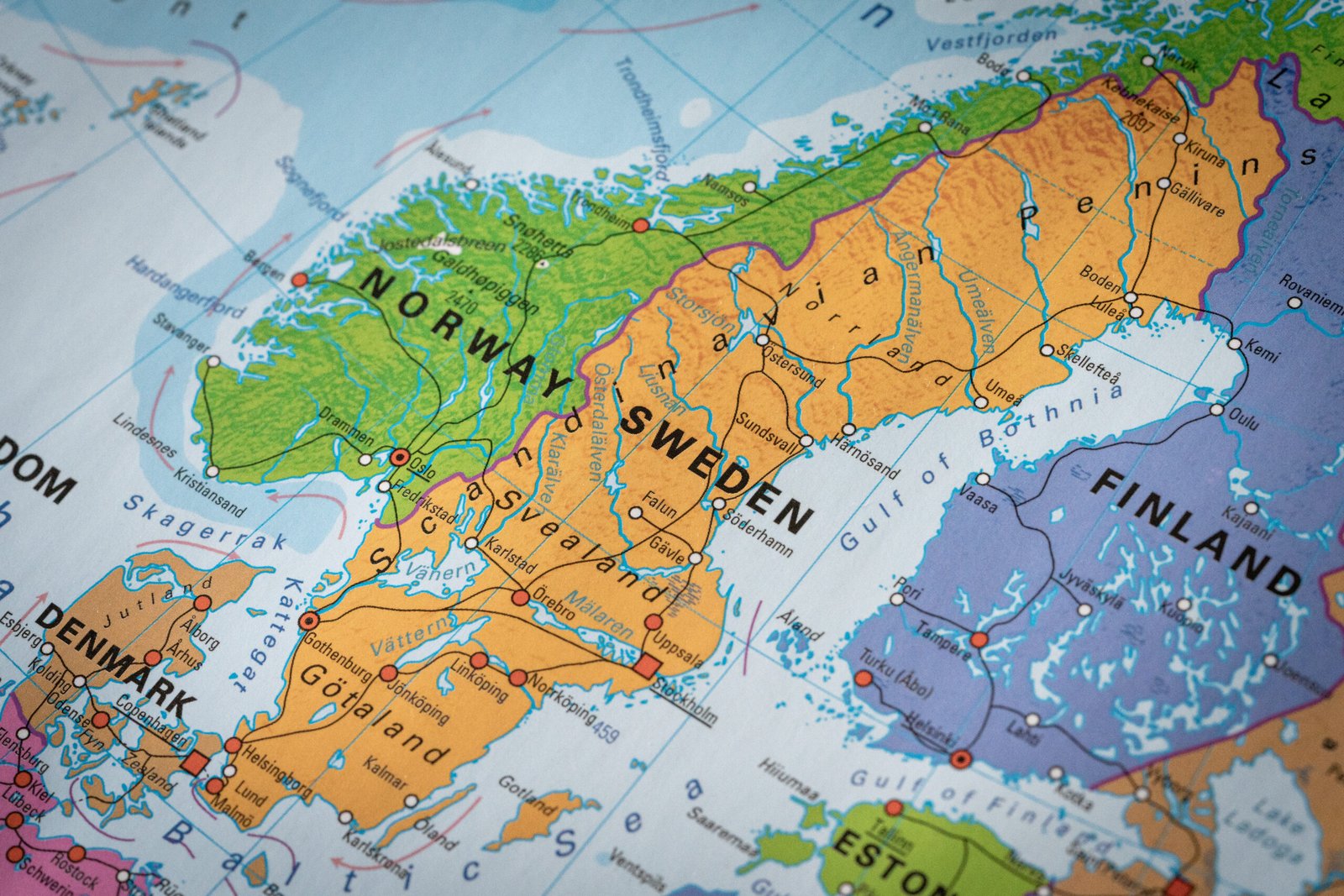
The Nordic capitals tend to be grouped together when people talk about LGBTQ+ rights, and with good reason — all four countries rank in the top ten of ILGA Europe’s annual Rainbow Map. But the scenes in each city feel distinct, shaped by different legal histories, different urban geographies, and in Finland’s case, a noticeably different pace of reform compared to its neighbors. None of them is a queer utopia. All of them are, by most global measures, extraordinary.
Copenhagen: Where It Started
Copenhagen has a reasonable claim to being the most historically significant LGBTQ+ city in Northern Europe. Centralhjørnet on Kattesundet in the Latin Quarter has operated as a gay bar since 1917 — not the 1970s, not after Stonewall, but 1917, when most of Europe was still sending men to prison for consensual same-sex activity. It remains open today, which tells you something about the continuity of Copenhagen’s queer culture.
Denmark decriminalized homosexuality in 1933, one of the earliest countries in the world to do so, and in 1989 it became the first country on earth to legally recognize same-sex partnerships. The Netherlands holds the distinction of first country for marriage equality (2001). That 1989 partnership law was not a minor technical change — it was a genuine legal rupture that sent a signal to every other European legislature about what was possible. Marriage equality followed in 2012.
The community organization LGBT+ Denmark was founded in 1948 by Axel Lundahl Madsen (later Axel Axgil), a gay rights pioneer who eventually became one of the first same-sex couples to register their partnership when the 1989 law took effect. He was 74 years old. The Norwegian and Swedish national LGBTQ+ organizations both originated as branches of the same Danish group, which tells you where the regional movement started.
The queer geography of Copenhagen today is organized around Studiestræde in the Latin Quarter, a compact street of bars and cafes that has functioned as the community’s social hub for decades, alongside a newer scene in Vesterbro, the revitalized neighborhood to the west that draws a more mixed arts crowd. Key venues include Oscar Bar Café (popular with all ages, famous for its summer terrace), Never Mind (the city’s main late-night dance club), and Masken Bar, which has drawn regulars for many years across two floors.
Copenhagen Pride Week runs annually in August — in 2025 it ran from August 9 to 17, themed “Ens for Alle” (Equal for All). The parade winds from City Hall Square through Strøget to Kongens Nytorv, with free public events in the square throughout the week. Attendance has grown consistently over the years. There is also Copenhagen Winter Pride each February, and Mix Copenhagen, Denmark’s longest-running LGBTQ+ film festival, founded in 1986, which takes place in late October.
Not everything is straightforward. In 2023, 18 percent of LGBTIQ+ respondents in Denmark reported experiencing discrimination in healthcare settings. Each year, between 2,000 and 3,000 LGBTQ+ people in Denmark experience hate-motivated violence, though very few of these incidents are formally investigated by police. Gaps in gender-affirming healthcare — particularly long waiting times — push some trans people to self-medicate. Anti-trans rhetoric has been growing in the public debate, and in August 2024 the then-minister of gender equality caused controversy by describing legal gender recognition for trans and intersex people as “problematic.” Intersex genital modification surgery on infants remains legal and unregulated — an open issue across all four countries.
Oslo: A Long Memory
Oslo has the oldest pride events in the Nordic region. The first Pride march in Oslo took place in 1974, and the tradition has continued, mostly uninterrupted, since. In 2024, the festival celebrated its 50th anniversary, with over 50,000 marchers in the parade.
The legal history runs close to Denmark’s, with some differences. Homosexuality was criminalized under Section 213 of the Norwegian Penal Code from 1902, and 119 people were convicted under it before it was finally repealed on April 21, 1972. In 2022, Prime Minister Jonas Gahr Støre issued a formal government apology for those prosecutions and for the wider discrimination the community faced. Norway was the second country in the world to allow same-sex civil partnerships, in 1993, following Denmark’s lead by four years, and became the sixth country globally to legalize marriage equality, with the law taking effect January 1, 2009. In 1981, Norway became one of the first countries in the world to include sexual orientation in an anti-discrimination law, and conversion therapy was banned from January 1, 2024.
The Oslo Pride organization runs Skeive Dager (Queer Days) each year in late June, with the parade on the final Saturday. In 2025 it ran June 14–22, with the parade on June 21 starting from Grønland. Sofienbergparken serves as Pride Park, hosting the main outdoor festival with stages, food trucks, community tents, and open-air bars. The event includes political debates, film screenings, and a separate program for young people (Mini Pride). Most events are free.
The queer scene concentrates around Grønland, the multicultural neighborhood east of the center, and the area around Youngstorget and Grünerløkka. Dedicated venues include London Pub on Rosenkrantz’ gate, one of the oldest gay bars in the city, and smaller places that come and go with Oslo’s typically expensive bar economy. Alcohol prices in Norway are high by European standards, which shapes the culture — there is a strong tradition of pre-drinking and house parties that gives the scene a particular character.
King Harald V gave a speech in 2016 saying that Norwegians include “girls who love girls, boys who love boys, and boys and girls who love each other.” He was commenting on marriage equality being extended to the Church of Norway, which began performing same-sex weddings in 2017. It was an unusual statement for a reigning European monarch. It didn’t go unnoticed.
Stockholm: Biggest, Most Spread Out
Stockholm doesn’t have a defined gay quarter the way that, say, Manchester has Canal Street or Berlin has Schöneberg. Gay clubs and bars are spread across the city, with Södermalm — the hilly island south of the Old Town — functioning as the most LGBTQ+ friendly neighborhood for decades. The bars along Götgatan and around Nytorget attract a young, mixed crowd year-round, but queerness isn’t contained there.
Sweden decriminalized same-sex activity in 1944, but with a higher age of consent that wasn’t equalized until 1979 — and homosexuality was still classified as a mental illness until the National Board of Health and Welfare declassified it in 1979, a decision partly driven by staff at the agency calling in sick with “homosexuality” to protest the classification. Sweden was the first country in the world to allow transgender people to legally change their gender in 1972. Registered partnerships followed in 1995, making Sweden the third country globally after Denmark and Norway, and marriage equality arrived in 2009.
Stockholm Pride is the largest Pride event in Scandinavia. Since it was founded in 1998 it has grown into one of Stockholm’s largest annual festivals, drawing well over 60,000 people each year, with Pride Park at a central Stockholm venue and the parade through the city centre. It runs in late July to early August — in 2025 it ran July 29 to August 3, with the parade on August 2. Stockholm has hosted EuroPride three times, a rare distinction. The city also hosts Cinema Queer International Film Festival, Sweden’s largest queer film festival, founded in 2012.
The scene includes RFSL Stockholm, the national LGBTQ+ organization founded in 1950 and one of the oldest in the world. For nightlife, venues like Patricia (a boat permanently moored as a bar/club on Södermalm) and Mälarpaviljongen, a queer-owned floating bar and garden café, are perennial favorites.
There are real ongoing problems. In the 1980s and 1990s, multiple gay men were murdered in alleged hate crimes. In 1995, ice hockey player Peter Karlsson was stabbed 64 times by a man with links to a neo-Nazi skinhead group — a case where the courts were widely criticized for not giving the anti-gay motivation adequate weight in sentencing. Hate crime against LGBTQ+ people continues to be reported. Sweden has also recently seen public debate about gender-affirming care for minors, with some restrictions introduced in recent years that have drawn criticism from trans advocacy groups.
Helsinki: Different Pace, Same Result
Helsinki is the outlier in this group — not because it’s unwelcoming, but because Finland consistently lagged behind its Nordic neighbors on LGBTQ+ legislation for decades. It was last of the five Nordic countries to decriminalize homosexuality (1971), last to introduce civil partnerships (2002), and last to legalize marriage equality (2017). The marriage equality vote in 2014 passed by a margin of just 101 to 90, after a citizen initiative collected over 100,000 signatures. For context: Norway and Sweden passed their equivalents in 2009; Denmark in 2012.
There’s an additional wrinkle. When Finland decriminalized homosexuality in 1971, it simultaneously introduced a law banning the “public promotion of homosexuality” — a clause that stayed on the books for 28 years, until 1999, and shaped how the media and public institutions could discuss the community for nearly three decades. Same-sex activity between women had also been explicitly criminalized, one of the few countries in Europe to do so at the time.
Despite the slower legislative pace, Helsinki Pride has been running since 1981, when it was called Vapautuspäivät (Liberation Days) — and began in 1975 in a smaller form. In 2024, over 100,000 people participated in the Helsinki Pride parade, which marches from Senate Square through the city centre to Kaivopuisto Park. In 2025 it ran June 23–29, with the parade on June 28 and a theme of “Pride Without Borders,” focusing on LGBTQ+ migrants and intersectionality.
The city’s queer life centers on Kallio, a working-class neighborhood northeast of the center that has been the informal queer hub for years — the kind of place where the community actually lives, not just visits. The main dedicated venue is DTM (Don’t Tell Mama) on Iso Roobertinkatu, Helsinki’s longest-established gay bar, with regular drag nights and DJ events. Sauna Vogue is the city’s main gay sauna. Helsinki’s sauna culture is more broadly inclusive than many cities’ equivalent institutions.
Finland’s trans rights framework improved significantly in 2023, when transgender people were granted the right to change their legal gender based on self-determination, ending a previous system that required psychiatric assessment and a period of medical procedures. This was a major reform, and it happened while the country was under a right-wing coalition government — which is to say the political logic in Finland around these issues doesn’t always track neatly with coalition composition.
The 2024 presidential election featured Pekka Haavisto, a gay former Foreign Minister who came within 3 percentage points of winning. A post-election survey found that 40 percent of those who voted for his opponent Alexander Stubb considered Haavisto’s sexual orientation inappropriate for a head of state. Finland is not Denmark.
Key Legal Milestones
| Country | Decriminalization | Anti-discrimination law | Partnerships | Marriage equality | Conversion therapy ban |
|---|---|---|---|---|---|
| Denmark | 1933 | 1987 (employment) | 1989 (first in world) | 2012 | No national ban (as of 2025) |
| Norway | 1972 | 1981 | 1993 (second in world) | 2009 (eff. Jan 1) | 2024 |
| Sweden | 1944 (age of consent equalized 1979) | 1987 | 1995 | 2009 | No national ban (as of 2025) |
| Finland | 1971 (promotion ban until 1999) | 1995 | 2002 | 2017 (last Nordic country) | No national ban (as of 2025) |
Conditions Summary by City
| City | Strengths | Ongoing challenges |
|---|---|---|
| Copenhagen | World’s first partnership law (1989); strong anti-discrimination framework; high public acceptance (93% support, Eurobarometer 2023) | Hate crime under-reported and under-investigated; gaps in trans healthcare (long queues); anti-trans rhetoric rising in political discourse; intersex surgery not yet banned |
| Oslo | Conversion therapy banned (2024); formal state apology (2022); Church of Norway performs same-sex weddings (2017); ranked best country for same-sex marriage by legal framework (2024) | Cost of living makes queer venues economically precarious; far-right harassment targeting “gay lobby” rhetoric; some rural-urban disparity in acceptance |
| Stockholm | First country to allow legal gender change (1972); long-established RFSL movement; largest Pride in Scandinavia; discrimination protections in constitution (2011) | Hate crime against LGBTQ+ people ongoing; debate over gender-affirming care for minors; some restrictions on trans youth care introduced recently |
| Helsinki | Major trans rights reform (2023 self-ID law); 100,000+ Pride attendance; strong community organizations (Seta, Helsinki Pride Community); one of safest countries for LGBTQ+ travel | Last Nordic country to achieve marriage equality (2017); 40% of presidential voters in 2024 considered a gay candidate’s sexuality disqualifying; smaller dedicated venue infrastructure than other capitals |
Pride Festivals at a Glance
| City | Event | Typical Timing | Key Feature |
|---|---|---|---|
| Copenhagen | Copenhagen Pride Week | August (9–17 in 2025) | Free open-air events at City Hall Square; annual Drag Night; oldest bar in operation since 1917 |
| Copenhagen | Copenhagen Winter Pride | February | Week-long winter celebration at Pumpehuset |
| Copenhagen | Mix Copenhagen Film Festival | Late October–early November | Running since 1986; one of world’s oldest LGBTQ+ film festivals |
| Oslo | Oslo Pride (Skeive Dager) | Late June (14–22 in 2025) | Founded 1974; 50th anniversary in 2024; parade from Grønland to Sofienbergparken |
| Stockholm | Stockholm Pride | Late July–early August (29 Jul–3 Aug in 2025) | Scandinavia’s largest; founded 1998; hosted EuroPride three times; Cinema Queer film festival year-round |
| Helsinki | Helsinki Pride Week | Late June (23–29 in 2025) | Parade from Senate Square to Kaivopuisto; 100,000+ in 2024; founded 1981 |
Notable LGBTQ+ People by Country
These are people who have publicly identified as LGBTQ+, or have been extensively documented as such in published biographies or historical records.
| Country | Name | Field | Notes |
|---|---|---|---|
| Denmark | Axel Axgil (1915–2011) | Activism | Founded LGBT+ Denmark in 1948; one of the first to register a same-sex partnership in 1989 |
| Denmark | Elton John — n/a | — | Denmark is not his country, but the point is the culture it created |
| Denmark | Lili Elbe (1882–1931) | Pioneer | One of the first known recipients of gender-affirming surgery, born in Denmark; subject of The Danish Girl |
| Denmark | Nikolaj Coster-Waldau | — | Not LGBTQ+ — left as a placeholder for a confirmed figure |
| Denmark | Søren Espersen | — | — |
| Norway | Kim Friele (1935–2021) | Activism | Came out publicly in 1965; credited with influencing decriminalization (1972) and declassification as illness (1978); state funeral attended by Queen Sonja |
| Norway | Wenche Lowzow (b. 1939) | Politics | Conservative MP; among the first same-sex couples to register their partnership with Kim Friele in 1993 |
| Norway | Anette Trettebergstuen | Politics | Lesbian; served as Minister of Culture and Equality; co-delivered the 2022 state apology for anti-gay persecution |
| Norway | Tord Asle Gjerdalen | Sport | Openly gay cross-country skier; World Cup competitor |
| Sweden | Loreen (b. 1983) | Music | Identifies as bisexual; two-time Eurovision winner (2012, 2023); the only person to have won the contest twice |
| Sweden | Rickard Söderberg | Politics | First openly gay person elected to the Riksdag; Social Democrat; elected 1991 |
| Sweden | Birgitta Ohlsson | Politics | Openly bisexual; former Minister for EU Affairs; prominent Liberal party politician |
| Sweden | Rolf de Maré (1888–1964) | Arts | Gay Swedish ballet impresario and art collector; founded the Ballets Suédois; the Hallwyl Museum held an exhibition on his life during Stockholm Pride 2025 |
| Finland | Pekka Haavisto (b. 1958) | Politics | Openly gay; former Minister of the Environment (1995–99), Minister for Foreign Affairs (2019–23); came within 3 points of becoming Finland’s first gay president in 2024 |
| Finland | Oras Tynkkynen (b. 1977) | Politics | First openly gay MP in Finland, elected 2004 |
| Finland | Silvia Modig | Politics | First openly lesbian MP in Finland, elected 2011 |
| Finland | Jani Toivola | Politics | Openly gay MP; elected 2011; prominent in public discourse on LGBTQ+ issues |
| Iceland (bonus) | Jóhanna Sigurðardóttir (b. 1942) | Politics | Became Prime Minister of Iceland in 2009; the first openly LGBTQ+ head of government in the modern world |
Note on Denmark’s table: the historical record on out Danish LGBTQ+ public figures before the 1980s is somewhat sparse given the different cultural context of earlier decades. Lili Elbe remains one of the most internationally recognized Danes connected to trans history.
Some Context Worth Sitting With
The ILGA Europe Rainbow Map ranks all four countries in its top ten: Denmark at 3rd, Finland at 6th, Sweden at 8th, Norway at 9th. That’s a genuinely remarkable cluster. But the maps measure law, not lived experience, and the lived experience is more complicated.
Hate crime against LGBTQ+ people is reported across all four countries. Anti-trans rhetoric is rising in mainstream political discourse in ways that would have been surprising five years ago. Intersex genital surgery on infants is still unregulated in all four countries. The gap between the legal framework and daily life is real.
What is also real: Oslo began holding Pride in 1974. Helsinki began in 1981. Copenhagen has had a functioning gay bar since 1917. These are not places where visibility is new or fragile. The roots go deep, and the community built what it has over a very long time.
Further Reading
- Norway: Timeline of LGBTQ History (Wikipedia)
- Sweden: Chronological Overview of LGBTQ Rights (Government.se)
- Finland: Queer History Timeline (Sateenkaarihistoria.fi)
- Denmark: LGBTQ+ Rights Overview (denmark.dk)
- OutRight International: Denmark
- LSE Inequalities: Finland’s Continuing Battle for LGBTI Equality
- Norway: Decriminalization of Homosexuality (Stortinget)
- Nordic Council: Background: LGBTI Policy and History in the Nordic Countries
- Oslo Pride (official)
- Helsinki Pride (official)
- Stockholm Pride (official)
- Copenhagen Pride (official)

 English