
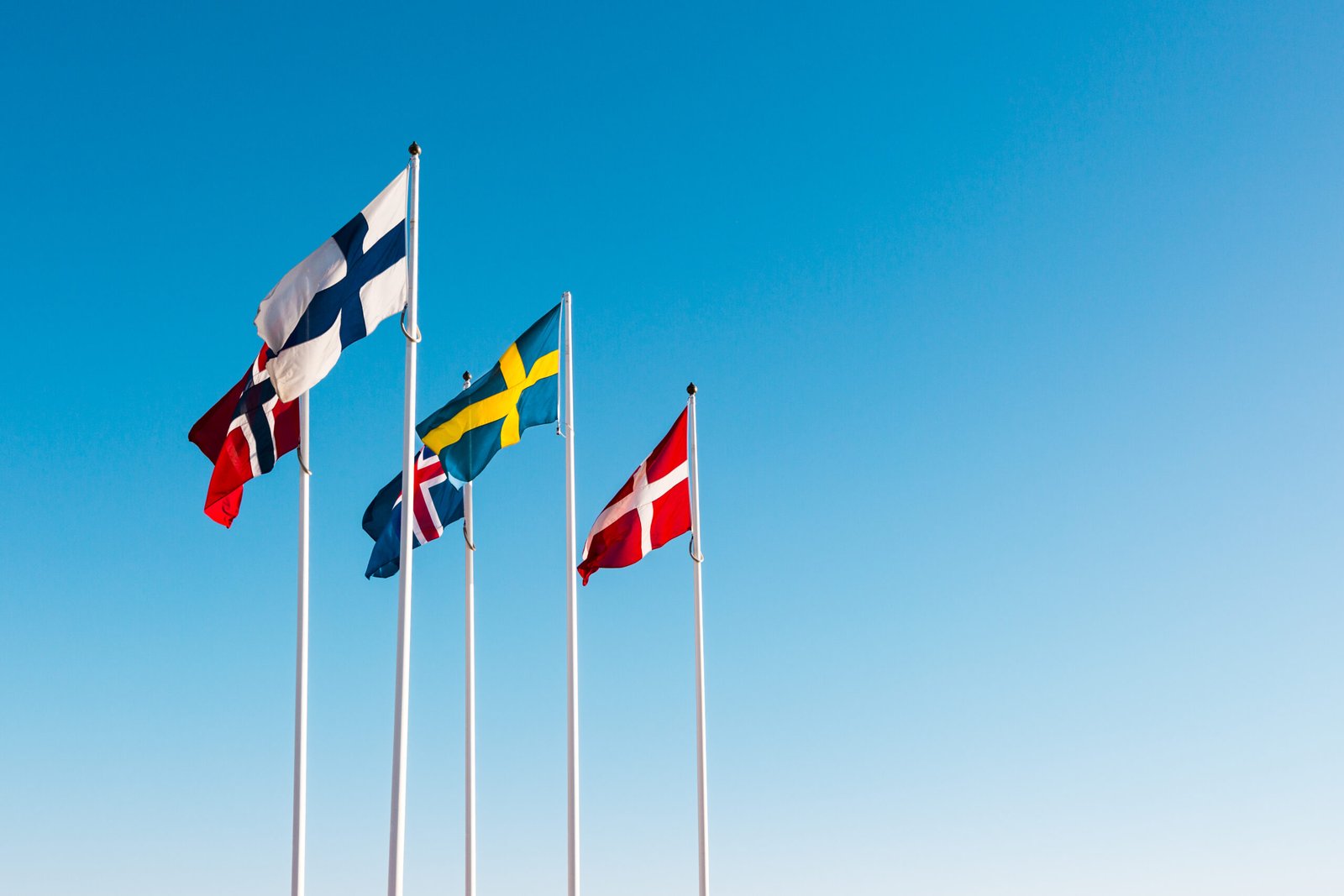
Norway is a kingdom. Finland is a republic. Denmark is a kingdom. Sweden is a kingdom. Iceland is a republic. These are not accidents: each form of government reflects a specific set of pressures, wars, occupations, and near-misses that played out across several centuries. The five countries have been fighting each other, ruling each other, and forming and breaking alliances since at least 1397. They now share one of the most integrated cross-border cooperation frameworks in the world, argue about whose beer is better on social media, and take gentle pride in the fact that nobody outside the region can quite tell them apart.
Denmark: The One That Started Everything
Denmark has a reasonable claim to being the oldest continuous kingdom in Europe. The monarchy traces back to the tenth century, when Gorm the Old and his son Harald Bluetooth consolidated power over the Danish territory. For about 800 years after that, whoever sat on the Danish throne had a very large say in what happened to everyone else in Scandinavia.
The Danes ran the Kalmar Union from 1397, a single crown covering Denmark, Norway, and Sweden — with Denmark firmly in charge. Sweden never fully accepted this arrangement, which produced several centuries of intermittent warfare. The union lasted on and off until Sweden finally got out in 1523, when Gustav Vasa led a successful rebellion and took the throne. Norway stayed.
For nearly 400 years after that, Norway was essentially a Danish province. The kingdom of Denmark-Norway was an absolute monarchy under Danish kings until 1814, when the Napoleonic Wars reshuffled the entire region.
Denmark itself only got a constitution in 1849. King Frederik VII signed the June Constitution on June 5, 1849, ending absolute monarchy and establishing a parliament (the Rigsdag) with legislative power shared between the king and elected representatives. Remarkably, this happened without a revolution — in 1660, the king had taken absolute power without a fight; in 1849, the people took it back without one either. The current constitution dates to 1953 and has Frederik IX’s signature. Today King Frederik X heads a constitutional monarchy where the monarch’s role is ceremonial and the government answers to the Folketing.
Norway: The Kingdom That Wrote Its Constitution Under Threat of Invasion
The year 1814 was probably the most eventful in Norway’s history. In January, Norway was ruled by Denmark’s absolute monarch. By December, it was a constitutional monarchy in a union with Sweden. In the months in between, it briefly became an independent state, wrote its own constitution, and chose its own king — all while Swedish troops were preparing to enforce the Treaty of Kiel, which had transferred Norway to Sweden without asking any Norwegians.
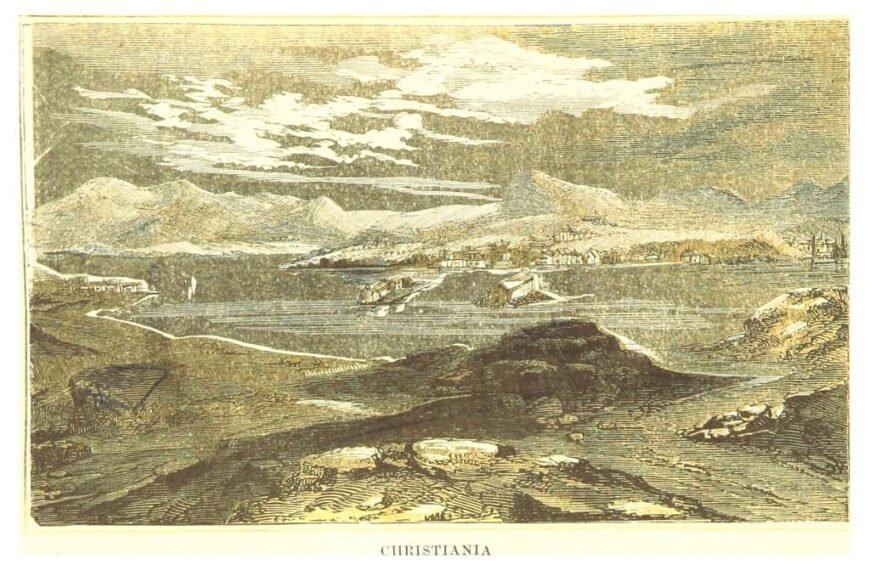
The Danish viceroy in Norway, Prince Christian Frederik, refused to accept the transfer. He convened a constitutional assembly at Eidsvoll, north of Christiania (Oslo), in April 1814. In six weeks, 112 elected representatives drafted and adopted a constitution on May 17, 1814, declaring Norway “a free, independent and indivisible realm” with a limited hereditary monarchy. Christian Frederik was elected king the following day. May 17 has been Norway’s national day ever since.
Sweden sent troops anyway. The brief Norwegian-Swedish War of summer 1814 ended with the Convention of Moss in August. Norway lost the war but kept almost everything that mattered: the constitution, the Storting (parliament), its own legal system. It entered a personal union with Sweden under a shared monarch, a junior partner but not a province. This loose union lasted until 1905, when Norway voted to dissolve it and offered the crown to a Danish prince (Haakon VII), who took it. The constitutional monarchy established at Eidsvoll has continued ever since, now with King Harald V on the throne.
Norway chose a monarchy in 1814 not out of sentimental attachment to kings, but because the constitutional framers needed a recognized head of state to legitimize the new nation internationally, and a constitutional monarchy with a strong parliament was the liberal model of the day. It stuck.
Sweden: The Kingdom That Imported a French Marshal
Sweden’s current form of government traces back to a coup. In 1809, after Gustav IV Adolf was deposed following a disastrous war with Russia that cost Sweden Finland, the Swedish estates adopted a new Instrument of Government that shifted power from the king to parliament and the Council of State. The king became constitutionally constrained for the first time.
The next problem was succession. The new king Karl XIII was old and had no heir. The originally chosen successor died unexpectedly. So in 1810, the Swedish Riksdag elected a French military officer, Marshal Jean-Baptiste Bernadotte — one of Napoleon’s generals — as crown prince. He converted to Lutheranism, learned Swedish, became Karl XIV Johan, and founded the dynasty that still reigns today. It remains one of history’s more improbable dynastic arrangements.
Throughout the 19th century Sweden moved gradually toward parliamentary democracy, and by the early 20th century it was a de facto parliamentary monarchy even while the 1809 constitution remained formally in force. That constitution lasted until 1975 — the second oldest in the world at the time it was replaced, after the United States’. The current constitution places all formal power in parliament, and the king’s role is entirely ceremonial. King Carl XVI Gustaf is head of state but holds no political power whatsoever.
Finland: The Republic That Almost Became a Kingdom
Finland’s path to its current form of government is stranger than it looks. After being under Swedish and Russian rule for more than seven centuries, Finland declared independence on December 6, 1917, after the Bolshevik revolution in Russia, and was recognized by Lenin almost immediately.
Then came a civil war. Finnish “Reds,” backed by Russian Bolsheviks, and “Whites,” backed by Germany, fought for 108 days in early 1918, with approximately 37,000 Finns killed. The White Guards won. Then the right-leaning parliament voted to make Finland a monarchy, and in October 1918 elected a German prince, Friedrich Karl of Hessen, as king.
The kingdom never happened. Germany lost World War I the following month. The Western powers made clear they would not recognize an independent Finland allied with Germany. Friedrich Karl renounced the throne and never set foot in the country. With the left and socialists able to vote again in the March 1919 elections, republicans won a crushing majority. Finland’s constitution of 1919 confirmed its status as a republic — a decision shaped almost entirely by the timing of German defeat.
Finland has a semi-presidential system: the president holds significant power, particularly in foreign policy, while a prime minister leads the government. This structure goes back to that 1919 constitution, where conservatives pushed for a strong presidency and liberals wanted more parliamentary power; the conservatives won that argument. The current president is Alexander Stubb, who took office in 2024.
Iceland: The Republic That Declared Independence While Its King Was Occupied
Iceland’s story runs through Denmark. The island was settled by Norse Vikings in the ninth century, established one of the world’s oldest parliaments (the Althing) in 930 AD, came under Norwegian and then Danish rule in the medieval period, and spent most of the 20th century negotiating its way out.
In 1918, Iceland became a separate state in personal union with Denmark — a shared king, Danish control of foreign policy, but Icelandic self-government. The Act of Union was set to be reviewed after 25 years, i.e. in 1943. But Denmark was under Nazi occupation from April 1940, and the king was no longer in a position to govern Iceland. British troops occupied Iceland in May 1940 to prevent a German takeover; American forces took over in 1941.
With Denmark still occupied in 1943 and the treaty expired, Iceland decided not to wait. In a referendum in May 1944 with 98% participation, 99.5% supported ending the union and 95% voted for a republic. On June 17, 1944, Iceland declared itself a republic at Þingvellir, the historic site of the medieval Althing. Denmark, still occupied at the time, did not formally repeal the union law until 1950. Iceland chose a republic partly because the Danish king was unavailable and partly to get away from Denmark, and partly because the institutional mood at the time favored republican self-determination over inherited monarchy.
Iceland is a parliamentary republic. The president is a largely ceremonial head of state; the Althing, the parliament, holds real power. The current president is Halla Tómasdóttir, who took office in 2024.
The Wars Between Them
It would be misleading to present the Nordic countries as having always been the cheerful cooperative bloc they are today. They spent several centuries fighting each other with considerable determination.
The Kalmar Union (1397–1523) brought Denmark, Norway, and Sweden under one crown but generated constant tension between Danish dominance and Swedish resentment. The Stockholm Bloodbath of 1520, in which Denmark’s Christian II had around 80 Swedish nobles and clergy executed, ended any remaining Swedish goodwill toward Danish rule and directly triggered Gustav Vasa’s rebellion.
After the union broke apart, Denmark and Sweden fought a series of wars across roughly two centuries:
- Northern Seven Years’ War (1563–1570): Sweden and Denmark-Norway fought to a costly stalemate. Denmark nominally won but neither side gained territory.
- Kalmar War (1611–1613): Denmark declared war after Sweden claimed sovereignty over a traditionally Norwegian coastal region; Norway pushed the Swedes out of Finnmark. Denmark won.
- Dano-Swedish Wars of 1657–1660: Sweden under Karl X Gustav drove deep into Denmark in winter, crossing the frozen straits to threaten Copenhagen. Denmark ceded the provinces of Skåne, Halland, and Blekinge — historically Danish territories on the Scandinavian peninsula — to Sweden in the Treaty of Roskilde (1658). This is arguably the most consequential border change in Scandinavian history.
- Great Northern War (1700–1721): Denmark-Norway joined a coalition against Sweden, fighting on Norwegian soil among other fronts. Sweden’s empire, which had reached its maximum extent, began its long contraction.
- Napoleonic-era wars (1808–1814): Denmark-Norway backed France; Sweden backed the coalition. Sweden attacked Denmark in 1813–1814 and forced the Treaty of Kiel, under which Denmark ceded Norway to Sweden — the event that set off Norway’s 1814 constitutional moment.
- Swedish-Norwegian War (1814): Brief and decisive. Sweden invaded after Norway adopted its constitution and elected its own king. Norway lost militarily but won the negotiation, keeping its constitution and parliament.
The last actual military conflict between any two Nordic countries ended in 1814. Norway dissolved its union with Sweden in 1905 through a referendum, not a war. The five countries have been at peace with each other since.
What They Share Now
The peace has been productive. The five countries have built one of the most integrated cross-border arrangements in the world, well beyond what most international neighbors manage.
The Nordic Passport Union, established in 1952 and extended to Iceland in 1966, gives citizens of all five countries the right to live, work, and reside anywhere in the Nordic region without a passport, visa, or residence permit. No documentation is legally required to cross these borders. Citizens of Svalbard and Greenland — Norwegian and Danish territories respectively — are included in this arrangement. All five countries also joined the Schengen Area from March 2001.
The Helsinki Treaty of 1962 is the legal spine of Nordic cooperation, setting out the framework for the Nordic Council and the Nordic Council of Ministers. Under Article 15, Nordic residents are entitled to the same social security and welfare benefits as citizens when living in another Nordic country. A Norwegian who moves to Sweden accesses Swedish healthcare on the same terms as a Swede. A Finn who retires to Denmark gets Danish pension treatment. The Nordic Labour Market Agreement of 1954 exempts Nordic citizens from work permit requirements across all five countries.
If a Nordic citizen is traveling in a country where their own nation has no embassy, any Nordic country’s embassy must help them — this is codified in the Helsinki Treaty. Nordic legislators are also formally required, when drafting new laws, to consider alignment with equivalent legislation in the other Nordic countries.
A Nordic Convention on Social Security was implemented in 1955. The countries also cooperate on transport, the environment, education, research, and — increasingly — defense. In 2024, the Nordic Council adopted recommendations to update the Helsinki Treaty to include defense and security policy and climate policy, reflecting the shift since Finland and Sweden joined NATO in 2023 and 2024.
The Rivalry (Such As It Is)
The five countries tease each other with the affection of people who share a slightly embarrassing family history. The jokes run in well-worn grooves.
Swedes and Danes mock each other most persistently — arguably because they fought the most and because Danish sounds, to Swedish and Norwegian ears, like Swedish spoken with a potato in the mouth (the Danes dispute this). In 2016, the official Twitter/X accounts of Sweden and Denmark — Sweden.se, run by the Swedish Institute, and Denmark.dk, run by the Danish Foreign Ministry — got into a public argument on social media that drew international attention. Sweden opened by pointing out that its lakes were the size of Denmark. Denmark fired back about Swedish rule-following. It went on. The Swedish Institute later confirmed it was coordinated: “We are friends and know that our target audience is entertained by this content.” Which tells you something about how the rivalry actually works.
Swedes and Norwegians have a version of the same dynamic. Approximately 70,000 Swedes work in Norway to take advantage of higher wages and lower income tax; 3,000 Norwegians retire to Sweden for lower prices. Norwegians note that Swedish border towns would barely exist without Norwegian cross-border shopping. Swedes find Norwegian oil wealth grating. The relationship is conducted mostly through sport — cross-country skiing, biathlon, football — and wins on either side are treated as national validation.
Finland occupies a particular place in Nordic culture: respected, somewhat quieter, linguistically entirely different from the others (Finnish is Finno-Ugric, not North Germanic), and occasionally the subject of jokes about stoic reserve. Finnish people have largely responded by winning things.
Iceland, small and remote and with a parliament that is literally the oldest in the world, regards the whole conversation with mild amusement.
Summary Table
| Country | Form of Government | Head of State | Key Constitutional Moment | Relationship with Others |
|---|---|---|---|---|
| Denmark | Constitutional monarchy | King Frederik X | June Constitution, 1849 | Oldest Nordic kingdom; ruled Norway for ~400 years; at war with Sweden repeatedly until 1814 |
| Norway | Constitutional monarchy | King Harald V | Eidsvoll Constitution, May 17, 1814 | In union with Denmark until 1814, Sweden until 1905; current form unbroken since |
| Sweden | Constitutional monarchy | King Carl XVI Gustaf | Instrument of Government, 1809; Bernadotte succession, 1810 | Fought Denmark-Norway extensively 1563–1814; annexed Norway briefly; now in Schengen and NATO |
| Finland | Presidential republic | President Alexander Stubb | Constitution of 1919 | Under Swedish rule until 1809, Russian until 1917; civil war 1918; monarchy briefly proposed and rejected |
| Iceland | Parliamentary republic | President Halla Tómasdóttir | Republic declared June 17, 1944 | Under Danish crown until 1944; oldest parliament (Althing, 930 AD); joined Nordic Passport Union 1966 |
What They Share Across Borders: A Summary
| Right or Arrangement | Details |
|---|---|
| Passport-free travel | No passport or ID legally required to cross borders between all five countries |
| Right to live and work | No residence or work permit needed; in force since 1954 for DK/SE/NO/FI, 1966 for IS |
| Equal social welfare | Nordic residents entitled to same benefits as nationals (Helsinki Treaty, Art. 15) |
| Embassy assistance | Any Nordic embassy must assist citizens of another Nordic country where unrepresented |
| Nordic Council | Joint parliamentary body; 87 members from national parliaments; cooperates on law, culture, environment, now defense |
| Nordic Council of Ministers | Intergovernmental body; handles cross-border policy coordination |
| Schengen Area | All five members since March 2001 |
| NATO | Denmark, Norway, Iceland founding members (1949); Finland joined 2023; Sweden joined 2024 |
| Legislative harmonisation | Nordic countries formally consider alignment of domestic laws with each other when legislating |
Further Reading
- Royal Court of Norway: Independence and Union 1814–1905
- Nordics.info: The Events of 1814
- Nordics.info: History of Iceland from 1944
- Nordic Council: History of Nordic Co-operation
- Library of Congress: The Danish Constitution of 1849 — 175th Anniversary
- Library of Congress: Nordic Cooperation — 60 Years Since the Helsinki Treaty
- Britannica: Finland — Early Independence
- Wikipedia: Nordic Passport Union
- The Local: That Time Sweden and Denmark Got Into a Twitter War



 English