
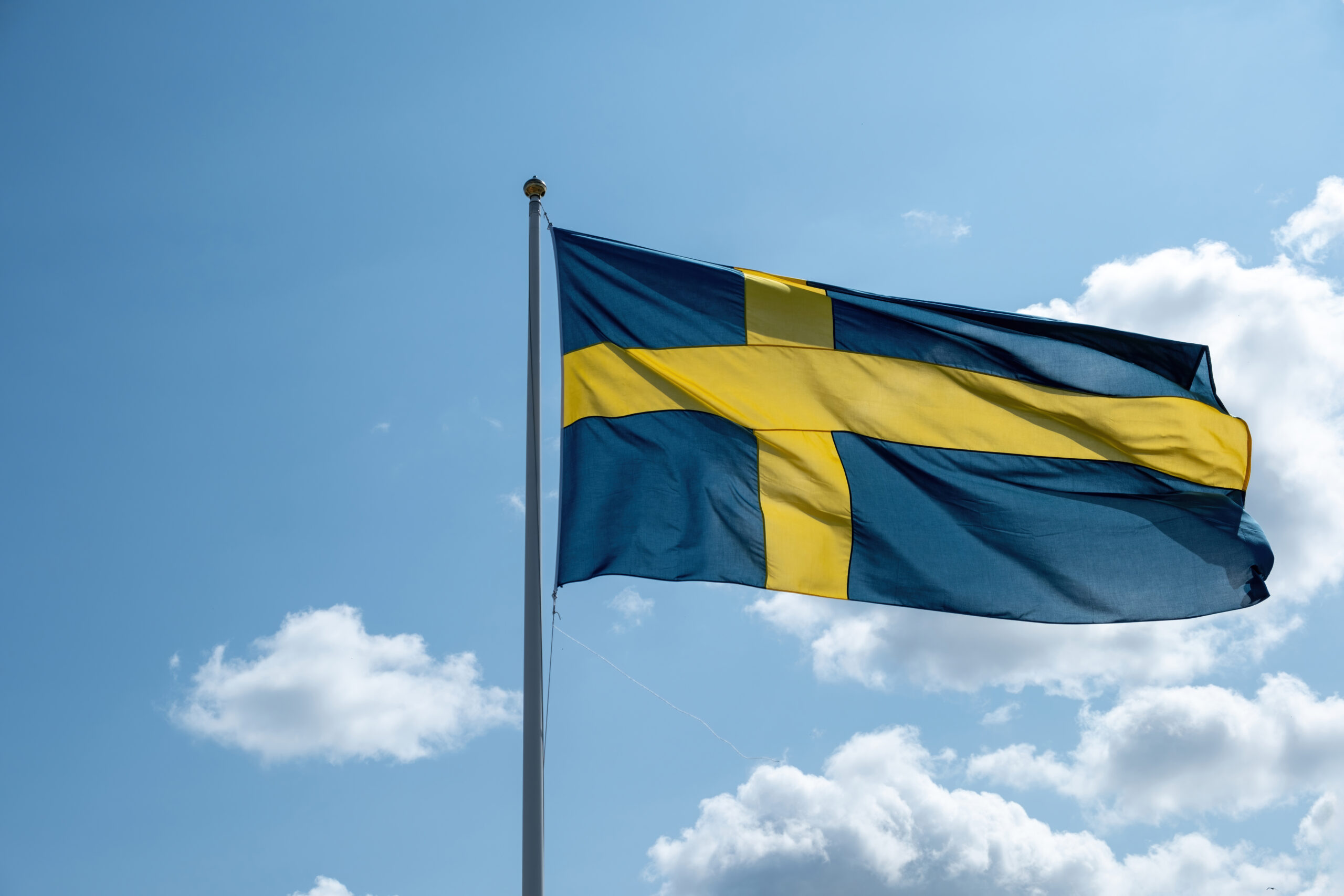
Every year on 6 June, Sweden marks its National Day, Sveriges nationaldag, with flags, folk costumes, and a modest kind of national pride that is distinctly Swedish. But behind the pageantry lies five centuries of history: a rebellion that ended Danish rule, a constitution born from military humiliation, a queen who simply walked out of the job, and a modern king whose private life sold out bookshops in hours.
The Day That Almost Wasn’t
Sweden was late to the national holiday idea. France had Bastille Day. The Americans had their Fourth of July. The Swedes, somehow, managed to reach the 1980s without officially designating one.
The origins of the date go back to Artur Hazelius, the man who founded the open-air museum Skansen in Stockholm, and who had been hosting celebrations on 6 June at the museum since 1893. He called it Gustafsdagen — Gustaf’s Day — in honour of the king elected on that date in 1523. When the union with Norway dissolved in 1905 and Sweden got its own distinctive flag, the date took on new weight. In 1916, 6 June was officially named Svenska flaggans dag, the Day of the Swedish Flag.
It took another sixty-seven years before the Riksdag renamed it the National Day in 1983, and a further twenty-two before it became an actual public holiday in 2005. Even then, making it a holiday required a trade-off: Whit Monday was removed from the calendar to compensate, a decision that annoyed enough people to become its own minor controversy. Sweden, essentially, had to give something up to officially celebrate itself.
Gustav Vasa and the Bloody Prequel
The events of 6 June 1523 were not exactly a clean founding myth.
Sweden’s independence came after the Stockholm bloodbath of 1520 and the Swedish liberation war that followed it. The bloodbath in question was organised by the Danish King Christian II after he had invited the Swedish nobility to Stockholm under a flag of truce. Around ninety people — bishops, nobles, burghers — were arrested and executed over three days. Among them was Erik Johansson Vasa, father of the man who would become Sweden’s founding king.
Gustav Eriksson Vasa, twenty-six years old and freshly motivated, launched a guerrilla uprising from the province of Dalarna. He won his first victory over Christian at Västerås in the spring of 1521 and gradually earned the trust of Swedish aristocrats who recognised his skills as a genuine leader rather than someone they could manipulate. By 1523, with financial backing and ships from the German city of Lübeck, the Danes were pushed out.
On 6 June 1523, at Strängnäs Cathedral, the deacon Laurentius Andreae proclaimed Gustav Eriksson king of Sweden after he swore a royal oath before the privy council. His election as king and his triumphant entry into Stockholm eleven days later marked Sweden’s final secession from the Kalmar Union, which had tied Sweden, Denmark, and Norway together under Danish dominance.
During his reign, Gustav initiated the Protestant Swedish Reformation, transformed the country from an elective to a hereditary monarchy, and established a standing army and navy. He was, in short, the kind of king who gets a national day named after him.
A Royal Scandal That Happened to Fall on the Same Date
Here is where June 6 starts to accumulate layers.
On 6 June 1654, exactly 131 years after Gustav Vasa’s election, Queen Christina of Sweden abdicated her throne and converted to Catholicism. Both acts were extraordinary. Sweden was a Lutheran country; Catholicism was not merely unfashionable, it was effectively banned. And the daughter of Gustavus Adolphus — the Protestant warrior-king who had dominated northern Europe — renouncing the faith her father had died defending was received by most Swedes as something close to treason.
Christina had spent most of her life in the company of men, was raised to rule like one, and refused to marry — which her leading subjects did not consider an adequate excuse for relinquishing the throne. She never explained herself fully, claiming only that the burden of ruling was too heavy for a woman, while not revealing that she had secretly converted to the Catholic faith, which in Lutheran Sweden was banned.
After leaving Sweden, Christina began a wandering journey across Europe, often baffling observers with her use of male clothing. In 1655 she converted to Catholicism openly. She gained a reputation in those years for having a caustic and dismissive attitude towards all forms of Christianity — possibly a smokescreen to conceal her conversion — before openly declaring her new faith in Austria.
She moved to Rome, where she founded the Academy of Arcadia and assembled what became the greatest collection of Venetian paintings ever put together in one place. History has been kinder to her than her contemporaries were.
The Constitution Born from Disaster
The third historical anchor for June 6 arrived in 1809, and it too came out of a crisis.
Gustav III’s and Gustav IV Adolf’s strong opposition to the French Revolution and its ideas of constitutionalism and democracy brought them into conflict with large sections of the Swedish nobility and civil servants. Gustav III was murdered in 1792, the result of a conspiracy of nobles opposed to his autocratic rule.
His son Gustav IV Adolf managed to make things worse. In 1805, he joined the Third Coalition against Napoleon. The campaign went poorly; France occupied Swedish Pomerania; and when Russia switched sides at Tilsit in 1807, Sweden was left exposed. On 21 February 1808, Russia invaded Finland, which Sweden had governed for nearly 700 years.
On 13 March 1809, a group of conspirators led by Carl Johan Adlercreutz broke into the royal apartments at Gripsholm Castle and imprisoned Gustav Adolf and his family. He abdicated on 29 March, and on 10 May, the Riksdag proclaimed that all members of his family had forfeited their rights to the throne. The former king was sent into exile, adopted the name “Colonel Gustafsson,” and eventually died alone in a hotel in St. Gallen, Switzerland.
The new Instrument of Government, adopted on 6 June 1809, established a separation of powers between the executive branch (the king) and the legislative branch (the Riksdag), ending the era of royal autocracy. The current Swedish constitution, the 1974 Instrument of Government, came into force on yet another 6 June. The date had, by this point, become something of a magnet for constitutional moments.
What Actually Happens
The main ceremony is at Skansen, the open-air museum in Stockholm that first hosted June 6 celebrations in the 1890s. The King and Queen attend a ceremony there on National Day: the blue and yellow flag is raised, and children in traditional peasant costume present the royal couple with bouquets of summer flowers.
It is, by international standards, a restrained affair. Generally speaking, Sweden’s National Day comes with far fewer displays of national pride compared with many other countries. There are no fireworks. No military parades of any consequence. Swedes tend to treat the day as a pleasant long weekend rather than an occasion for flag-waving solemnity.
In recent years, the day has taken on a new dimension. Citizenship ceremonies are held all across the country, welcoming new Swedes to their adopted home. For some families, June 6 marks something genuinely personal — the day their arrival in Sweden was formally recognised.
In Malmö, Folkets Park hosts flag parades, readings, and live music. Smaller towns hold their own versions. The common thread is outdoors activity, the Swedish flag, and the first serious sunshine of the year.
What to Wear
The Sverigedräkten — Sweden’s national dress — is what you will see on the royal family on 6 June, and on a significant number of people throughout the day. It was designed in 1903 by Marta Palme, with the blue and yellow colours taken directly from the Swedish flag. The response from the general public was lukewarm until June 6, 1983, when Queen Silvia wore it for the first National Day celebration; since then it has been the established national costume.
The movement behind the dress wanted to break from the prevailing trend of expensive textiles, artificially shaped clothing, uncomfortable corsets, and hard-to-wash dresses that had taken hold across Europe. The practical argument, in other words, was part of the pitch.
Beneath the Sverigedräkten, the older tradition of regional folkdräkter is still very much alive. These costumes span roughly 400 years of documented history and reflect local traditions and craftsmanship rather than a single national template. The tradition today is strongest in regions like Dalarna, Västmanland, Skåne, and Östergötland. Dalarna’s costumes in particular — with their bright reds, blacks, and hand-embroidered details — are what most people picture when they think of Swedish folk dress.
What to Eat
June 6 sits in a curious position on the Swedish calendar: close enough to midsummer to share its seasonal produce, but with its own, newer food tradition.
Many Swedes celebrate with a Nationaldagsbakelse — a special almond and citrus pastry created specifically for the day. Others prefer a simple strawberry cake (jordgubbstårta), which serves as a warm-up for midsummer.
The strawberries matter. Sweden’s first domestically grown strawberries of the year typically arrive in late May or early June, and they carry the kind of seasonal significance that is hard to explain to anyone from a country where the fruit is available year-round. The appearance of Swedish strawberries is, for many people, what announces summer has actually started.
The broader food context is the smörgåsbord — pickled herring in multiple preparations, new potatoes with dill and sour cream, cured salmon, and aquavit consumed with traditional drinking songs called snapsvisor. Swedes consume nearly 3,000 tonnes of herring over the midsummer weekend alone. The National Day feast is a more modest version of the same spread.
The King Who Made the Headlines
Sweden’s current monarch, Carl XVI Gustaf, has reigned since 1973, making him the longest-serving monarch in Swedish history. He presents the Nobel Prizes. He champions environmental causes. He is genuinely interested in vintage cars.
He also became the subject of Sweden’s most talked-about royal scandal in living memory.
In 2010, an unauthorised biography by journalists Thomas Sjöberg, Deanne Rauscher, and Tove Meyer alleged that in the earliest years of his kingship, Carl XVI had frequented sex parties at a Stockholm nightclub owned by an ex-gangster and had the Swedish secret police ensure he did not leave traces. The book also claimed he had an affair in the 1990s with Camilla Henemark, a Swedish-Nigerian singer.
The 338-page biography broke a long-standing tradition of Swedish media not printing intimate details about the king’s private life. Bookstores throughout Sweden reported they could not keep it on their shelves; one Stockholm store sold all 100 copies in the first two hours.
The king chose not to sue, offering his response at a press conference in a forest, still wearing a wax jacket from an elk hunt: “I have spoken with my family and the queen and we choose to turn the page and move forward, because, as I understand, these are things that happened a long time ago.”
Pragmatic, outdoorsy, and delivered from the woods while still in hunting clothes. Distinctly Swedish.
His predecessor, Queen Kristina, chose the same date to stage one of the more dramatic exits in European royal history. The current king chose a forest clearing to manage his. June 6, it seems, has always attracted a certain kind of theatre.
A Holiday That Grew Into Itself
The fact that Sweden only got around to officially celebrating its national day in 1983 — and only made it a public holiday in 2005 — says something about the country’s relationship with collective self-congratulation. It has never been entirely comfortable.
But the day has found its footing. The citizenship ceremonies give it genuine contemporary meaning. Skansen fills up. Strawberry cakes appear in every window. The Sverigedräkten comes out of the wardrobe. And the blue and yellow flag goes up across a country that waited a long time to decide it was worth the fuss.
Sources
- Sweden’s National Day – Visit Sweden
- The National Day of Sweden – sweden.se
- On This Day in 1523: Gustav Vasa Elected King – Library of Congress
- Queen Christina Abdicates, June 6, 1654 – Library of Congress
- Christina, Queen of Sweden – Britannica
- The Instrument of Government, June 6, 1809 – European Royal History
- King Carl XVI Gustaf – Newsweek
- Swedish Food Traditions – Swedentips.se
- Traditional Swedish Clothing – Nordic Perspective
- Swedish National Day – Michelin Guide





 English