
Five countries, roughly 28 million people combined, and a footballing culture that punches consistently above its weight at the European Championships but has a much spottier record at the World Cup itself. That’s the Nordic story in men’s football: Sweden as the genuine heavyweight with a World Cup final to its name, Denmark and Norway with their moments of real magic, Iceland’s one improbable summer of fame, and Finland — for over a century — sitting at home watching everyone else play.
It’s a strange grouping. These are countries with deep cultural overlap, similar weather, similar populations, and similar approaches to youth sport, yet wildly different World Cup histories. Worth digging into why.
The Short Version: Football Arrived Early, Success Came Late (and Unevenly)
Football took root in the Nordic region in the late 19th and early 20th centuries, largely imported through British trade and cultural contact in port cities like Gothenburg, Copenhagen, and Bergen. Sweden’s federation formed in 1904, Denmark’s even earlier, and Norway and Finland weren’t far behind. All five countries were playing organized internationals against each other well before the first World Cup existed in 1930.
What set Sweden apart early was simply scale and consistency: a population large enough to sustain a deep domestic league, combined with players who went abroad to Italy and elsewhere in the postwar years and brought tactical sophistication home with them. That produced the country’s golden generation in the 1940s and 50s — the “Gre-No-Li” trio of Gunnar Gren, Gunnar Nordahl, and Nils Liedholm — and set up Sweden’s run to the 1958 World Cup final on home soil, a 5–2 loss to a 17-year-old Pelé and a Brazil side that announced itself to the world that summer.
Denmark took a very different path. Danish football stayed strictly amateur into the 1970s — the country’s federation prohibited its internationals from turning professional abroad — which meant Denmark didn’t even qualify for a World Cup until 1986, despite a long Olympic football pedigree going back to the early 1900s. Once Danish players were finally allowed to go pro and play abroad, the team transformed almost overnight into “Danish Dynamite,” built around Michael Laudrup and Preben Elkjær, and arrived at the 1986 World Cup playing some of the most attractive football in the tournament.
Norway and Iceland both had long international careers but rare tournament appearances — Norway with sporadic World Cup qualifications across nearly a century, Iceland with none until a sudden golden generation in the mid-2010s. And Finland simply never got there. Not once, across every qualification cycle since the country’s first attempt in 1937.
World Cup Appearances by Country
| Country | World Cup Appearances (Years) | Best Result | Notes |
|---|---|---|---|
| Sweden | 13: 1934, 1938, 1950, 1958, 1970, 1974, 1978, 1990, 1994, 2002, 2006, 2018, 2026 | Runners-up (1958), hosts | Also third place in 1950 and 1994. Only Nordic country to reach a World Cup final. |
| Denmark | 7: 1986, 1998, 2002, 2010, 2018, 2022, 2026 | Quarter-finals (1998) | “Danish Dynamite” debut in 1986 was their most thrilling campaign even though they exited in the round of 16. |
| Norway | 4: 1938, 1994, 1998, 2026 | Round of 16 (1998) | Never lost a World Cup match to anyone except Italy. Returns in 2026 after a 28-year absence. |
| Iceland | 1: 2018 | Group stage | Smallest nation (by population at the time) ever to qualify, a record since broken by Curaçao for 2026. Famous 1–1 draw with Argentina. |
| Finland | 0 | Never qualified | The only Nordic country (besides the Faroe Islands) never to reach the finals, despite entering qualification since 1937. |
Sources: Sweden at the FIFA World Cup (Wikipedia), Denmark at the FIFA World Cup (Wikipedia), Norway at the FIFA World Cup (Wikipedia), Iceland national football team (Wikipedia), Finland national football team (Wikipedia).
A note on 2026: only Norway and Sweden qualified for the United States/Mexico/Canada tournament. Denmark lost in the playoffs to Czechia on penalties after a 2-2 draw, and Finland and Iceland both missed out in qualifying. It’s the first World Cup since 1970 in which the Nordic representation has dropped to just two countries — though it’s also the most talent-rich Nordic generation since the 1990s, which makes the absences sting more than usual.
Sweden: The One That Actually Got Close
Sweden’s 1958 World Cup final remains the high-water mark for Nordic football at the men’s World Cup, full stop. Playing as hosts, Sweden beat West Germany 3–1 in the semi-final before running into a Brazilian team that would go on to define the sport for a generation — Pelé scored twice in the final, including a goal where he lobbed a defender and volleyed it home, a piece of skill that’s still shown in highlight reels. Sweden lost 5–2, but Nils Liedholm’s opening goal made him, at 35, the oldest goalscorer in World Cup final history — a record that still stands.
The 1994 tournament in the United States produced Sweden’s other great modern run: a third-place finish powered by Tomas Brolin and a young Henrik Larsson, including a dramatic penalty-shootout win over Romania in the quarter-final after playing extra time a man down. Thomas Ravelli’s saves in that shootout are still part of Swedish football folklore.
Since then, Sweden has been a steady if unspectacular World Cup participant — round of 16 finishes in 2002 and 2006, a quarter-final run at the 2018 tournament in Russia, and a difficult, injury-hit qualification for 2026 under new English manager Graham Potter, who replaced Jon Dahl Tomasson (himself Danish) after a disastrous Nations League stretch.
Denmark: Dynamite, Then a Long Wait for the Next Spark
Denmark’s 1986 World Cup debut is one of the great cult favorites in tournament history. The team swept its group, including a 6–1 demolition of Uruguay that featured a Preben Elkjær hat-trick, and played with a freedom and flair that earned them comparisons to the great Dutch and Brazilian sides of earlier decades. They lost 5–1 to Spain in the round of 16 — Emilio Butragueño scored four — in a game that’s remembered in Denmark almost as fondly as the wins that preceded it, because of how the team had played to get there.
Denmark’s best actual result came in 1998: with both Laudrup brothers (Michael and Brian) playing their final World Cup together, Denmark beat Nigeria 4–1 in the round of 16 before losing a tight, high-quality quarter-final to Brazil, 3–2. It remains the deepest Nordic run outside of Sweden’s two finals appearances.
Denmark has otherwise been a consistent, if not consistently deep, World Cup participant — round of 16 finishes in 2002 and 2018, group-stage exits in 2010 and 2022. The 2026 absence, following a playoff loss to Czechia, is considered one of the bigger surprises of qualifying given the squad’s talent depth around Christian Eriksen’s eventual successors.
Norway: The Long Gap, and the Wait That Just Ended
Norway’s World Cup history is the strangest of the bunch: four appearances spread across 88 years, with a 56-year gap between the first (1938) and second (1994), and then a 28-year gap heading into 2026. Norway has never actually lost a World Cup match to anyone except Italy — a genuinely strange piece of trivia that’s held since 1938, when Italy beat them in extra time at the round of 16 stage, and again in 1994 and 1998 when Italy beat them both times in the group stage and the round of 16 respectively.
The 1998 tournament in France was Norway’s best World Cup, finishing top of a group that included Brazil and Morocco before losing to Italy yet again, 1–0, courtesy of a Christian Vieri goal. Kjetil Rekdal remains the only Norwegian to have scored at more than one World Cup, including a penalty that beat Brazil in the 1998 group stage.
Norway’s return for 2026, after missing five consecutive World Cups, came via one of the most dominant qualifying campaigns in the competition’s recent history — including an 11-goal win over Moldova and a 4–1 win at San Siro against Italy, the team that has haunted Norwegian World Cup history for nearly nine decades. Given that, beating Italy specifically on the way back to the tournament had a certain poetic justice to it.
Iceland: One Summer, One Point, and a Permanent Place in Football Folklore
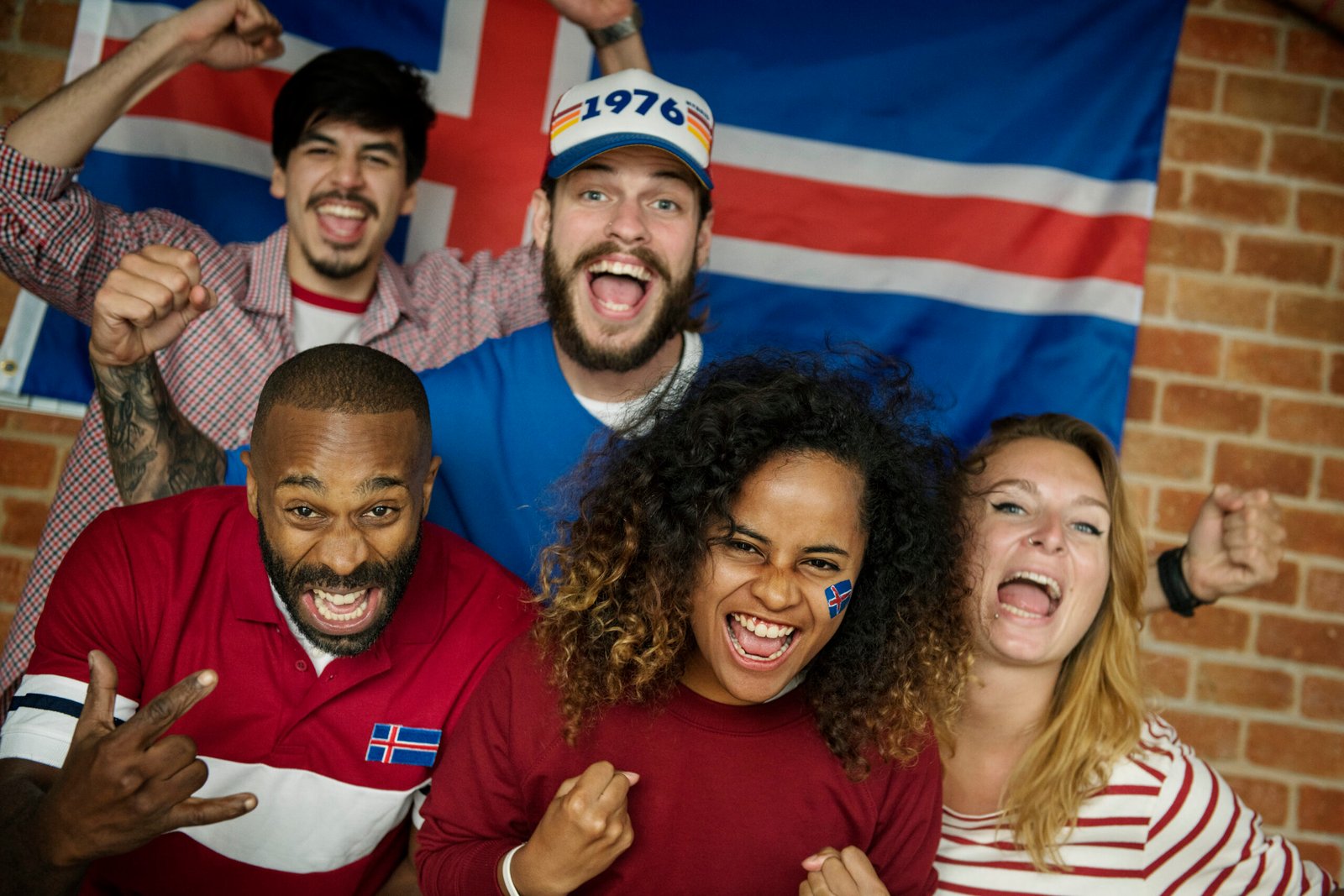
Iceland’s entire World Cup history consists of three matches in the summer of 2018. That’s it. But few small-nation World Cup debuts have been more thoroughly chronicled, because Iceland qualified as a country of roughly 334,000 people — at the time the smallest nation ever to reach the finals, a record since broken by Curaçao for 2026.
The opening match against Argentina is the one people remember: Alfreð Finnbogason equalized Sergio Agüero’s goal for a 1–1 draw, and goalkeeper Hannes Halldórsson saved a Lionel Messi penalty in the second half — notable in part because Halldórsson had directed Iceland’s own Eurovision entry music video a few years earlier, a detail that got more international coverage than it probably deserved but which captured something true about Iceland’s charm offensive that summer. Iceland lost their next two games, to Nigeria and Croatia, and were eliminated with a single point. They haven’t been back since, missing out on both 2022 and 2026 qualification.
The team’s run to the Euro 2016 quarter-finals — including a famous win over England — actually happened before the World Cup appearance and was, in some ways, the more historically significant achievement. But the World Cup debut is what cemented the “Viking Thunderclap” celebration and Iceland’s small-nation mystique in the global football consciousness.
Finland: A Century of Coming Close, Never Arriving
Finland’s relationship with the World Cup is the region’s quiet tragedy, or running joke, depending on who in Helsinki you ask. The Huuhkajat (Eagle-Owls) have entered World Cup qualification every cycle since 1937 and have never once reached the finals — the only Nordic country with that distinction, alongside the non-sovereign Faroe Islands.
The closest Finland ever came was the 1998 qualifying campaign: needing only a home win against Hungary in their final group match to reach a playoff, Finland led 1–0 deep into injury time before conceding an own goal that ended their hopes. It’s the kind of moment that gets retold in Finnish football culture roughly the way a near-miss penalty shootout gets retold elsewhere — with a wince every time.
Finland’s fortunes turned somewhat in 2019, when the team qualified for its first-ever major tournament, UEFA Euro 2020, behind striker Teemu Pukki’s scoring form and a more conservative, defensively organized approach under manager Markku Kanerva. That qualification broke a 109-year wait for any major tournament appearance. But it was the Euros, not the World Cup, and Finland missed out again for 2022 and 2026. Danish coach Jacob Friis took over the national team in January 2025 with World Cup qualification as an explicit mandate — so far, unsuccessfully.
The Star Players: Who Carries Each Nation’s Hopes
Norway — Erling Haaland. The most dominant individual goal-scoring force currently playing international football, full stop, and the central reason Norway’s return to the World Cup carries real expectation rather than nostalgia. Haaland’s club form at Manchester City has made him arguably the best pure finisher in the world, and Norway’s qualifying campaign for 2026 was built heavily around getting the ball to him in dangerous positions as often as possible — hence the 11-goal demolition of Moldova. Alongside Haaland, Real Madrid’s Martin Ødegaard provides the creative platform; the Haaland-Ødegaard pairing is the best attacking partnership Norway has produced since the Rekdal-era teams of the late 1990s.
Sweden — Viktor Gyökeres and Alexander Isak. Sweden’s attack heading into 2026 is built around two strikers who have become two of Europe’s most productive forwards in their own right: Gyökeres after a prolific run at Sporting CP and a move to Arsenal, Isak as one of the Premier League’s most coveted finishers following his Newcastle years. Add Dejan Kulusevski’s creativity and Anthony Elanga’s pace on the wings, and Sweden possesses an attacking threat capable of troubling almost any opponent — the challenge, as it’s been for Sweden for decades, is whether the collective defensive discipline can match the individual quality up front.
Denmark — Christian Eriksen (the recent generation). Though Denmark didn’t qualify for 2026, the Eriksen generation defined the last decade of Danish football, including the emotional run to the Euro 2020 semi-finals that followed his on-pitch cardiac arrest during the tournament. Historically, Denmark’s star-player lineage runs through Michael and Brian Laudrup in the 1980s and 90s, Peter Schmeichel in goal, and more recently Simon Kjær as a defensive anchor.
Iceland — Gylfi Sigurðsson. Iceland’s all-time leading scorer and the engine of both their Euro 2016 and 2018 World Cup campaigns, Sigurðsson was the most internationally recognizable Icelandic player of the golden generation, having played for Tottenham and Everton in the Premier League. Eiður Guðjohnsen, who played for Barcelona and Chelsea in an earlier era, is often cited as Iceland’s greatest individual talent historically, though he retired before the 2018 World Cup run.
Finland — Teemu Pukki. The face of Finland’s modern breakthrough, Pukki’s scoring form for Norwich City directly powered Finland’s Euro 2020 qualification, and he remains the country’s most recognizable modern player even past his peak years. Jari Litmanen, the Ajax and Barcelona midfielder of the 1990s, is still widely regarded as the greatest Finnish footballer of all time, even though his career predates Finland’s only major tournament appearance by over two decades.
What the Numbers Actually Say
Add it up and the Nordic World Cup story is really two stories happening at once. There’s Sweden, a genuine historical power with a final, two thirds, and twelve appearances overall — closer in stature to a mid-tier traditional football nation than to its neighbors. And then there’s everyone else: Denmark with one great tournament and a handful of solid ones, Norway with long absences punctuated by occasional brilliance, Iceland with a single unforgettable summer, and Finland with nothing at all to show for ninety years of trying.
The current generation — Haaland, Ødegaard, Isak, Gyökeres — is arguably the most talented collection of Nordic players assembled at once since Denmark’s 1990s peak. Whether that talent translates into deep World Cup runs in the years ahead, or simply adds another chapter to the region’s long history of underachieving relative to individual quality, is the question Nordic football fans have been asking themselves for decades. 2026 might offer at least a partial answer.

 English