
Four countries, one region, and almost no reason to fly between any of them. Denmark, Sweden, Norway and Finland have spent the last century building rail lines specifically so you don’t have to. Iceland is the outlier here, worth noting up front: it has no passenger railway at all, so it sits outside this itinerary entirely.
I’ve done this trip in pieces over the years, never quite the same way twice, and the thing that surprises people most isn’t the scenery (though the Bergen Line will still get you). It’s how little planning the trains themselves require once you understand the pass situation. The countries, on the other hand, reward some planning.
The pass question, sorted first
If you hold an EU or EEA passport, or you’ve lived in Europe for six months or more, you want an Interrail Pass, not a Eurail Pass. Everyone else goes the Eurail route. The Eurail Nordic Pass and its close cousin, the Eurail Scandinavia Pass, both cover Denmark, Norway, Sweden and Finland, and both let you buy anywhere from three to eight travel days within a one-month window.
One wrinkle worth knowing about before you buy anything: an Interrail One Country Pass is generally not valid for travel within your own country of residence, and country-specific passes have their own quirks depending on which operator you’re riding. The Nordic Pass description spells this out, and it’s worth five minutes of reading before you commit.
Most high-speed trains and every night train need a seat or berth reservation on top of the pass, and that costs extra. Budget for it. On the Norwegian night trains this runs through Entur, the national booking platform that handles Vy, Go-Ahead Nordic and SJ Norge tickets in one place.
The four systems, side by side
| Country | Operator(s) | Website | Signature scenic route | Key stops worth building a day around |
|---|---|---|---|---|
| Norway | Vy, Go-Ahead Nordic, SJ Norge | vy.no | Bergen Line (Oslo–Bergen), one of the highest railways in Europe | Finse (glacier country, no road access), Myrdal (change here for the Flåm Railway), Voss, Geilo |
| Sweden | SJ, with Snälltåget and Vy running some routes | sj.se | The Arctic Circle sleeper, Stockholm–Luleå–Narvik via Kiruna | Kiruna (mining town being physically relocated), Abisko (aurora viewing), Gothenburg |
| Denmark | DSB | dsb.dk | The IntercityLyn corridor, Copenhagen–Odense–Aarhus–Aalborg | Odense (Hans Christian Andersen’s hometown), Aarhus |
| Finland | VR | vr.fi | The night train north, Helsinki–Rovaniemi across the Arctic Circle | Tampere, Oulu, Rovaniemi (officially Santa’s hometown, less officially a solid base for Lapland) |
A couple of things that table doesn’t show. Norway actually has three passenger operators sharing the network now, a post-2019 liberalization that occasionally confuses people expecting a single national carrier. And Denmark, unusually among the four, runs no domestic overnight services of its own. If you want a sleeper through Danish territory you’re catching the Snälltåget or SJ EuroNight services that pass through on their way between Berlin and Stockholm.
One week: the classic capitals loop
Seven days is enough for the obvious route and a couple of detours, not much more.
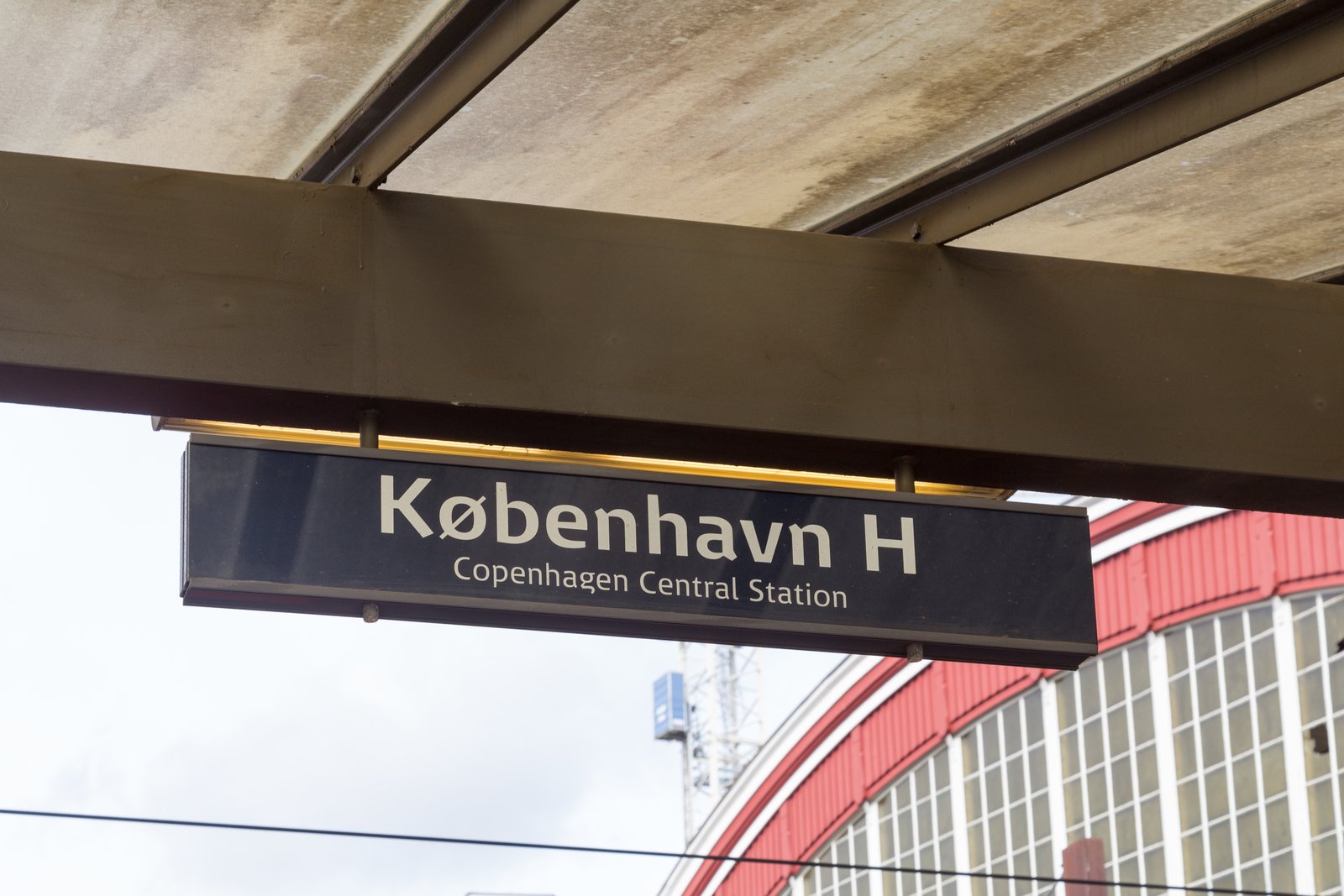
Days 1–2: Copenhagen. Fly in, adjust, wander. This is also where you’ll want to sort your rail pass and reservations if you haven’t already.
Day 3: Copenhagen to Gothenburg or Stockholm. The direct SJ connection to Stockholm normally runs via the X2000 tilting train, though it’s worth checking current timetables before you book. As of mid-2026, direct X2000 services between Copenhagen and Stockholm have been temporarily suspended due to a shortage of trainsets, with services expected to resume in autumn 2026. If that’s still the case when you travel, routing via Malmö and changing, or via Gothenburg, gets you there anyway.
Days 4–5: Stockholm. Worth every hour you give it.
Day 6: Stockholm to Oslo. A five to six hour ride, usually changing in Gothenburg.
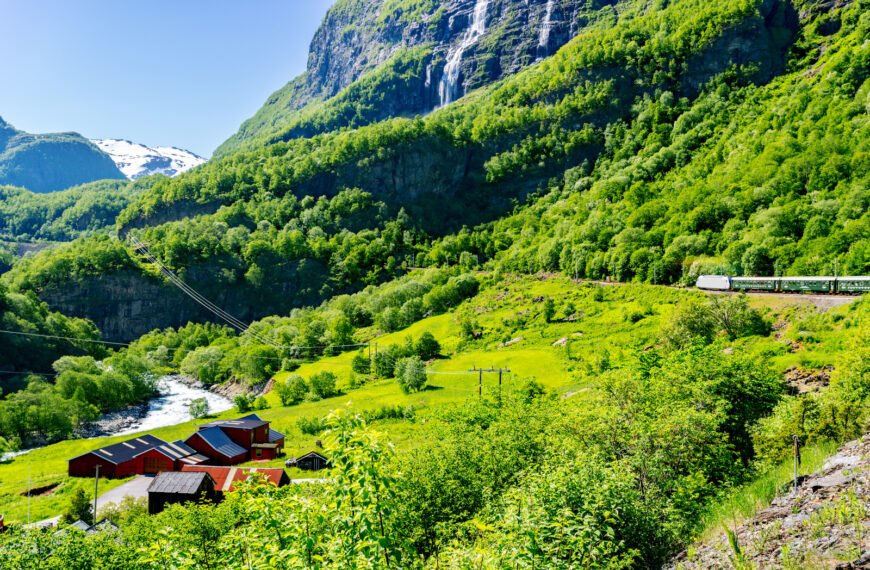
Day 7: Oslo, or push on to Bergen if you can stretch the trip by a day, because the Bergen Line genuinely is the reason half the people on this itinerary got interested in Nordic rail in the first place. Get off at Myrdal, ride the Flåm Railway down into the fjord, and decide for yourself whether the hype is deserved. It generally is.
Two weeks: add the north
If you’ve got two weeks, the extra week should go toward the part most people skip: the Arctic.
From Stockholm, instead of turning toward Oslo, take the night train north. This is the Stockholm–Kiruna–Narvik sleeper, sometimes still called the Arctic Circle train out of habit. It crosses into Norwegian territory at the very end, and the operator has changed hands a couple of times in recent years (SJ took the contract back from Vy Tåg in December 2024), so double-check who’s actually running it before you book. Get off in Kiruna to see a town being moved, building by building, because the iron mine underneath it made the old site unstable. Abisko, a little further on, is one of the more reliable spots in Europe for aurora viewing if you’re travelling between September and March.
From there, work your way back down through Norway on the Nordland Line to Trondheim, then pick up the Dovre Line south to Oslo, and finish with the Bergen Line as above. Alternatively, if Finland is the priority, route through Helsinki instead: the VR night train from Helsinki to Rovaniemi takes around twelve hours and crosses into the Arctic Circle by morning. Rovaniemi is touristy in a way that’s hard to avoid given the Santa Claus Village down the road, but it’s also a genuinely useful jumping-off point for Lapland.
Either version adds two or three overnight train segments to the trip, which is its own kind of efficiency: you’re covering ground while you sleep, and saving a hotel night in the process.
Night trains worth actually booking
Not all sleepers are equal, and reservation costs add up fast if you’re not selective.
- Stockholm–Narvik (via Kiruna): the marquee Arctic route, currently under SJ.
- Oslo–Bergen: shares the same spectacular route as the day train, just after dark, which some people prefer for the surprise of waking up in fjord country.
- Oslo–Trondheim and Trondheim–Bodø, both on SJ Norge, useful if you’re threading together a longer Norwegian leg without backtracking.
- Helsinki–Rovaniemi or Helsinki–Kemijärvi, VR’s double-decker sleepers, seasonally busy during ski season when Helsinki runs as many as five departures a night northbound.
Reservations on all of these are best made through each operator’s own site rather than a resale platform, both for pricing and for actually being able to pick a cabin type.
Practical notes before you book anything
Seat reservations on Norwegian long-distance and night trains go through Entur, which handles all three Norwegian operators in one booking flow. Sweden’s SJ takes its own bookings directly at sj.se, and this is generally the better route than third-party resellers, who sometimes can’t sell SJ’s cheaper advance fares. Finland’s VR and Denmark’s DSB both run functional English-language booking sites, though DSB’s deeper information pages are mostly still in Danish.
None of this needs to be locked down months in advance, with one exception: night train cabins, especially on the Stockholm–Narvik and Helsinki–Rovaniemi routes during winter, do sell out. If those overnight legs matter to your itinerary, book them first and build the rest of the week around them, not the other way around.
Sources and further reading
- Interrail Nordic Pass — Interrail.com
- Eurail Nordic Pass and Eurail Scandinavia Pass — Eurail.com
- Norway train travel overview — Visit Norway
- The Bergen Line — Vy
- Night trains of Norway — Wikipedia
- Travelling around Sweden by train — Visit Sweden
- Copenhagen–Stockholm X2000 route notes and 2026 service update — Seat61
- VR night trains and Santa Claus Express — VR Finland
- DSB train services overview — DSB
- How to travel by train in Denmark — ShowMeTheJourney



 English